Wisdom Tooth Surgery in Noida — What Actually Happens Step by Step
Wisdom Tooth Surgery
Most people approach wisdom tooth surgery with a significant gap between what they've heard and what the procedure actually involves. They've heard "extraction" and mentally filed it alongside some combination of blood, pain, and drama. The reality, for the vast majority of patients, is considerably more mundane.
Understanding exactly what happens — before, during, and after — removes most of the anxiety. And anxiety, as it turns out, makes the recovery feel harder than it needs to.
Why Wisdom Teeth Need Removing in the First Place
Not every wisdom tooth needs to come out. A fully erupted, properly positioned, cleanable wisdom tooth is a functional tooth. It stays.
The problem arises when the third molar — the wisdom tooth, so called because it erupts between the ages of 17 and 25, when a person is supposedly old enough to have acquired some wisdom — can't erupt properly. The jaw, particularly in modern human populations, often doesn't have enough space to accommodate it. The tooth then sits partially erupted, at an angle, or completely buried in bone.
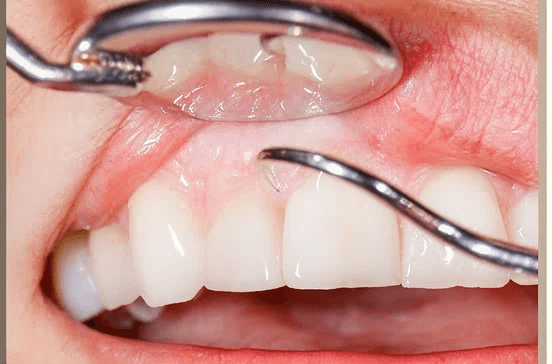
Partially erupted wisdom teeth are difficult to clean. The flap of gum tissue over them (the operculum) traps food and bacteria in a pocket that no toothbrush can reach adequately. This leads to pericoronitis — recurring infection of the gum around the tooth — which causes swelling, pain, difficulty opening the mouth, and sometimes fever. Each episode resolves temporarily with antibiotics and improved cleaning, then comes back. It's not a cycle that improves on its own.
Fully impacted wisdom teeth — completely buried in bone — can develop cysts around them, place pressure on the roots of the adjacent second molar causing root resorption, or create decay on the side of the second molar that's inaccessible for cleaning. These are the cases where removal is recommended proactively, before symptoms develop.
The Assessment Before Surgery
At Renew Dental Clinic in Sector 47, Noida, no wisdom tooth surgery is planned without a panoramic X-ray (OPG). This gives a full view of all four wisdom teeth — their position, angle, depth in the bone, proximity to the inferior alveolar nerve canal (which runs through the lower jaw), and the relationship to adjacent teeth.
This imaging is what separates a safe, planned procedure from guesswork. The inferior alveolar nerve specifically is important — lower wisdom teeth sit very close to it, and understanding the exact anatomy informs how cautious the surgical approach needs to be and whether temporary or permanent altered sensation is a realistic risk for that specific case.
The assessment also determines whether the procedure can be done under local anaesthesia in the clinic or whether general anaesthesia at a hospital is more appropriate. Most wisdom tooth removals — including most impacted ones — are done perfectly safely under local anaesthesia.
What Happens on the Day of Surgery
The procedure varies depending on whether the tooth is erupted, partially erupted, or fully impacted.
For a partially erupted or impacted wisdom tooth, the sequence runs roughly like this.
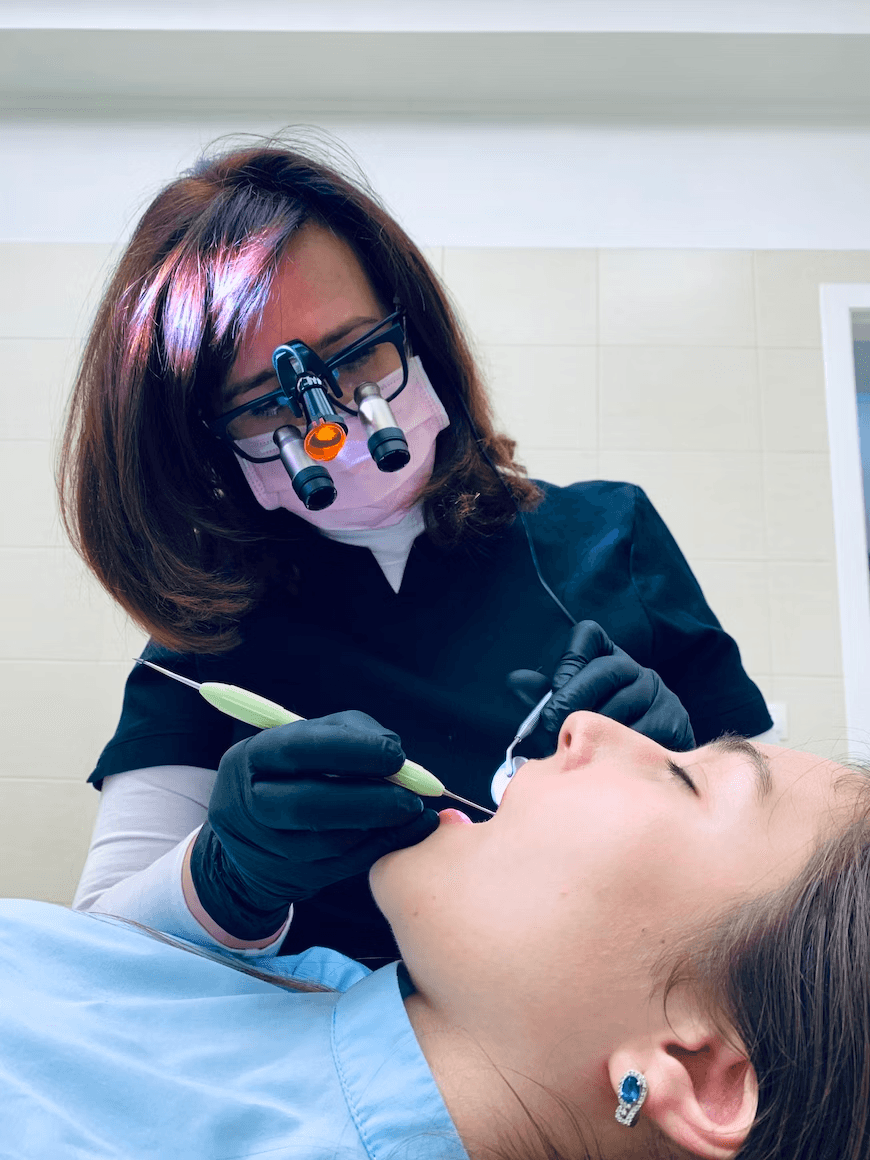
Local anaesthesia is the first thing. For lower wisdom teeth, this means an inferior alveolar nerve block — a single injection that numbs the lower half of one side of the mouth completely. The tongue, the teeth, the lower lip, and the chin on that side all become numb. For upper wisdom teeth, a palatal block and buccal infiltration cover the area. The injection takes about 30 seconds. With topical anaesthetic gel applied first to the gum, the injection is usually no more than a mild pressure sensation.
Then a wait of 3–5 minutes for the anaesthetic to work fully. Dr. Suchi Singh will test the area before proceeding — there is no treatment until the area is confirmed numb. If more anaesthetic is needed, more is given.
Once numb, the procedure begins. A small incision is made in the gum to expose the tooth and the bone around it. This is done with a scalpel. The gum is carefully reflected away from the bone to expose the tooth's crown.
If bone is covering part of the tooth, a small amount is removed using a surgical drill with constant water irrigation to keep the area cool. This is often the noisiest part of the procedure — the drill produces sound and vibration that patients can feel even without feeling pain. Understanding that this is what's happening — vibration and sound, not pain — is genuinely helpful.
The tooth is then either loosened with instruments and lifted out whole, or sectioned (cut into pieces) with the drill and removed piece by piece. Sectioning makes removal easier and less traumatic when the roots are curved or the tooth is at a difficult angle. Most impacted lower wisdom teeth are sectioned; upper wisdom teeth are often removable in one piece.
The socket is then irrigated thoroughly — flushed with sterile saline to clear any bone debris or tooth fragments. The gum tissue is repositioned and sutured closed with dissolvable stitches. These typically dissolve on their own within 7–14 days and don't require a return visit for removal.
From incision to suture, the procedure itself usually takes 20–45 minutes per tooth, depending on complexity. Patients are consistently surprised it's faster than they anticipated.
The Day of the Procedure — What You Feel and Don't Feel
During the procedure: pressure, vibration, and the sensation of movement. Not pain. If at any point something feels sharp or genuinely painful rather than just pressure, raise your left hand. Everything stops, more anaesthetic is given, and the procedure resumes only when you confirm you're comfortable. This is not a theoretical option — it's a practical one that Dr. Suchi Singh uses routinely.
Immediately afterward, while the anaesthetic is still working: little to nothing. The area is numb for 2–4 hours after the procedure. Don't eat during this time — it's too easy to bite the cheek or tongue without realising.
As the anaesthetic wears off: this is when discomfort starts. For most patients, it's a moderate, predictable soreness — manageable with the prescribed or recommended pain relief. Ibuprofen and paracetamol in alternating doses is the standard approach, and it works well for most cases. The first 24–48 hours are typically the most uncomfortable.
Recovery — Day by Day
Day 1: Soreness begins as anaesthetic wears off. Mild to moderate for most patients. Soft diet only — curd, khichdi, mashed dal, banana. Gauze biting for 30–45 minutes after leaving the clinic. No rinsing, no spitting forcefully. Ice pack to the cheek for 20 minutes on, 20 off, reduces swelling. Rest.
Days 2–3: Swelling often peaks on day 2 before beginning to reduce. Some facial swelling on the operated side is expected and normal. Pain is usually at its worst on day 1–2 and should be improving, not worsening, by day 3. Continue soft diet. Gentle warm salt water rinses from day 2 — tilt the head, don't swish vigorously.
Days 4–7: Swelling reduces progressively. Jaw stiffness (trismus) — difficulty opening the mouth fully — is common after lower wisdom tooth surgery and improves over 1–2 weeks. Dissolving stitches begin to loosen. Diet can gradually expand to softer normal foods.
Week 2 onwards: Most patients feel largely normal by day 7–10 for straightforward cases. Complex impacted lower wisdom tooth cases may take 10–14 days before feeling comfortable. Exercise and strenuous activity can resume from about day 5 for most patients.
Warning Signs That Mean Call the Clinic
Most wisdom tooth recoveries are uneventful. These aren't
Severe, throbbing pain beginning days 2–4, after initial pain was improving. This is dry socket — the blood clot has dislodged. It's the most common post-extraction complication and needs dental treatment. It doesn't resolve on its own.
Swelling that increases rather than decreases after 72 hours. Post-surgical swelling should be reducing by day 3. Increasing swelling suggests infection.
Fever above 38°C alongside dental pain. Systemic involvement — the infection has spread beyond the local area.
Numbness that hasn't resolved 24 hours after the anaesthetic wore off. Temporary altered sensation of the lower lip, chin, or tongue after lower wisdom tooth surgery can occur but should be monitored.
Pus or persistent bad taste from the wound. Signs of infection.
Frequently Asked Questions
Q: Can I get both sides removed at once in Noida?
A: In some cases, yes — particularly for upper wisdom teeth or straightforward erupted lower teeth. For complex impacted lower wisdom teeth, most practitioners prefer to do one side at a time so the patient can eat and function on the other side during recovery. Dr. Suchi Singh advises on this based on the specific imaging.
Q: How long should I take off work?
A: For most professional or desk-based roles in Noida, 2–3 days is usually sufficient. For physically demanding work, 4–5 days is more appropriate. Most patients feel comfortable enough for a normal working day by day 3–4.
Q: Is wisdom tooth removal under local anaesthesia safe if I'm anxious?
A: Yes. The procedure is performed entirely under local anaesthesia in the clinic. If anxiety is significant, it's worth mentioning when booking so the appointment can be structured with adequate time, thorough explanation, and the pace set to your comfort.
Q: What happens if I don't remove an impacted wisdom tooth?
A: It depends on the specific situation. Some impacted wisdom teeth remain problem-free for years. Others develop cysts, cause recurrent pericoronitis, or damage adjacent teeth. The OPG assessment at Renew Dental identifies which category your situation falls into and informs whether watchful waiting or removal is the better choice.
For wisdom tooth assessment or surgery at Renew Dental Clinic, Sector 47, Noida, contact us at:
📞 +91 99710 35300
A-321, Basement Floor, Next to Mother Dairy Store, Sector 47, Noida, Uttar Pradesh 201303
Monday–Saturday 10:30 AM – 8:00 PM | Sunday 11:00 AM – 2:30 PM