Tooth Stain vs Cavity — How to Tell the Difference

Dentists treat patients' teeth.
You're brushing your teeth, catch a glimpse of a dark spot, and immediately wonder: is that a cavity or just a stain? The anxiety is understandable. But the two look different, feel different, and require completely different responses.
The frustrating part is that neither can be definitively diagnosed by looking in a mirror. Visual inspection can give you a reasonable guess — but the definitive answer requires a dentist, a probe, and often an X-ray. What you can do is understand the difference well enough to know whether to make an appointment urgently, or simply note it for your next regular check-up.
What Stains Actually Are
Tooth staining is a surface-level change to the colour of the tooth. The enamel itself is structurally intact — no bacterial invasion, no decay, no hole. The colour change comes from pigmented compounds depositing on or within the outer enamel layer.
The main stain-causing culprits in the Indian urban diet:
Tea and coffee are the most common. Tannins and chromogens in both bind to the enamel surface (technically, to the pellicle — the protein film that coats teeth). Multiple cups a day over years produces the characteristic brown discolouration on the inner surfaces of the lower front teeth and the backs of the upper front teeth.
Tobacco — in any form — produces some of the most stubborn staining available. Tar compounds from smoking and direct contact from chewing tobacco penetrate the enamel pores and produce yellow-brown to almost black staining that's hard to remove even with professional polishing.
Calculus (tartar) — hardened plaque deposits — stains to a yellow or brownish tone. This is technically calculus staining rather than enamel staining, but from the patient's perspective it looks like darkened teeth.
Certain foods: beetroot, soy sauce, turmeric, dark curries, and coloured soft drinks all leave surface deposits.
Fluorosis — excessive fluoride during tooth development — produces characteristic white or brown mottling that's within the enamel structure (intrinsic staining).
Tetracycline antibiotics taken during tooth development produce grey or brown banding within the dentine (also intrinsic).
What stains look like:
- Often diffuse — covering a broad area rather than a distinct spot
- Tend to be on the surface that food and drink contact most (backs of upper teeth, lower front teeth)
- Don't hurt when you press on them
- The tooth surface feels smooth underneath
- They don't change rapidly — they build up gradually over months to years
What Cavities Are
A cavity is structural damage to the tooth — actual dissolution of the mineral content of enamel and dentine by acid produced by bacteria. The bacteria metabolise sugars, produce lactic acid, and that acid dissolves the calcium and phosphate that make up tooth structure. First the enamel goes. Then the dentine below it.
Cavities don't just change the colour of the tooth — they change its structure. There's a hole, or an area that has become soft, chalky, or porous.
What early-stage cavities look like:
A very early cavity — still in the enamel — often appears as a white, chalky, opaque spot on the tooth surface. This is called a white spot lesion. The mineral content has been partially dissolved but the enamel surface hasn't broken down yet. At this stage, remineralisation (through fluoride and improved oral hygiene) can potentially halt or reverse the process without drilling.
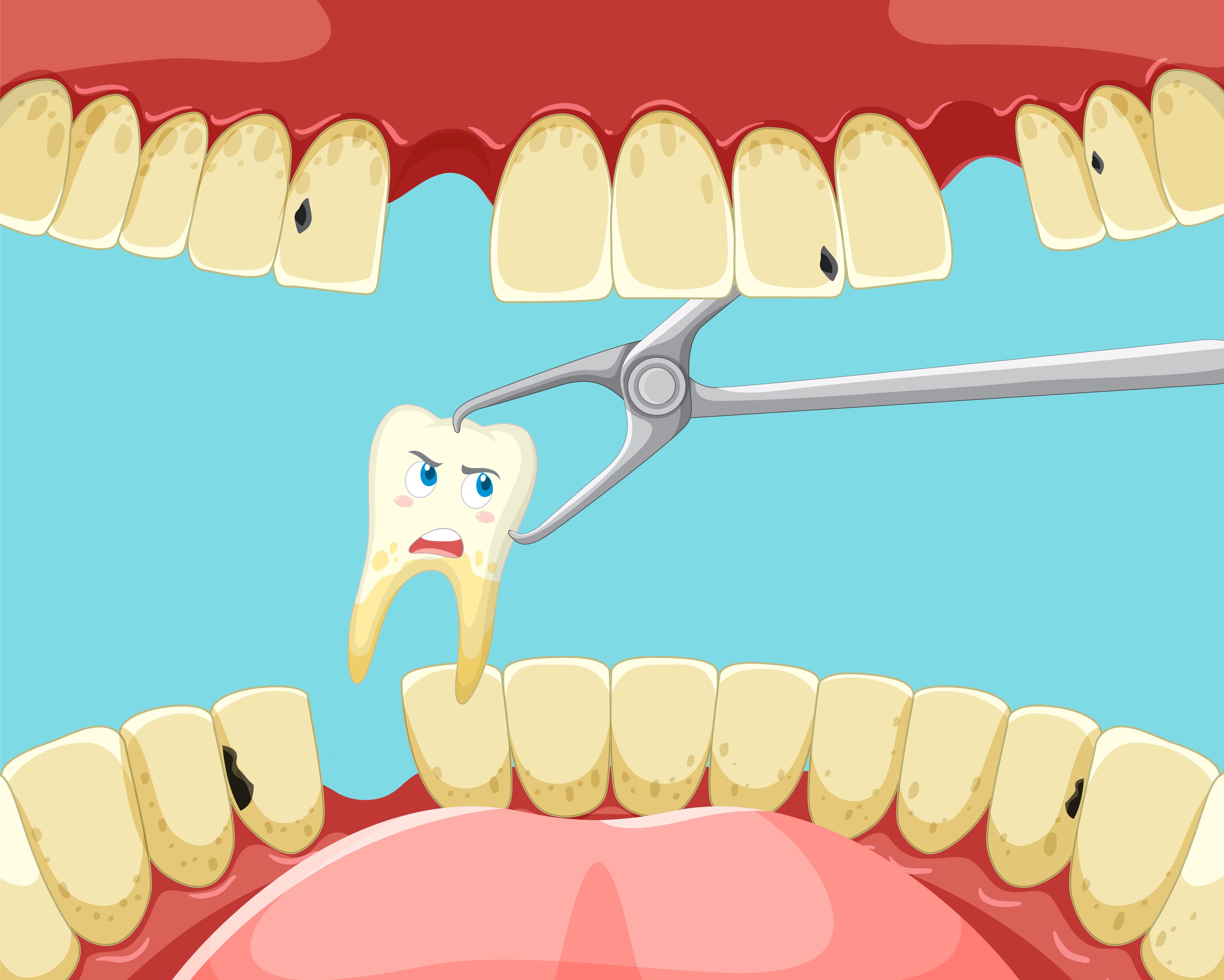
A more advanced cavity in the enamel appears as a brown or black spot. The discolouration comes from bacteria and the products of tooth decomposition. If the surface feels slightly rough or sticky when caught by the probe, or if the spot is concave rather than flat, it's likely a cavity.
A cavity that has reached the dentine is usually darker — often dark brown or black — and may have a visible depression or hole. At this stage, drilling and filling are necessary. Remineralisation won't close a cavity that's already physically broken the tooth surface.
Characteristics that suggest cavity rather than stain:
- A distinct, localised dark spot rather than diffuse discolouration
- Located in a fissure (groove on the chewing surface), between teeth, or at the gumline — the typical decay-prone areas
- Sensitivity to sweet foods, cold, or biting — stains don't cause sensitivity, decay does
- The spot feels different — slightly soft, sticky, or rough when the dentist's probe catches it
- Visible on X-ray as a dark shadow through the tooth structure
The Overlap Problem — Why It's Hard to Self-Diagnose
Here's the inconvenient truth: some stains look exactly like early cavities, and some early cavities look exactly like stains. Particularly in the fissures of the back teeth — the grooves on the chewing surface — dark discolouration can be either harmless staining from food that's settled into the groove, or the beginning of cavity formation.
A dentist uses an explorer probe (a fine, pointed instrument) to assess whether the surface is firm and smooth (stain, likely) or soft and sticky (cavity, almost certainly). They'll also look at the X-ray, where decay appears as a shadow of lower density than healthy tooth structure.
Stained fissures that catch the probe — the probe "sticks" in a soft, tacky area — are treated differently from stained fissures where the surface is firm. The former warrants a filling. The latter may just be monitored and cleaned.
This is genuinely not something you can sort out yourself, and self-diagnosis based on pain alone is particularly unreliable. Early cavities often cause no pain. By the time a cavity is causing genuine toothache, it's likely reached the dentine and may be approaching the pulp.
Can Stains and Cavities Exist in the Same Spot?
Yes. A tooth can have a stain on its surface that makes it hard to see whether there's also a cavity developing underneath. Heavy calculus and staining around the gumline sometimes masks decay at the tooth-root junction beneath.
This is another reason why professional scaling and assessment matters. Removing the surface deposits reveals what's actually on the tooth surface underneath.
What to Do About Each
1. If it's a stain:
Surface staining from tea, coffee, or food responds to professional polishing at a dental cleaning appointment. The polishing paste removes the deposits that have accumulated on and in the enamel pellicle. This is typically done at every scale-and-polish visit at Renew Dental Clinic in Noida.
For deeper or more established staining that polishing doesn't fully address, professional whitening is the next step. Extrinsic staining (on the surface) responds to whitening; intrinsic staining (within the tooth structure) often doesn't, and veneers or composite bonding may be the appropriate approach for those cases.
Calculus-related staining requires professional scaling — it literally cannot be removed at home.
2. If it's a cavity:
A very early cavity still in the enamel stage (white spot lesion, no surface breakdown) may be managed conservatively — intensive fluoride application, dietary modification, and close monitoring at 3 to 6-monthly intervals to see whether remineralisation is occurring.
A cavity that has broken the enamel surface needs a filling. Composite (tooth-coloured) fillings are the standard at Renew Dental. The earlier a cavity is treated, the smaller the filling required and the less drilling involved.
A cavity that has reached the dentine is typically sensitive and will require a filling of a certain depth. If it's very deep, a protective liner may be placed before the filling material.
A cavity that has reached or nearly reached the pulp may require a root canal.
The pattern is clear: each stage of delay makes the treatment more involved and more expensive. The small filling for an enamel cavity costs far less — in time, discomfort, and procedure complexity — than the root canal required when that same cavity reaches the nerve six months later.
The Cases That Definitely Need Immediate Attention
Don't wait for your next routine check-up if:
- The spot is associated with pain or sensitivity, even intermittently
- You feel a rough edge or a hole with your tongue
- Sensitivity has been increasing rather than staying constant
- Pain is spontaneous — occurring without a trigger like cold or biting
- The spot is visibly darkening or growing over weeks
These patterns suggest active decay, and active decay deepens. Every additional week without treatment is additional tooth structure lost.
Frequently Asked Questions
1. Can a cavity heal without a filling?
A very early cavity (white spot lesion) in the enamel can sometimes be remineralised with fluoride. A cavity that has physically broken the tooth surface cannot. The mineral is gone; remineralisation cannot fill the hole.
2. Does a stain mean my oral hygiene is bad?
Not necessarily. Some staining is due to diet (heavy tea/coffee) and accumulates despite good brushing habits. Staining from tobacco is harder to dissociate from habit. Calculus-related staining reflects the rate of tartar formation, which varies between individuals.
3. If something doesn't hurt, can it wait?
Generally, no. Pain is a late-stage signal in dental disease. The cavity that reaches the nerve takes months or years to get there; it's silent for much of that journey.
Get That Dark Spot Assessed at Renew Dental, Noida
If you've spotted something on a tooth and aren't sure what it is — the only sensible thing to do is get it looked at. A clinical examination and X-ray at Renew Dental Clinic, Sector 47, Noida gives you a definitive answer, quickly.
To book, call (0120) 498-8333.
Monday–Saturday 10:30 AM – 8:00 PM | Sunday 11:00 AM – 2:30 PM.