Gum Bleeding — Causes, What It Means, and When to Worry

Man checking his teeth and looking disturbed.
A small streak of blood when brushing is easy to dismiss. "Brushed too hard." "Just ate something sharp." But gum bleeding that keeps happening — same spot, same time, every day — is your body trying to tell you something that's worth listening to.
Gum bleeding isn't one thing with one cause. Here are the real explanations, from the common and easily fixed to the ones that need a dentist's attention sooner rather than later.
Gingivitis — The Most Common Cause by Far
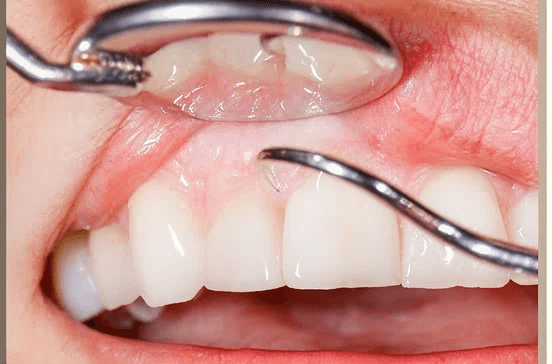
Gingivitis accounts for the overwhelming majority of gum bleeding in adults. It's inflammation of the gum tissue — specifically the tissue at and just below the gumline — caused by bacterial plaque that hasn't been adequately removed.
Plaque builds up wherever cleaning is insufficient: between teeth, along the gumline, around the edges of crowns or fillings. The bacteria it contains produce toxins. The body mounts an immune response. Blood flow to the gum tissue increases. The tissue becomes swollen, softer, and the blood vessels within it become fragile. A toothbrush or piece of floss touching this tissue ruptures those fragile vessels.
This is why bleeding gums often improve dramatically with 2 to 3 weeks of proper brushing and daily flossing. Remove the plaque, reduce the inflammation, and the gums stop bleeding.
What keeps gingivitis going despite regular brushing is usually calculus — hardened plaque that can't be removed at home. This keeps the bacterial presence at the gumline constant regardless of home hygiene. Professional scaling removes it.
Aggressive Brushing — A Different Problem
Not all gum bleeding is from inflammation. Some patients brush so hard, or with such a firm-bristled toothbrush, that they physically traumatise the gum tissue. This is called toothbrush abrasion.
The gum doesn't inflame the same way as gingivitis — it recedes. The gumline pulls back over time, exposing root surfaces, creating sensitivity, and eventually leaving the tooth more vulnerable to decay near the root.
If your gums bleed in distinct spots that correspond to where you brush most vigorously, and if your gums look like they're pulling away from certain teeth, aggressive brushing is the more likely explanation. Switch to a soft-bristled toothbrush and a gentler technique. If recession has already occurred, Dr. Suchi Singh at Renew Dental Clinic can assess whether intervention is needed.
Vitamin Deficiency
This is more common than most people expect.
Vitamin C deficiency directly impairs gum tissue integrity. Collagen — the structural protein that makes gum tissue firm — requires vitamin C for its synthesis. When vitamin C is insufficient, gum tissue becomes fragile and prone to bleeding. In severe deficiency this becomes scurvy; in milder deficiency it produces gum bleeding that looks like gingivitis but doesn't respond to better brushing.
In an Indian context this matters. Dietary vitamin C sources are available — amla, guava, citrus, capsicum, green leafy vegetables — but not consistently consumed in all households. Patients who rarely eat these foods and have persistent gum bleeding despite good oral hygiene are worth testing for vitamin C status.
Vitamin K deficiency is less common but relevant. Vitamin K is essential for blood clotting. When it's deficient, bleeding anywhere in the body — including gums — is prolonged and more pronounced. Green leafy vegetables are the primary dietary source.
Vitamin D deficiency affects bone density including the alveolar bone supporting the teeth, and is associated with higher rates of gum disease. Extremely common in North India where sun exposure is limited for large portions of the population.
Medications That Cause Gum Bleeding
Several widely prescribed medications affect gum bleeding in different ways.
1. Blood thinners (anticoagulants)
Warfarin, aspirin, clopidogrel, and newer anticoagulants all reduce the blood's ability to clot. Gum bleeding in patients on these medications may be more pronounced and longer-lasting than in others. Importantly, changes to oral health care should be coordinated with the prescribing physician — don't stop medication without medical advice.
2. Medications causing gum overgrowth
Certain blood pressure medications (calcium channel blockers like amlodipine and nifedipine), anti-seizure medications (phenytoin), and immunosuppressants (cyclosporine) cause gingival hyperplasia — the gum tissue grows abnormally. Overgrown gum tissue is harder to clean, accumulates plaque, and bleeds more readily. The solution involves both better hygiene and, in significant cases, surgical reduction of the excess tissue alongside discussion with the prescribing doctor about medication alternatives.
3. Chemotherapy
Many chemotherapy agents reduce platelet counts or directly damage oral mucosa, causing gum bleeding and mouth sores. Dental assessment before starting chemotherapy is recommended to minimise these complications.
Pregnancy Gingivitis
Hormone changes during pregnancy — particularly elevated oestrogen and progesterone — make the gum tissue dramatically more reactive to plaque. Even small amounts of plaque cause exaggerated inflammatory responses.
The result: gums that were fine before pregnancy become red, swollen, and bleed easily — sometimes profusely — during the second and third trimesters. This is called pregnancy gingivitis and it's extremely common.
It's manageable. Professional cleaning during pregnancy is safe and recommended. Improved home hygiene helps significantly. The gingivitis typically resolves after delivery, though in some patients residual gum changes persist and need ongoing management.
Occasionally, pregnancy produces a localised overgrowth on the gum — a pregnancy epulis — that bleeds dramatically even on light contact. This is benign but may need to be removed if it doesn't resolve after delivery.
Periodontitis — When the Problem Goes Deeper
If gum inflammation is left unmanaged — the plaque and calculus persist, the gingivitis worsens — it can progress to periodontitis. The infection extends below the gumline, and the body begins destroying the bone that supports the teeth in its attempt to fight the bacteria.
Periodontitis doesn't always cause dramatic bleeding, but it causes persistent bleeding alongside other symptoms: bad breath that brushing doesn't fix, teeth that feel slightly mobile or have shifted, gums that look lower on the teeth than they used to, and deep pockets around the teeth that trap food.
This is not manageable with home care alone. Scaling and root planing — deep professional cleaning below the gumline — is the treatment. Caught early, periodontitis can be stabilised. Left late, the bone loss becomes severe enough that teeth are lost.
Less Common Causes Worth Knowing
1. Blood clotting disorders
Haemophilia, von Willebrand disease, and low platelet counts from various causes can all present with easy gum bleeding alongside bleeding elsewhere (bruising easily, prolonged bleeding from small cuts).
2. Leukaemia
Gum bleeding is an occasional early sign of certain leukaemia types, particularly acute myeloid leukaemia. The mechanism is a dramatic reduction in platelet count. This is uncommon, but gum bleeding accompanied by unexplained fatigue, pallor, fever, or bruising should prompt medical evaluation, not just a visit to the dentist.
3. Poorly controlled diabetes
Blood glucose dysregulation impairs the immune response to oral bacteria and affects gum tissue healing. Gum disease is significantly more prevalent and severe in people with uncontrolled or poorly managed diabetes. The relationship runs both ways — periodontitis also makes blood glucose harder to control.
How to Tell What's Causing Your Gum Bleeding
A few patterns that help distinguish causes
Widespread bleeding around the gumline of multiple teeth, improves with better brushing and flossing → Gingivitis. Address with improved home hygiene and professional cleaning if it doesn't resolve.
Bleeding at specific teeth where gums have pulled down → Gum recession from aggressive brushing. Switch to a soft toothbrush and gentler technique.
Bleeding that doesn't improve despite consistently good hygiene → Possible calculus, vitamin deficiency, or medication effect. Needs a dental assessment.
Bleeding in specific isolated spots that are swollen and reddish-purple → Possibly localised periodontitis or a specific dental issue at that site. Needs assessment.
Bleeding that is prolonged, heavy, or occurs spontaneously → Needs dental and possibly medical assessment for systemic causes.
Get Your Gum Bleeding Properly Assessed
At Renew Dental Clinic in Sector 47, Noida, gum assessment is part of every routine check-up. Dr. Suchi Singh examines pocket depths, calculus deposits, gum tissue colour and texture, and bone levels on X-ray — giving a complete picture of what's driving the bleeding rather than treating it symptomatically.
If you've had bleeding gums for more than a few weeks, or if improved home hygiene hasn't made a difference, a professional assessment is what's needed next.
To book, call (0120) 498-8333.
Monday–Saturday 10:30 AM – 8:00 PM | Sunday 11:00 AM – 2:30 PM.