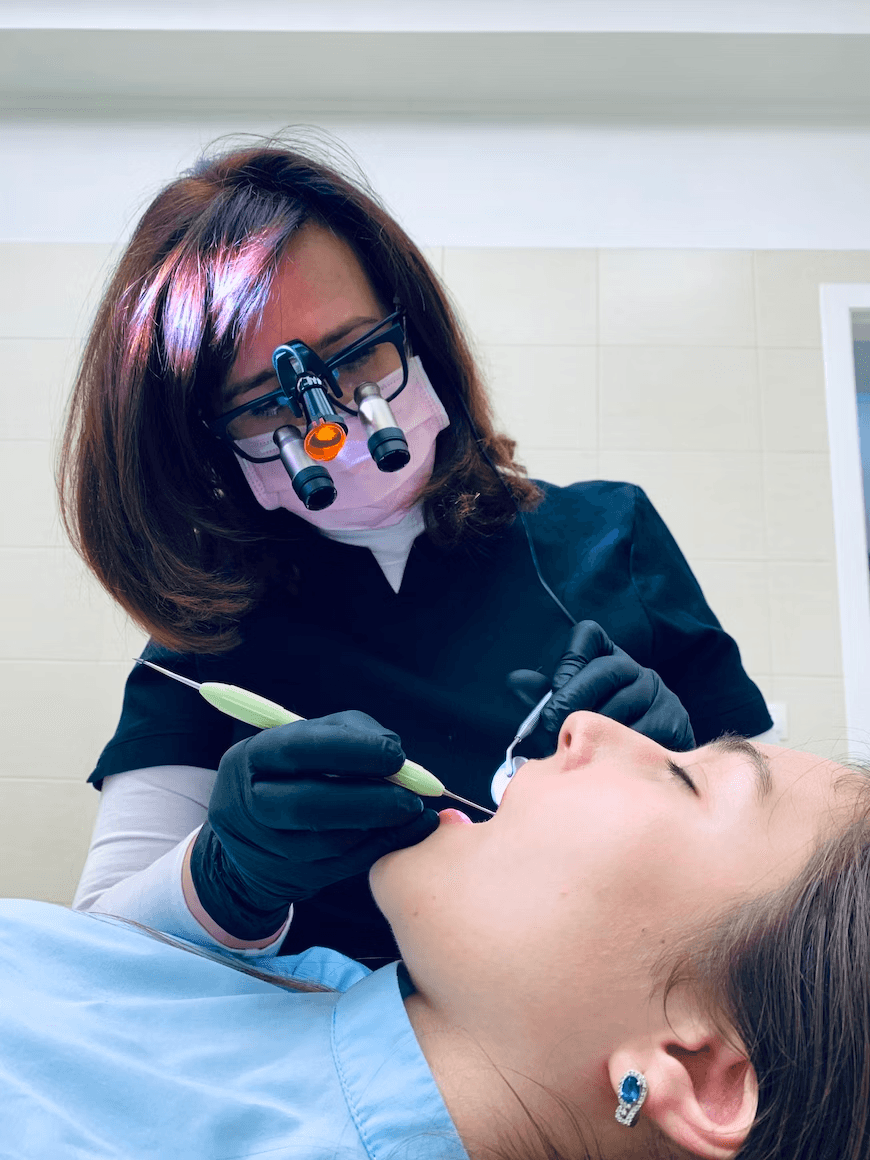
How to Stop Gum Bleeding at Home — What Works and What Doesn't
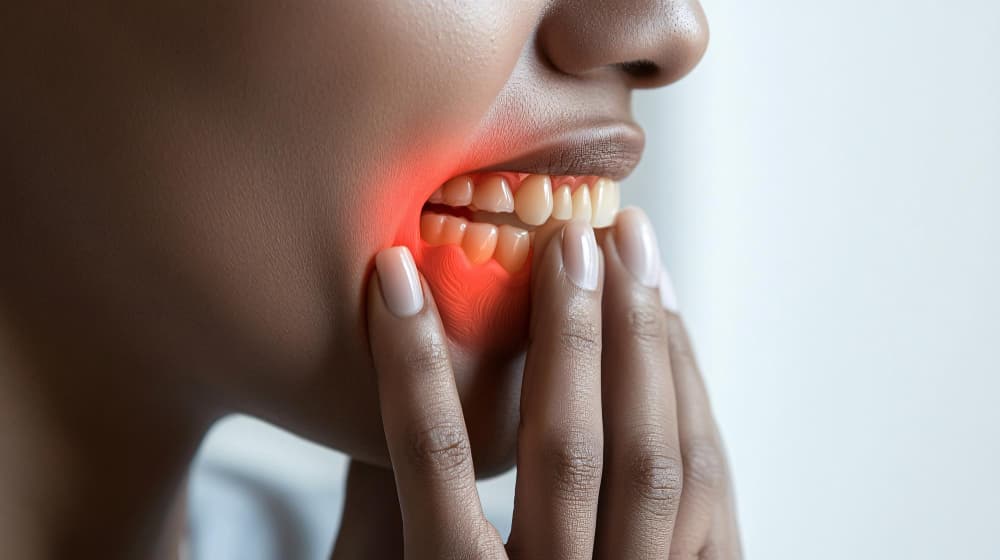
Closeup of person clutching painful jaw in bedroom setting
Gums bleeding when you brush is alarming the first time. By the fifth or sixth time, most people start to normalise it — and that's exactly when the problem tends to quietly get worse.
Bleeding gums are not normal. They're a signal that something in the gum tissue is inflamed, and that inflammation has a cause that needs to be addressed. Home remedies can manage some aspects of gum bleeding effectively. But they're not a substitute for understanding what's driving it in the first place.
Here's what actually helps, what doesn't, and what the bleeding might be telling you.
Why Gums Bleed
Healthy gum tissue is firm, pale pink, and doesn't bleed when touched. When gums bleed on brushing or flossing — or sometimes spontaneously — the most common explanation is gingivitis: inflammation of the gum tissue caused by plaque accumulation at the gumline.
The mechanism is simple. Bacteria in plaque produce toxins that irritate the gum tissue. The immune system responds with inflammation — increased blood flow, swollen tissue, fragile blood vessels. When a toothbrush bristle or floss touches these swollen, inflamed blood vessels, they rupture. That's the blood.
The good news: gingivitis is reversible. Remove the plaque, the inflammation settles, the gums stop bleeding. It typically takes 2 to 3 weeks of consistent, thorough oral hygiene to see meaningful improvement.
The complication: plaque that has hardened into calculus (tartar) cannot be removed at home. Calculus keeps driving the inflammation regardless of how well you brush. At that point, professional cleaning is what's needed — not just improved home care.
What Helps — Evidence-Based Home Measures
1. Improve Your Brushing Technique First
This sounds obvious. But most people who have bleeding gums are either brushing too aggressively — which damages gum tissue directly — or not cleaning the gumline at all. Both produce bleeding.
The correct approach: a soft-bristled toothbrush, held at 45 degrees to the gum, using short circular or vibrating strokes at the gumline rather than horizontal scrubbing. The bristles should just reach under the gum margin. Firm scrubbing doesn't clean better — it traumatises the gum and wears enamel.
If you're using a medium or hard toothbrush, switch immediately. Soft bristles are recommended by virtually every dental organisation for this reason.
2. Start Flossing — Even Though It Will Initially Bleed More
This is counterintuitive. People stop flossing when it causes bleeding. The opposite is actually needed.
Gums that haven't been flossed are chronically inflamed from undisturbed plaque between teeth. When flossing begins, the fragile inflamed vessels bleed — which is alarming. But within 2 to 3 weeks of consistent daily flossing, the inflammation reduces, blood vessel integrity returns, and the bleeding stops.
Patients who stop flossing because it bleeds are removing the intervention that would have fixed the problem.
Exception: if flossing causes heavy bleeding that doesn't stop quickly, or if gums look very swollen and dark red, get a professional assessment before proceeding.
3. Salt Water Rinse
Warm salt water — half a teaspoon of salt in a glass of warm water, rinsed for 30 to 60 seconds after meals — is genuinely useful. Salt has mild antimicrobial properties and reduces gum inflammation. It doesn't replace brushing, but it's a useful addition during the weeks when gums are actively healing.
Don't use hot water. Don't make it stronger than a mild saline — concentrated salt can irritate already-inflamed tissue.
4. Chlorhexidine Mouthwash (Short-Term)
Chlorhexidine gluconate mouthwash (available at pharmacies, typically 0.2% in India) is the most effective antibacterial mouthwash for gum disease. It significantly reduces bacterial counts in the mouth and is frequently recommended by dentists for patients with active gum inflammation.
However, it's not a long-term solution. Chlorhexidine stains teeth brown with extended use, alters taste, and can affect the oral microbiome if used indefinitely. It's most useful as a 2 to 4-week adjunct while improving brushing and flossing habits, not as a permanent substitute for mechanical cleaning.
5. Vitamin C — If Deficient
Vitamin C deficiency directly causes gum bleeding. The collagen that makes gum tissue firm and resilient requires vitamin C for its synthesis. Severe deficiency produces scurvy; milder deficiency produces fragile, bleeding gums without the other scurvy symptoms.
In India, where diets vary considerably and vitamin C-rich foods aren't always consistently consumed, this is worth considering. Adding amla, guava, citrus fruits, or capsicum to the diet — or a vitamin C supplement — can make a meaningful difference if deficiency is contributing.
This isn't a substitute for addressing the plaque problem, but it matters.
What Doesn't Actually Help
Pressing the gums to stop the bleeding: Bleeding from inflamed gums stops on its own within seconds to a minute. Pressing doesn't speed this up and can irritate the tissue further.
Brushing less to avoid the bleeding: Brushing less allows more plaque to accumulate, which worsens the inflammation. The correct response to bleeding gums is better cleaning technique, not less cleaning.
Oil pulling as a replacement for brushing/flossing: Oil pulling has mild antibacterial properties and may reduce bacterial load somewhat. It does not remove calculus, does not clean below the gumline, and is not a substitute for the mechanical cleaning that brushing and flossing provide. As an addition, fine. As a replacement, no.
Turmeric gel or paste: Turmeric contains curcumin, which has anti-inflammatory properties in laboratory studies. Clinical evidence for turmeric reducing gum bleeding in humans is limited. It may have some benefit as a gum massage ingredient, but the evidence doesn't support using it instead of fluoride toothpaste.
Situations Where Home Care Is Not Enough
Home measures can reduce gum bleeding from early gingivitis. They cannot address:
1. Calculus (tartar) deposits
Once plaque has hardened, no home product removes it. The inflammation it drives persists until a dentist or hygienist scales it away.
2. Periodontitis (advanced gum disease)
If the infection has spread below the gumline and bone loss has begun, deep cleaning (scaling and root planing) is required. Home care improves the situation but doesn't reverse the bone loss or adequately clean pockets deeper than 3 to 4 mm.
3. Bleeding from other causes
Gum bleeding that occurs without clear cause — spontaneously, in large amounts, or in unusual patterns — warrants medical assessment. Blood thinners, platelet disorders, leukaemia, and certain vitamin deficiencies can all present with gum bleeding.
4. Gum disease during pregnancy
Pregnancy hormones amplify gum tissue sensitivity to plaque dramatically. Even minimal plaque causes significant bleeding in many pregnant women (pregnancy gingivitis). Professional cleaning during pregnancy is safe and important — it's not something to manage with salt water alone.
The 2-Week Test
If your gums are bleeding and you haven't been cleaning well, try this properly for 2 weeks: soft-bristle brush at the gumline twice daily, floss once daily, salt water rinse after meals. Track whether the bleeding reduces.
If it's significantly better after 2 weeks — and keeps improving — you're managing early gingivitis successfully with improved home care.
If it's not better, or if there are other symptoms (swelling, dark red gums, loose teeth, persistent bad breath), a professional assessment at Renew Dental Clinic in Sector 47, Noida is the next step.
When to See a Dentist — Not a Maybe, a When
Book an appointment if:
- Bleeding hasn't improved after 2 to 3 weeks of genuinely improved oral hygiene
- Gums bleed spontaneously, not just on brushing
- Gums look significantly swollen, dark red, or are pulling away from the teeth
- You have diabetes — the relationship between diabetes and gum disease runs in both directions, and bleeding gums in diabetic patients need prompt professional care
- You are pregnant — pregnancy gingivitis is common and professional cleaning is the appropriate intervention
- There's persistent bad breath alongside the bleeding
To book a gum assessment at Renew Dental Clinic, Sector 47, Noida, call the number on the website.
Monday–Saturday 10:30 AM – 8:00 PM | Sunday 11:00 AM – 2:30 PM.