By Renew Dental ClinicPublished on
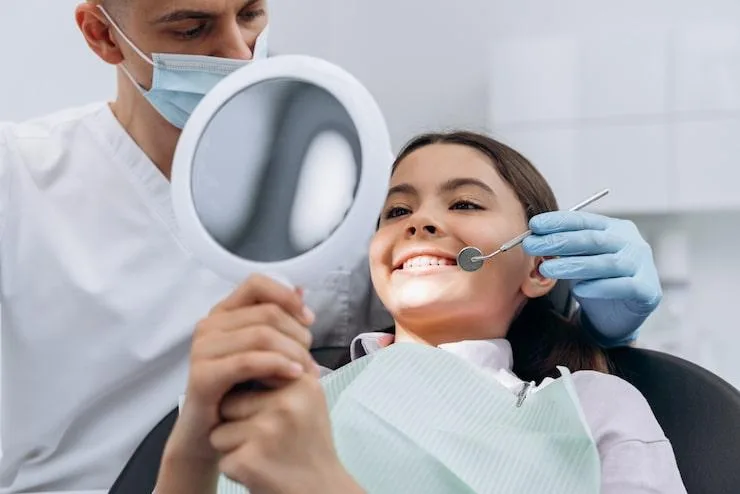
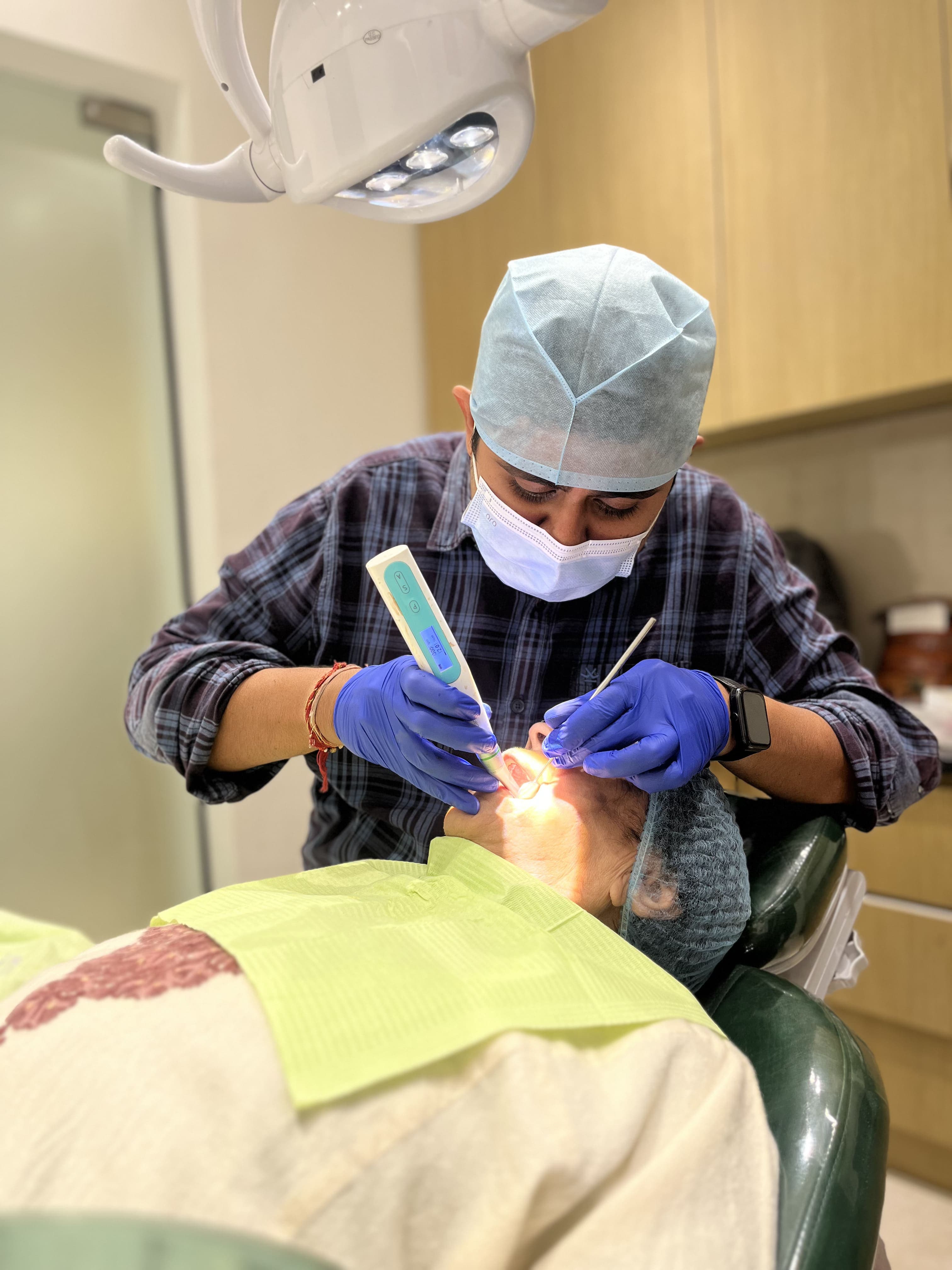
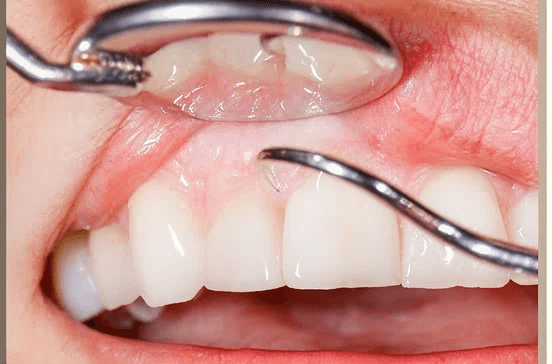
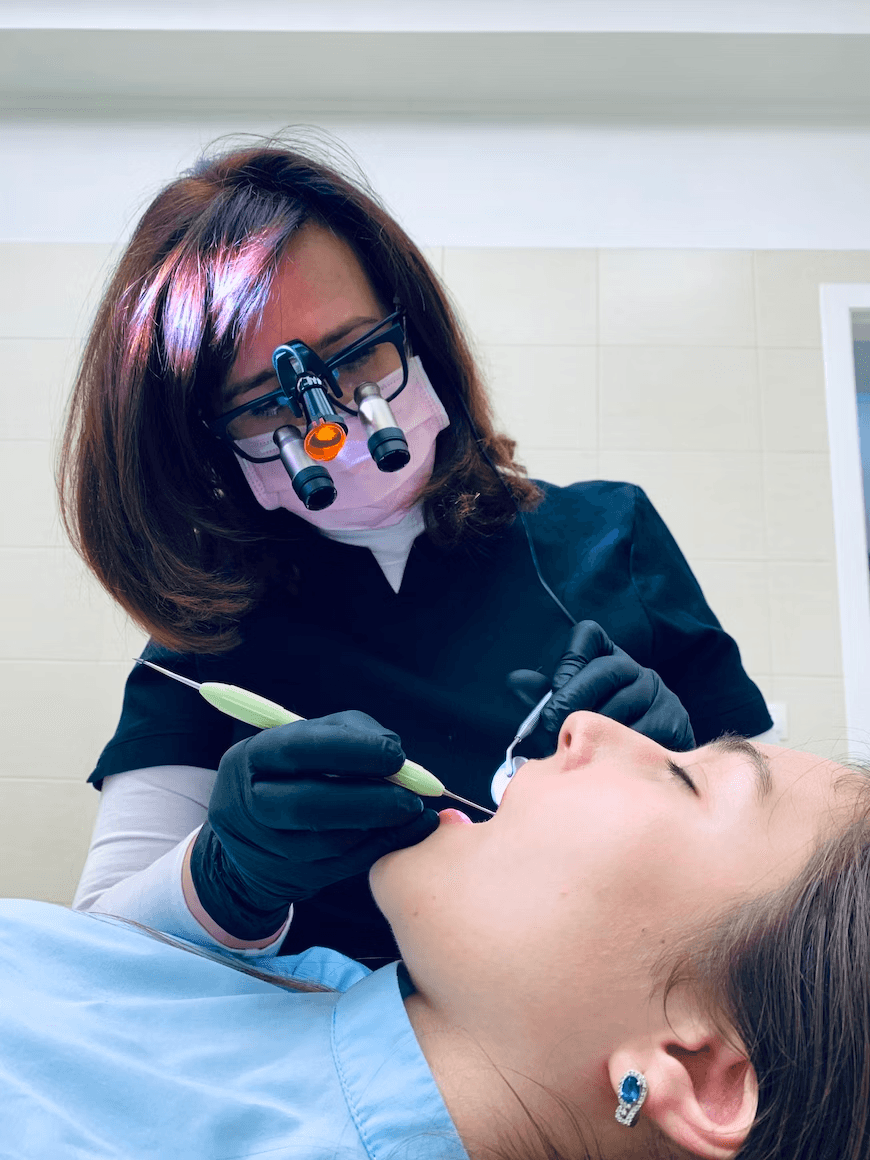
A girl getting her teeth examined by a dentist to maintain her oral health
Here's an unusual question: have you ever been told what your mouth is supposed to look like when everything is working as it should?
Most dental conversations happen when something is wrong. You come in with a toothache, leave with a treatment plan. You come in for a clean, leave with a scale done. Nobody describes the baseline.
Without knowing what healthy looks like, it's very hard to notice when something has changed. And in dental health, noticing early is the thing that keeps a small problem from becoming a complicated one.
Natural teeth are not bright white. That's worth saying plainly because the marketing for dental products has created an unrealistic standard that causes many patients to seek whitening when they don't need it.
Healthy natural teeth range from light yellow to light grey to a warm cream or ivory tone. The shade varies significantly between individuals and is largely determined by genetics — specifically, the natural colour of the dentine layer beneath the enamel.
Enamel itself is semi-translucent. The overall tooth colour you see is a combination of the slightly bluish-white of the enamel and the warmer yellow of the dentine beneath it. The thinner the enamel, the more the dentine colour dominates.
What's not normal: Teeth that are darkening — either uniformly (usually enamel thinning, staining, or ageing) or in isolated spots (possible decay, internal damage, or calculus). A single tooth that's significantly darker than its neighbours without a clear explanation (like an old trauma) deserves assessment.
Healthy enamel is smooth, slightly translucent, and has a gentle sheen. When light hits a healthy tooth surface, it reflects consistently.
The biting edges of healthy front teeth are slightly uneven — small projections called mamelons are visible in recently erupted young permanent incisors, though these usually smooth with normal wear. The cusps of healthy molars are defined and pointed, not flat.
What's not normal: Rough or pitted enamel surfaces. Flat cusp tips that were previously defined (wear from grinding). Cupping — small hollows in the centre of molar biting surfaces (acid erosion). Visible cracking or chipping beyond normal minor surface irregularities.
Teeth don't need to be perfectly straight to be healthy. But they should meet reasonably well when biting, and shouldn't be so crowded that cleaning is genuinely impossible.
Functionally important: Upper teeth slightly overlapping lower when biting together. Some variation is normal. Significant gaps, open bites, or deep overbites affect function and cleaning ability — worth discussing with a dentist even if they've been there for years without causing obvious problems.
This is where most patients have no reference point. Gums are not something people look at carefully or regularly. They should.
Healthy gum tissue is pale pink. It's often described as salmon pink. The specific shade varies with skin tone — patients with darker skin pigmentation may have naturally darker gum tissue, including areas of brownish or dark pigmentation that are entirely normal.
What's not normal: Red, bright pink, or purplish gum tissue indicates inflammation — gingivitis. The redder and more swollen the gum appears, the more active the inflammation.
Healthy gums have a slightly stippled texture — like an orange peel. This characteristic texture reflects healthy, firm connective tissue.
What's not normal: Gums that appear smooth and shiny are typically inflamed and oedematous (swollen with fluid). This smoothing of the natural stippling is an early, visible sign of gingivitis.
Healthy gums fit snugly around each tooth. At the gumline, there's a small crevice — the sulcus — that's typically 1 to 3 mm deep in health. You can't see this depth without a probe, but you can see the position of the gumline.
What's not normal: Gums that look like they're pulling away from the teeth — lower than they should be, with root surfaces becoming visible. This is gum recession, which can result from aggressive brushing, gum disease, or a combination. Recession is not reversible without professional intervention; once the gum has moved back, it doesn't return on its own.
Conversely, gums that appear to be growing over the teeth, covering more of the tooth surface than expected, indicate gingival enlargement — which has several causes including medications and systemic conditions.
Healthy gums do not bleed. Not on brushing, not on flossing, not when eating something firm. If you touch a healthy gum firmly with a finger, nothing happens.
This is worth emphasising because many patients normalise gum bleeding — "oh, my gums always bleed a bit when I brush." Normal healthy gums don't bleed. Bleeding always indicates inflammation, which has a cause.
The soft tissues of the mouth should be uniformly pink (with individual pigmentation variations), moist, smooth, and without any unusual patches, lumps, or sores.
The tongue: Slightly rough from papillae. Mild whitish coating in the morning is normal (overnight bacterial accumulation). Deep white coating, smooth and sore-looking patches, or any patch that doesn't shift are abnormal.
The inner cheeks: Smooth pink mucosa. Occasional pale horizontal line at the point where the upper and lower teeth close (linea alba) is a normal variant.
The palate: Firm ridged tissue at the front, smooth further back, consistent pink. Any unusual colour, swelling, or texture deserves attention.
This one is subjective but worth describing. Healthy breath is neutral. Not noticeably fresh — mint is artificial — but not obviously unpleasant either.
A characteristic pattern in a healthy mouth: mild morning breath that resolves after brushing and breakfast. No persistent bad breath throughout the day despite normal eating.
What's not normal: Persistent bad breath (halitosis) that doesn't respond to brushing and tongue cleaning. This almost always has a specific cause — gum disease, a dental infection, dry mouth, post-nasal drip, or occasionally a systemic condition. It's worth investigating, not just masking with mouthwash.
Opening the mouth should feel smooth and comfortable, with both sides opening symmetrically. Chewing should be painless on all teeth. The jaw joint (just in front of the ear on each side) shouldn't click, pop, or ache.
Mild occasional clicking that's been present for years and causes no pain or restriction is common and often benign. New clicking, clicking that's getting louder or more frequent, or clicking with pain warrants assessment.
Look at your gums and teeth in a mirror regularly — once a month is a reasonable frequency. Use the descriptions above as a reference. Notice changes.
The things worth tracking over months:
Changes over months — a gumline that seems lower, a new dark area on a tooth, sensitivity that's increasing — are the signals that prompt a dental visit between routine checks.
The best version of this is having Dr. Suchi Singh at Renew Dental Clinic take clinical baseline photographs and periodontal measurements at a routine check-up. With this on record, any progression at future appointments is measurable rather than subjective.
Most patients don't have this. It's one of the most practically useful things a regular dental check-up provides — a documented picture of where you are, against which future visits can compare.
To book a check-up and establish your baseline at Renew Dental Clinic, Sector 47, Noida, call (0120) 498-8333.
Monday–Saturday 10:30 AM – 8:00 PM | Sunday 11:00 AM – 2:30 PM.
 Copy
Copy
Two minutes sounds simple. Most people brush for 45 seconds. Here's what the research says...
03 Aug 2026
by Renew Dental Clinic

Some dental symptoms can wait for a routine appointment. These can't. This guide identifies the...
29 Jul 2026
by Renew Dental Clinic
You don't need a dentist to do a basic check of your oral health. This...
28 Jul 2026
by Renew Dental Clinic
Swelling after wisdom tooth surgery is normal — but how much is normal, when should...
16 Sept 2026
by Renew Dental Clinic
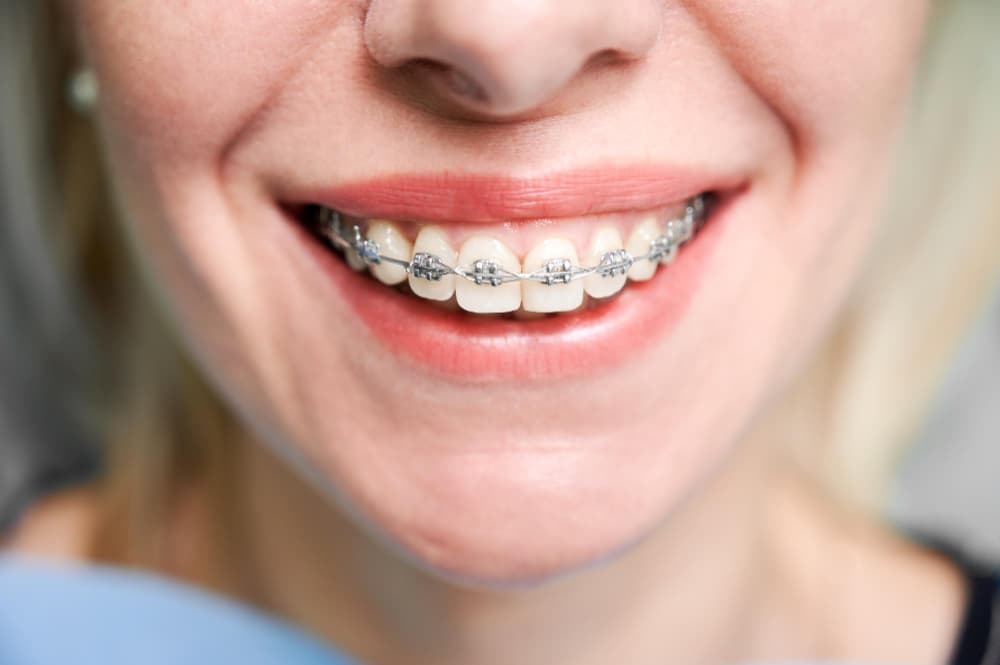
Planning to get braces in Noida? This complete guide explains how braces work, the different...
18 May 2026
by Renew Dental Clinic
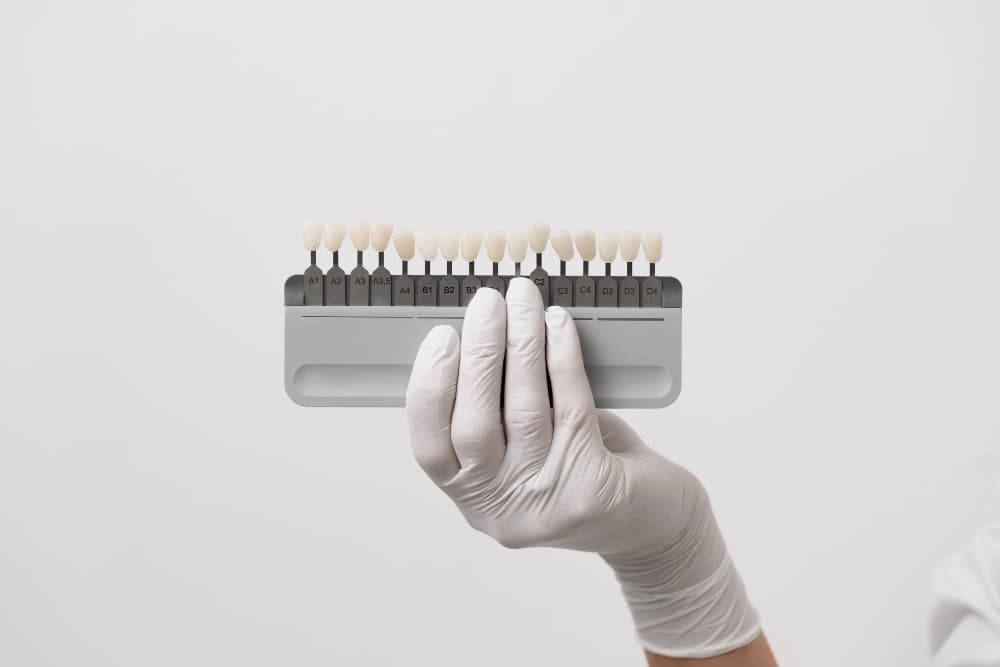
Considering dental veneers in Noida? This complete guide explains what veneers are, the types available,...
20 May 2026
by Renew Dental Clinic

Is the twice-daily brushing rule backed by evidence or just dental industry tradition? This guide...
15 Jul 2026
by Renew Dental Clinic

Having a healthy mouth for life is not just about having a bright smile; it...
03 Sept 2025
by Renew Dental Clinic

A gummy smile isn't one problem but several that look alike. Learn what drives excess...
19 Oct 2026
by Renew Dental Clinic

Find out all about dental veneers, such as types, advantages, price, and upkeep suggestions. Find out how veneers can revolutionize your smile and increase confidence.
16 Sept 2025
by Renew Dental Clinic

Explore the pros, cons, costs, durability, and suitability of teeth whitening and veneers. Learn which cosmetic dental procedure is best for your unique smile.
27 Jun 2025
by Renew Dental Clinic
Teeth reshaping removes small amounts of enamel to refine tooth shape, with no injections and...
13 Oct 2026
by Renew Dental Clinic
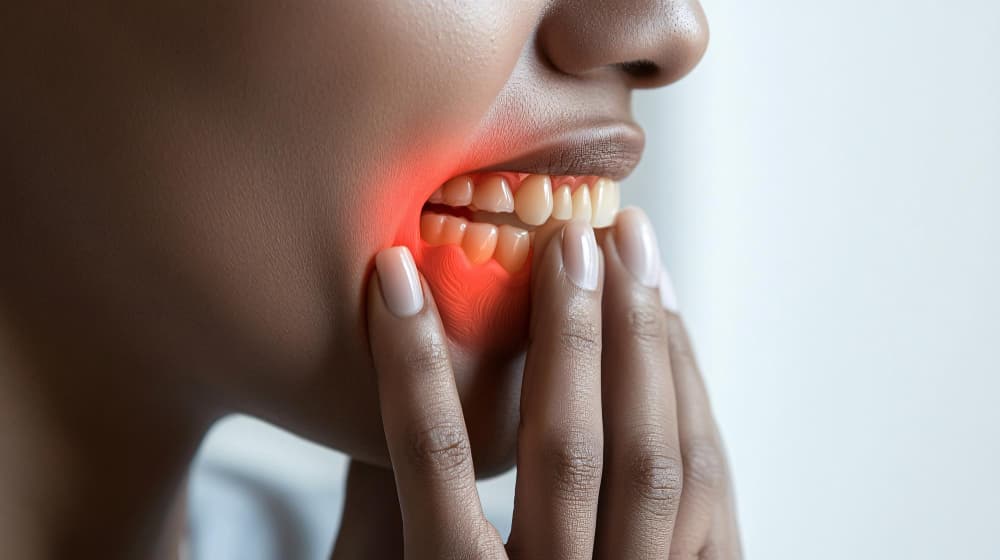
The staining is just the beginning. This guide explains what tobacco — cigarettes, bidi, paan...
22 Jul 2026
by Renew Dental Clinic

Want a long-lasting white smile? Discover five simple steps to keep white teeth after tooth whitening, from diet adjustment to oral health and dentist-approved tips.
03 Oct 2025
by Renew Dental Clinic

Curious about laser teeth whitening in Noida? This guide explains how the procedure works, who...
15 May 2026
by Renew Dental Clinic
Explore More
Discover how thousands of patients trust Renew Dental Clinic with their smiles.
Experience was impeccable services are Immaculate, satisfaction was 100%. Really admire & distinguished about doctor is her care for the patient regular follow up availability on what's App her response is really appreciable. Professionally sound confident responsible doctor she is. Visited her for root canal treatment went with a pain & distress came back with a smile and sense of relief. I should say if you have any dental related problem, she is the one stop solution for the same. Guys what you guys waiting for just book and appointment and feel relaxed as you are in the safe hands. Thank you, Mam, for such wonderful experience and restoring my smile back. You are an Angel.
I had an outstanding experience at this dental clinic in Sector 47, Noida. I opted for Basel/Cortical implants, and the entire treatment was started and completed in just 5 days, beginning on 2nd January. The efficiency and expertise of the doctor truly amazed me - highly competent, reassuring, and deeply committed to patient care.
FULLY SATISFIED WITH THE SERVICES PROVIDED BY DR.RENU TANWAR.
Best dental clinic in Noida
I am getting my dental treatment done from here and my experience has been excellent. Dr. Suchi is professionally very competent and provides excellent treatment in a very soothing and comforting environment. She explains the problems fully and provides the best possible options. My RCT was done in one sitting only. The crown provided is also very snug and comfortable fitting. Her team is also very competent and helpful. They do necessary follow up keep a good liaison. Over all a great experience. Thank you Dr. Suchi and team.
Excellent facilities and infrastructure ,
Very impressed with the quality of service. The clinic is clean, modern, and organized. The staff is friendly, and the doctor explained everything in detail. Great experience from start to finish.
Excellent doctor who gives right advice and treatment
I had a very good experience at Renew Dental Clinic during my implant and RCT treatment. The doctors and staff were extremely kind, supportive, and professional throughout the entire process. What I appreciated the most was their care and attention towards patient comfort — the treatment was smooth and almost painless.
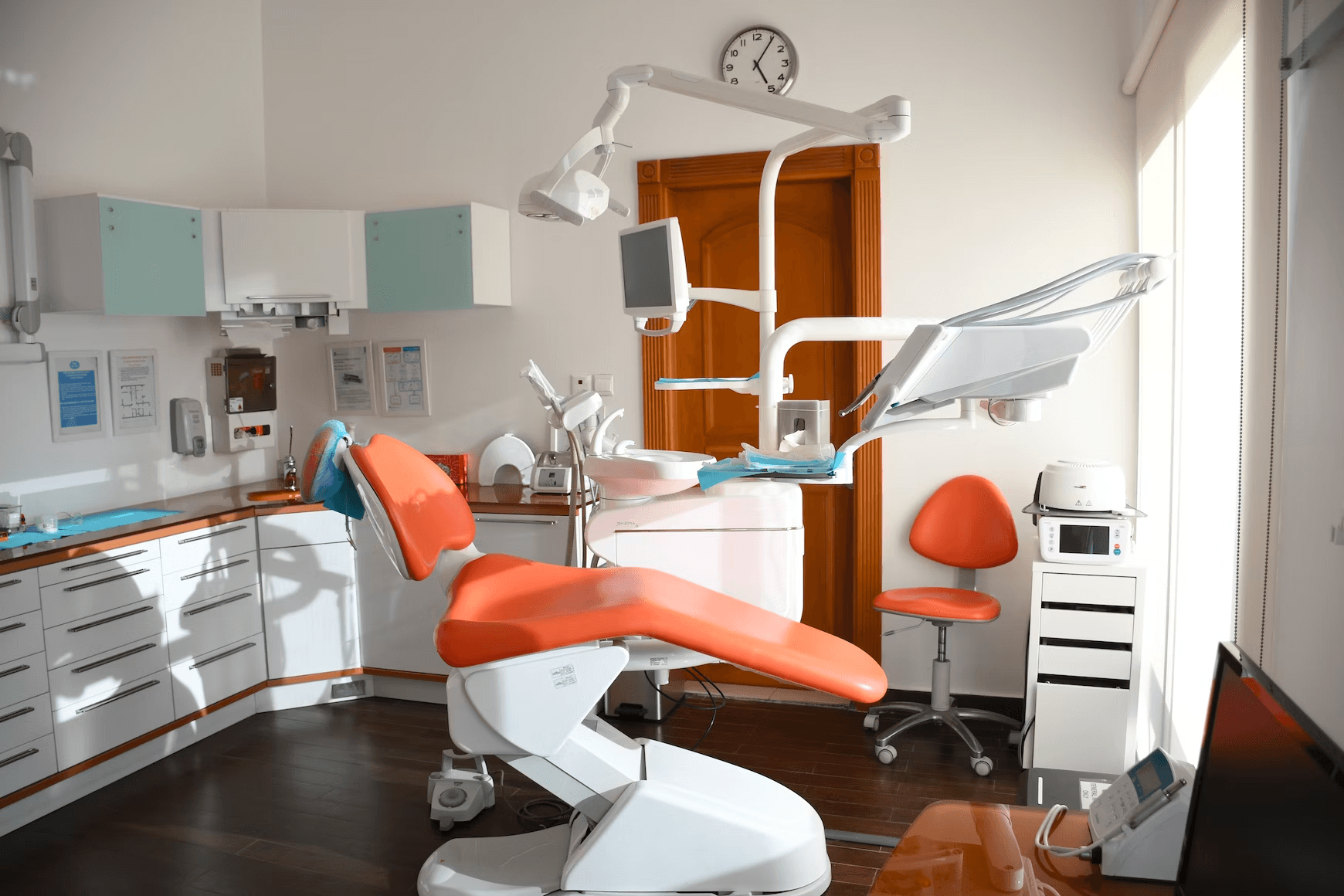
A glimpse into our modern dental clinic, advanced technology, and patient-friendly environment at Renew Dental.
Explore our thoughtfully designed clinic spaces built to provide comfort, cleanliness, and a calming experience for patients of all ages.
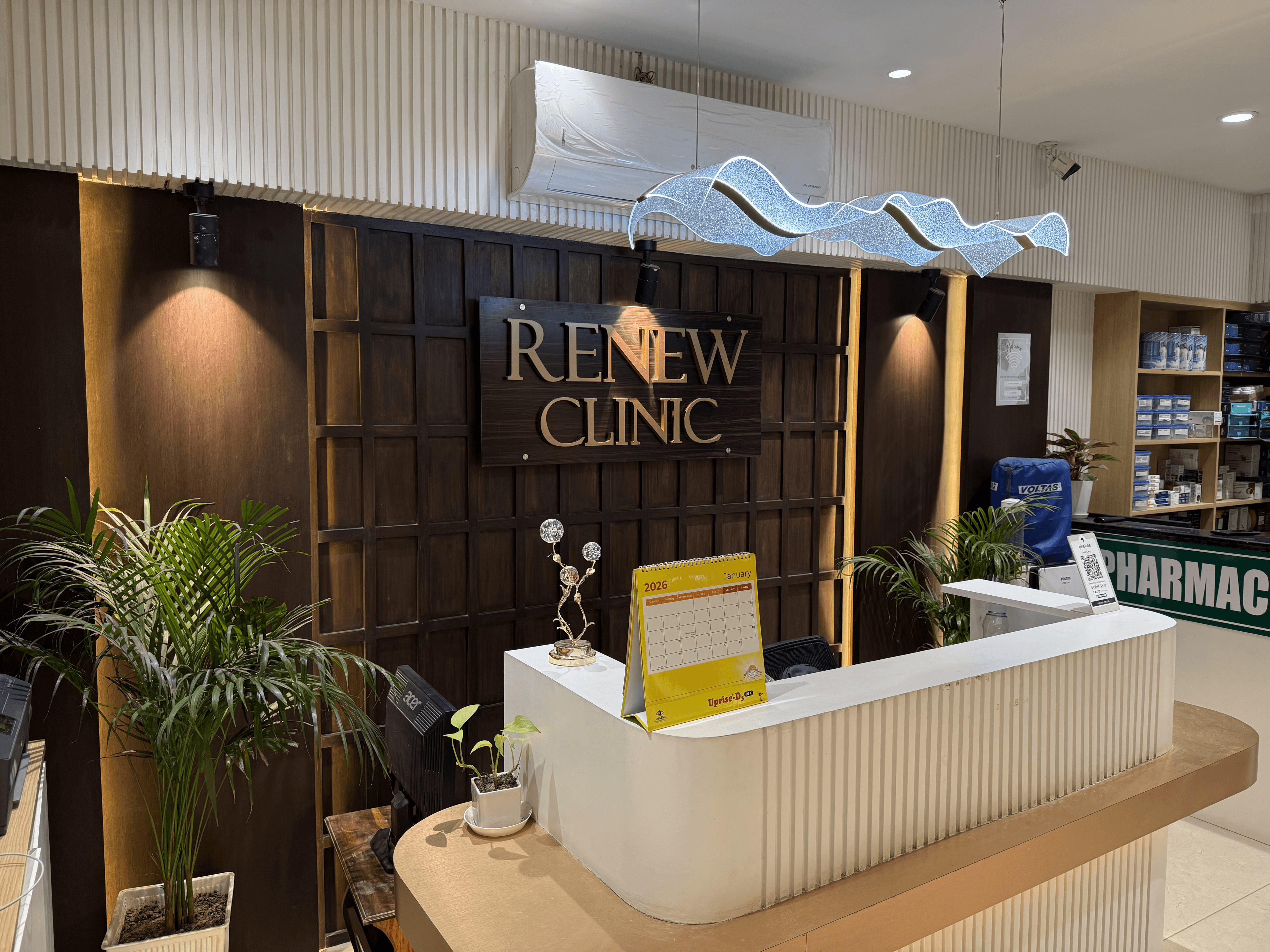
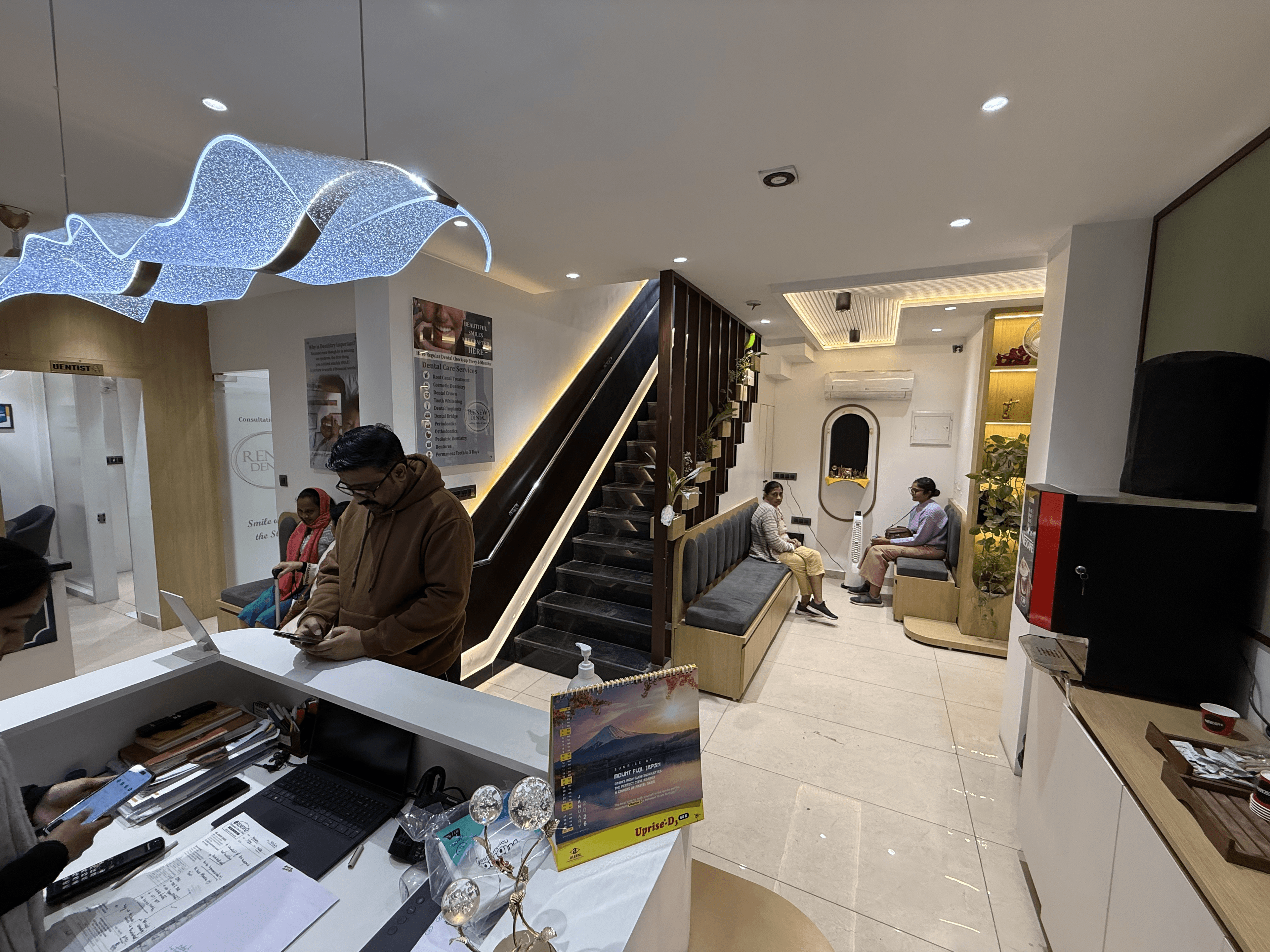

Best Dentist in Noida
Renew Dental Clinic located in Noida, Sector 47, is one of the leading dental clinics. Founded by Dr. Suchi Singh who is widely regarded as one of the best dentists in Noida, the clinic is committed to delivering personalised and high-quality dental care. Dr. Suchi Singh focuses on customised treatment plans designed around each patient’s unique needs, ensuring advanced, comfortable and reliable dental care at Renew Dental Clinic.

Your Trusted Dental Experts

Complete Dental Care

Friendly Dental Space

No Hidden Charges
Two trusted dental clinics in Noida — Renew Dental (Sector 47) and Tooth & Truth (Sector 34) — for gentle, modern care.

Renew Orthopedic Clinic, A-321, Basement Floor, Next to Mother Dairy Store, Sector 47, Noida, Uttar Pradesh 201303
 +91 99710 35300
A-98/A, Block A, Sector 34, Noida, Uttar Pradesh 201307
+91 99710 45002© 2026. All rights reserved | Designed and Developed by Zarle Infotech