Smoking and Your Teeth — What Tobacco Does Beyond the Staining
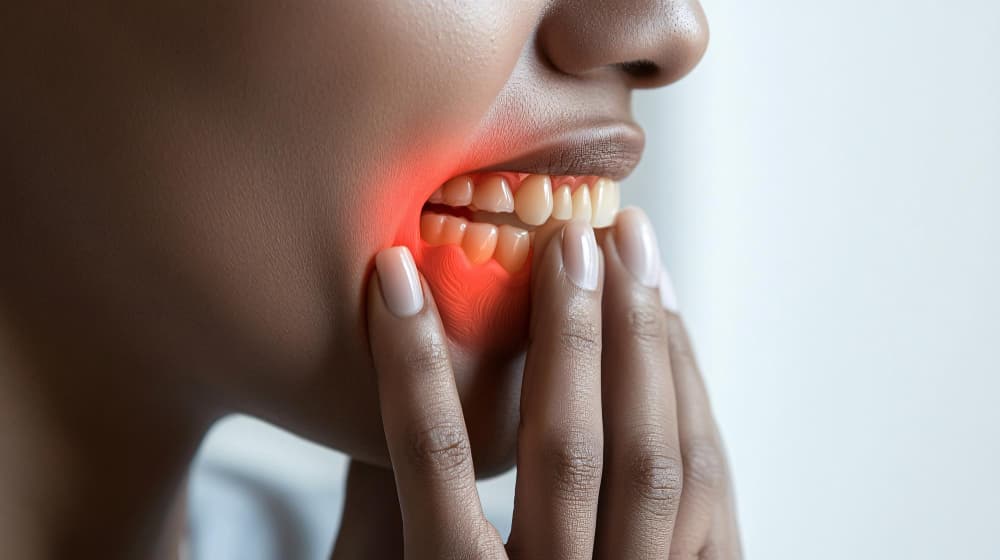
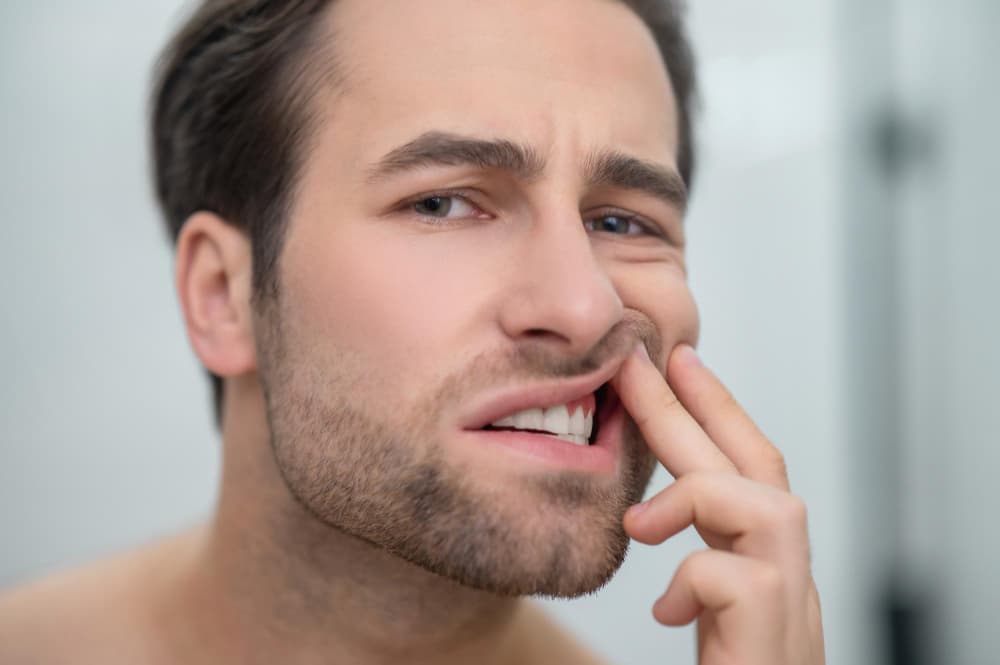
Closeup of person clutching painful jaw
Stained teeth are the visible consequence of tobacco use. Every dentist sees them — the yellowish-brown deposits on the inner surfaces of upper front teeth, the darkening around the gumlines, the general dullness that no routine cleaning fully reverses. But the staining is cosmetic. The more serious damage is happening where you can't see it.
What Tobacco Does to Gum Tissue
This is the conversation most tobacco users haven't had with a dentist, and it's the most clinically significant.
Tobacco — in any form — profoundly suppresses blood flow to the gum tissue. Nicotine causes vasoconstriction: the blood vessels supplying the gums narrow. The gum tissue receives less oxygen, fewer immune cells, and reduced nutrient delivery. Healing is impaired.
The clinical consequence that surprises most patients: smokers bleed less from their gums than non-smokers with equivalent gum disease.
This sounds like a benefit. It's actually the opposite. Gum bleeding is the primary warning sign of gingivitis. In a non-smoker, inflamed gums bleed when touched, which prompts them to see a dentist. In a smoker, nicotine-induced vasoconstriction masks this warning sign. The gum disease progresses silently, without the bleeding signal, until bone loss is already significant.
Studies consistently show that smokers have higher rates of periodontitis than non-smokers — not just slightly higher, but substantially. The risk increases with the number of cigarettes smoked and years of smoking. By the time a smoker presents with periodontitis symptoms, the disease is often at a more advanced stage than it would be in a non-smoker.
Bone Loss — The Consequence That Takes Teeth
Periodontitis destroys the alveolar bone — the bone that holds teeth in their sockets. As the bone recedes, teeth loosen. They shift. Eventually, without adequate bone support, they're lost.
Smoking impairs this process at every stage
- The immune response to periodontal bacteria is suppressed, allowing the infection to progress
- The healing response to treatment is reduced — scaling and root planing is less effective in smokers than non-smokers with equivalent disease
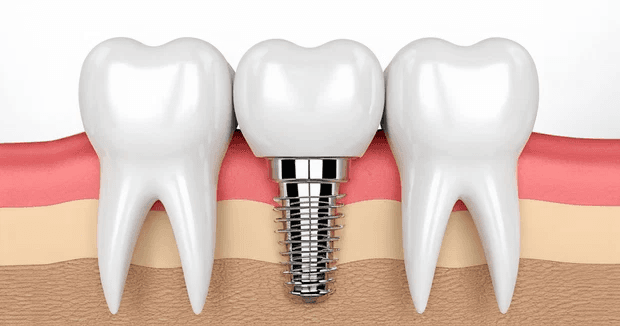
- The success rate of dental implants placed in smokers is measurably lower than in non-smokers, because osseointegration (the bone fusing with the implant) depends on good vascularity and healing
This last point has practical significance for patients who've lost teeth to smoking-related periodontitis and then consider implants. The same biological impairment that drove the tooth loss reduces the likelihood of implant success.
Oral Cancer Risk — The Conversation That Can't Be Avoided
India has one of the highest rates of oral cancer in the world. Tobacco use — particularly smokeless tobacco — is the primary driver.
Oral cancer can develop in any part of the mouth: the tongue, the floor of the mouth, the inner cheeks, the gums, the palate, and the lips. It frequently starts as a white patch (leukoplakia), a red patch (erythroplakia), or a non-healing ulcer that's been present for more than three weeks. Many patients ignore these signs for months before seeking assessment.
Smokeless tobacco in India — including gutka, paan masala, khaini, zarda, and tobacco-containing paan — carries a particularly high oral cancer risk. These products are held in the oral cavity for extended periods, delivering carcinogens directly and continuously to the mucosa. Submucous fibrosis — a pre-cancerous condition that progressively restricts the ability to open the mouth — is directly linked to areca nut use (which is present in most paan masala and gutka).
The combination of tobacco with areca nut amplifies the cancer risk beyond either alone.
Oral cancer in India is often diagnosed at advanced stages when prognosis is significantly worse. Early detection through regular dental examinations — including oral cancer screening — is what changes outcomes.
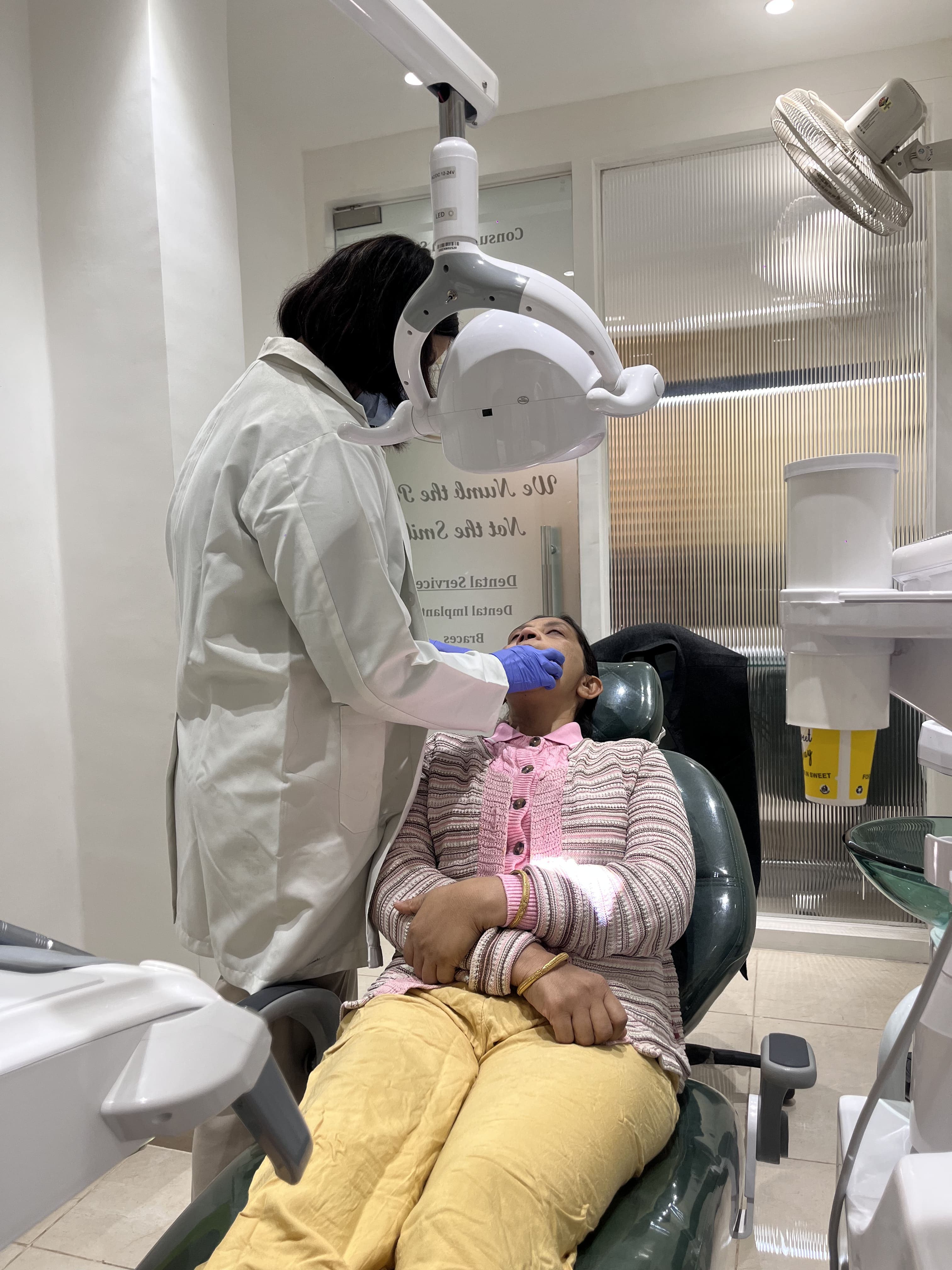
At Renew Dental Clinic in Sector 47, Noida, Dr. Suchi Singh includes an oral mucosal examination for every patient at every check-up. Patients who use tobacco in any form are specifically examined for early mucosal changes.
Dry Socket and Impaired Healing After Dental Procedures
Tobacco impairs healing in the dental context in a way that causes real, immediate problems.
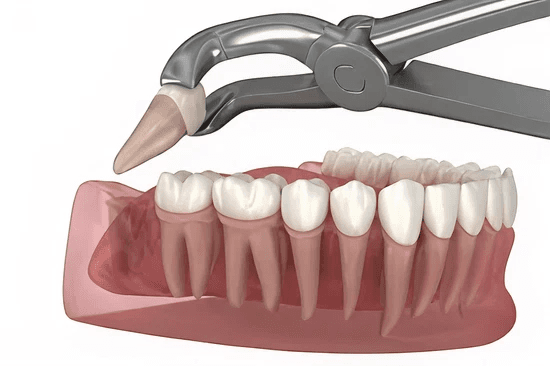
After tooth extraction, a blood clot forms in the socket — the foundation of healing. Nicotine constricts blood vessels and reduces clot formation. The act of smoking creates suction that can physically dislodge the clot.
When the clot dislodges, the result is dry socket — the bone and nerve are exposed, producing severe, throbbing pain that typically develops 2 to 4 days after extraction and doesn't respond to over-the-counter pain relief. Dry socket is significantly more common in smokers than non-smokers, with some studies showing 3 to 4 times the risk.
Dentists routinely advise patients to avoid smoking for at least 72 hours after any extraction. Most smokers find this very difficult. The consequence of not following this advice is predictable.
What Tobacco Does to Breath
Tobacco contributes to bad breath (halitosis) through multiple mechanisms. The smoke itself deposits sulfur-containing compounds throughout the mouth and airways. More significantly, tobacco-induced gum disease produces volatile sulfur compounds from the bacteria in periodontal pockets — the same compounds responsible for the characteristic smoker's breath that persists regardless of mouthwash.
Forms of Tobacco — All Problematic, Different Risks
Cigarettes and bidis: Tar and nicotine, smoke deposited throughout the mouth. Staining, gum disease, impaired healing, oral cancer risk.
Hookah (shisha): Often perceived as safer than cigarettes. It isn't. A typical hookah session is equivalent in smoke exposure to many cigarettes, with all the same oral health consequences.
Smokeless tobacco — gutka, paan masala, khaini, zarda: No smoke, but direct prolonged mucosal contact with carcinogens including tobacco-specific nitrosamines. High oral cancer risk. Associated with submucous fibrosis from areca nut content. Significant staining of teeth.
Electronic cigarettes and vaping: Less research than conventional tobacco products, but not harmless. Nicotine is still present — meaning the gum blood flow suppression and healing impairment effects are still in play. Some evidence for gum inflammation with e-cigarette use.
What Smokers Should Do Differently for Their Dental Health
Quitting tobacco is the most important thing a tobacco user can do for their oral health. This guide isn't the place to discuss cessation resources in depth — but if you're considering stopping, your GP can provide information on cessation support available in India.
If you're not stopping right now, these measures reduce the dental impact
More frequent professional cleaning. Smokers accumulate calculus faster than non-smokers, and the masked bleeding sign means gum disease can advance significantly between annual check-ups. Every 4 to 6 months rather than annually is appropriate for most smokers.
Oral cancer self-examination. Once a month, examine your own mouth with a mirror and torch. Look for white or red patches, lumps, non-healing sores, or areas that look different from the surrounding tissue. Anything that hasn't resolved after 3 weeks needs professional assessment.
Regular oral cancer screening at the dental clinic. This should happen at every check-up regardless.
Meticulous home oral hygiene. Soft-bristled brush, fluoride toothpaste, daily flossing. The reduced gum immunity from tobacco makes what's removed at home by brushing more important, not less.
Frequently Asked Questions
1. Can a dentist always tell if you smoke?
Almost always. The characteristic staining pattern, calculus distribution, gum tissue changes, and sometimes mucosal changes are consistent and recognisable.
2. Is chewing paan without tobacco safe for teeth?
Paan without tobacco still contains areca nut, which is carcinogenic in its own right and associated with oral submucous fibrosis. Betel leaf is mildly stimulant. It's not safe in the way tobacco-free implies.
3. If I switch from cigarettes to e-cigarettes, does my dental risk reduce?
Oral cancer risk may reduce. Gum disease risk from nicotine-mediated vasoconstriction remains. The overall oral health improvement of switching is real but not complete.
To book an oral health check-up at Renew Dental Clinic, Sector 47, Noida — including oral cancer screening — call (0120) 498-8333.
Monday–Saturday 10:30 AM – 8:00 PM | Sunday 11:00 AM – 2:30 PM.