How to Check Your Oral Health at Home — A Simple Self-Assessment Guide

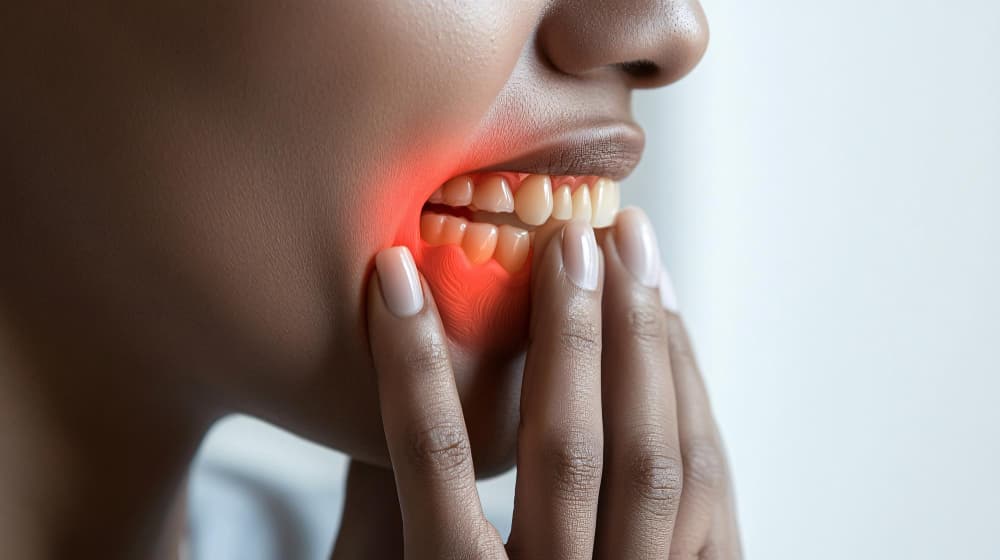
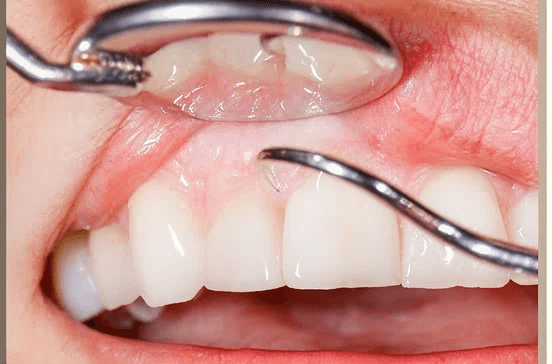
Smiling man's face.
Most people have no idea what their mouth actually looks like. They brush quickly twice a day without really looking, and they go years between dental visits assuming everything is fine because nothing hurts.
Pain is a late-stage signal in dental disease. The time to notice a problem is before it hurts — and you can catch a surprising amount with a torch, a mirror, and about three minutes of attention.
What You Need
A well-lit room or a torch. A small handheld mirror (or a dental mirror if you have one). Clean hands. Two to three minutes.
This isn't a diagnosis. It's a way to notice changes, catch things early, and know when to book an appointment rather than waiting for the next routine check-up. Anything concerning that you find here warrants professional assessment — not self-management.
Start With the Lips
Open your mouth and look at the lips first. They're part of the oral mucosa and occasionally show early signs of conditions that extend inward.
What's normal: Pink, smooth, moist lips. Minor dryness or chapping is common in dry climates (like Delhi NCR winters).
Watch for: Persistent sores at the corners of the mouth (angular cheilitis — often from candida or B12 deficiency). Any lump, thickening, or non-healing sore on the lip itself that's been present more than 2 to 3 weeks.
The Inner Cheeks and Gums
Pull each cheek gently outward with a finger and look at the inner surface under good light.
What's normal: Smooth, uniform pink or pale pink mucosa. Some people have naturally darker pigmentation of the oral mucosa, which is entirely normal and more common in people with darker skin tones.
Watch for:
- White patches that don't wipe away — these could be leukoplakia (a pre-cancerous change, particularly in tobacco users) or oral thrush (fungal overgrowth)
- Red patches that are persistent and unexplained
- Ulcers or sores — most are aphthous ulcers (canker sores) that heal within 10 to 14 days. Any sore that's been present for more than 3 weeks needs assessment
- Lumps or thickening in the cheek tissue
- Ragged or irregular areas where the tissue doesn't look smooth
For the gums specifically: healthy gums are pale pink (or have normal pigmentation variation), firm-looking, and fit snugly around each tooth. Look at the gumline.
Warning signs in the gums:
- Dark red, purplish, or very swollen gum tissue suggests active gingivitis
- Gum tissue that appears to have pulled away from the teeth, leaving roots exposed (recession)
- Any swelling on the gum near a specific tooth — particularly a raised, pimple-like bump (called a sinus or fistula, which drains infection from below)
- Calculus visible as yellowish or brownish hardened deposits along the gumline
The Teeth
Look at each tooth surface that you can see. This won't catch between-tooth decay — that requires X-rays — but surface cavities and significant damage are visible.
What's normal: Teeth are slightly off-white to cream. The colour varies naturally between individuals and darkens slightly with age. Slight variations in shade between teeth are normal.
Watch for:
- Dark spots on the biting surface of back teeth or on the smooth surfaces of teeth. Not all dark spots are cavities — calculus staining and food staining can look similar — but any new dark area warrants assessment
- White, chalky spots on the tooth surface, particularly in children — these are white spot lesions, the earliest sign of enamel demineralisation and early decay
- A visible hole or rough edge you can feel with your tongue
- Chips or cracks on the biting edges of front teeth
- Teeth that are shorter or flatter than they used to be — this suggests wear from grinding or acid erosion
- Yellow or brown staining concentrated along the gumline — likely calculus
- A dark tooth while surrounding teeth are normal — trauma, internal resorption, or nerve death can darken a single tooth
The Tongue
Stick the tongue out and look at the upper surface (dorsum) under a light.
What's normal: The dorsum has a slightly rough texture from the papillae. A thin whitish coating in the morning — especially if you haven't eaten yet — is normal and represents overnight bacterial accumulation.
Watch for:
- Thick white coating that doesn't reduce with tongue cleaning — may indicate oral thrush, particularly if you've recently had antibiotics
- Smooth, red, raw-looking patches that appear on the tongue and shift position over days — this is geographic tongue, a benign condition that causes mild soreness occasionally but is harmless
- A smooth, shiny, red tongue — can indicate nutritional deficiency (B12, iron)
- Any raised, white, red, or mixed patches that don't move and have been present for more than 2 weeks
Also look underneath the tongue by lifting it to the roof of your mouth.
Watch for under the tongue:
- Any lumps, bumps, or white patches
- Ulceration that's been present more than 2 weeks
The floor of the mouth is one of the higher-risk areas for oral cancer — particularly in people who use tobacco or alcohol.
The Palate and Back of the Mouth
Tilt the head back and use the torch to look at the roof of the mouth.
What's normal: Ridged tissue at the front (rugae), smooth pink palate further back.
Watch for: Any unusual colour change, swelling, or ulceration.
Look at the back of the mouth, toward the tonsils. Redness, swelling, or white deposits in the tonsillar area may indicate tonsillitis or other infection (though this is more medical than dental). Unusual growth or discolouration at the back of the palate or near the throat warrants professional assessment.
The Jaw and Bite
Close your teeth together and notice how they meet.
What's normal: Upper teeth slightly overlapping lower teeth, the midlines of upper and lower front teeth roughly aligned.
Watch for:
- A significant gap between upper and lower front teeth when back teeth are together (open bite)
- Lower teeth sitting in front of upper teeth (underbite)
- Significant deviation of the jaw when opening — it should open fairly straight
Also: gently press along the jaw joint just in front of each ear as you open and close your mouth.
Watch for: Clicking, popping, or pain at the joint, which can indicate temporomandibular joint (TMJ) issues.
Feel the muscles at the side of the jaw (masseter — the bulge you can feel when you clench). Tenderness here suggests jaw tension, possibly from grinding or clenching during sleep.
What to Do With What You Find
Findings that warrant booking a prompt dental appointment (within 1 to 2 weeks):
- Any sore, ulcer, or patch that's been present more than 3 weeks
- A visible dark spot or rough area on a tooth surface
- A visible swelling or bump on the gum near a tooth
- A tooth that's become sensitive or painful
- Significant gum swelling or recession that's changed recently
Findings that warrant mentioning at your next routine check-up but aren't urgent:
- Mild gum recession that's been stable for months
- Minor calculus visible at the gumline (schedule your next cleaning)
- Slight yellowing or staining
- Occasional mild jaw clicking without pain
Findings that warrant urgent assessment:
- Any ulcer or white/red patch that's been present more than 3 weeks — this is the threshold for oral cancer concern
- Swelling in the jaw or face alongside dental pain (possible spreading infection)
- Spontaneous, throbbing pain from a tooth
When Self-Assessment Has Its Limits
This exercise is useful for catching changes you can see. It doesn't replace professional examination.
X-rays detect between-tooth decay, bone levels around teeth, root tip infections, and impacted teeth — none of which are visible in a mirror. A periodontal probe measures pocket depth below the gumline. An experienced dentist's eye sees patterns in enamel wear, gum tissue texture, and mucosal change that a patient looking in a mirror won't recognise.
Regular check-ups at Renew Dental Clinic, Sector 47, Noida every 6 months, combined with this kind of monthly self-assessment, provides the best possible chance of catching problems at the earliest treatable stage.
To book a check-up, call (0120) 498-8333.
Monday–Saturday 10:30 AM – 8:00 PM | Sunday 11:00 AM – 2:30 PM.