By Renew Dental ClinicPublished on
Smiling man's face.
Standing in front of thirty toothbrush options at a pharmacy is not the moment to become an expert in oral hygiene research. Most of the differences between options matter far less than manufacturers would suggest. A few differences matter genuinely.
Here's the short version: soft bristles, appropriately sized head, a handle you can hold comfortably. Everything beyond that is either minor or personal preference.
This is the most clinically consequential choice in the toothbrush aisle.
Toothbrushes come in soft, medium, and hard bristle categories. The universal dental recommendation is soft. Not medium. Not firm. Soft.
This surprises many patients who feel that firmer bristles clean more effectively — a reasonable assumption that happens to be wrong.
Effective plaque removal doesn't require scrubbing force. Plaque is a biofilm — a relatively soft, sticky accumulation that's disrupted by gentle mechanical contact. The pressure required to disrupt plaque is very low. What matters is that the bristle makes consistent contact with the tooth surface and gumline, not that it presses hard.
What firm bristles do that soft bristles don't: they abrade. Hard bristles on enamel, repeated over years, contribute to enamel wear. Hard bristles at the gumline physically traumatise the gum tissue, contributing to gum recession — the gumline pulling back and exposing root surfaces. This recession is permanent. Once the gum has moved back, it doesn't return without surgical intervention.
Medium bristles are less damaging than hard, but soft is still the recommendation. If a patient is using soft bristles but pressing too hard — the bristles splay out within weeks of getting a new brush — the problem is technique, not bristle hardness. Switching to a softer bristle while continuing to press hard doesn't solve the problem.
Toothbrush heads come in various sizes. The instinct is sometimes that a larger head covers more surface area and therefore cleans faster. In practice, a large toothbrush head is harder to manoeuvre into the back corners of the mouth — the areas where most people already under-clean.
The back molars, the inner surfaces of the lower back teeth, and the junction of the tooth and gum on all rear surfaces need the brush to fit into relatively tight spaces. A compact head does this more effectively than a large one.
For adults: compact or regular head sizes. Not "full" or "maxi" heads unless there's a specific reason.
For children: child-specific brush heads with heads appropriately sized for the age group. An adult brush in a child's mouth can't reach the angles needed for effective cleaning.
This is largely personal preference, but a few practical points:
Non-slip grip. A brush that's slippery when wet — which a toothbrush always is — is harder to hold consistently. Rubber grip sections on the handle help.
Angled neck. Some toothbrushes have an angled neck that positions the head differently against rear teeth. Whether this helps depends on the individual's technique and anatomy. Neither straight nor angled is universally superior.
Length. Should fit comfortably in your hand, not so long that it's awkward to angle toward the back of the mouth.
For patients with limited hand dexterity — arthritis, reduced grip strength, neurological conditions — a wider handle is genuinely helpful. Some patients wrap a bicycle handlebar grip or a tennis ball around the handle of a standard toothbrush to make it easier to hold. Alternatively, the case for an electric toothbrush becomes stronger when manual dexterity is reduced.
The research on this is consistent: both work, when used correctly. The operative phrase is "when used correctly."
Manual toothbrushes clean just as effectively as electric ones when the user brushes for the full two minutes, covers all surfaces systematically, and uses the correct technique at the gumline. The problem is that this represents a minority of manual toothbrush users.
Electric toothbrushes tend to produce better clinical outcomes in population studies for a specific reason: they enforce good technique rather than relying on the user to produce it. The two-minute timer with 30-second quadrant alerts solves the under-brushing problem. The pressure sensor (on many models) solves the over-pressing problem. The oscillating or sonic motion delivers the correct bristle action without the user having to consciously apply it.
Electric toothbrushes are particularly worth considering for:
Manual toothbrushes are perfectly adequate for:
The outcome is what matters. If your gums don't bleed, your dentist doesn't find significant new calculus at each check-up, and your plaque control is consistently good — your toothbrush is working.
Orthodontic toothbrushes (V-shaped bristle pattern): Designed for cleaning around brackets and wires. The V-shape allows the bristles to contact both the bracket and the tooth surface adjacent to it. Useful for patients with fixed braces, though supplemented with interdental brushes for between-bracket cleaning.
Single-tufted brushes (end-tuft brushes): A very small brush with a single cluster of bristles. Used for cleaning extremely targeted areas — behind the last molar, around implant abutments, along the gumline of crowded teeth, or on any specific tooth that's difficult to reach with a standard brush. Not a replacement for a standard brush, but a useful addition.
Brushes with extra-soft bristles: Available specifically for patients with gum recession, extreme sensitivity, or recent gum surgery. These are softer than standard soft bristles and appropriate for these specific situations.
At the budget end: a soft-bristle brush with an appropriate head size. Cleans adequately when used correctly.
Mid-range manual: better grip, colour-indicator bristles, sometimes a tongue cleaner on the back of the head. None of these changes the cleaning outcome significantly.
Electric brush (entry level): timer, consistent motion. Genuinely useful features.
Electric brush (premium): timer, pressure sensor, multiple cleaning modes, app connectivity. The pressure sensor is the feature with the most clinical value. Multiple cleaning modes (whitening, sensitive, gum care) have limited evidence behind them — most are marketing differentiation.
The honest answer: a well-used budget soft toothbrush outperforms an expensive one used incorrectly. Technique and consistency are more important than price.
My dentist gave me a medium bristle brush at my last cleaning. Should I use it?
It's fine to use if you have very gentle technique and the bristles are medium rather than hard. If you tend to press hard when brushing, switch to a soft bristle.
Can I share a toothbrush?
No. Sharing a toothbrush transfers oral bacteria and viruses between people. Even between partners or family members, this increases the risk of transmitting cavity-causing bacteria, viral infections, and gum disease organisms.
How small is the right head for a child's brush?
Age-specific guidance: 0 to 3 years, use a very small infant toothbrush. 3 to 6 years, a pre-school sized head. 6 to 12 years, a child-sized head. Teenagers can transition to a small adult head.
At Renew Dental Clinic, Sector 47, Noida, Dr. Suchi Singh advises on the specific toothbrush type most appropriate for your individual situation — which varies more than the generic guidance in a pharmacy aisle can capture.
To book, call (0120) 498-8333.
Monday–Saturday 10:30 AM – 8:00 PM | Sunday 11:00 AM – 2:30 PM.
 Copy
Copy
Where you keep your toothbrush affects how many bacteria it carries into your mouth each...
07 Aug 2026
by Renew Dental Clinic
Most people change their toothbrush when they remember to buy a new one. The right...
04 Aug 2026
by Renew Dental Clinic
Two minutes sounds simple. Most people brush for 45 seconds. Here's what the research says...
03 Aug 2026
by Renew Dental Clinic
The right food choices after wisdom tooth removal protect the blood clot, speed healing, and...
30 Sept 2026
by Renew Dental Clinic
Waking up with a sore jaw, tight muscles, or morning headaches? This guide explains why...
04 Jun 2026
by Renew Dental Clinic
Dealing with a sudden sharp zing from a sensitive tooth? This guide covers what to...
14 Jul 2026
by Renew Dental Clinic
Oil pulling has a loyal following and bold claims. This guide from Renew Dental Clinic...
30 Jun 2026
by Renew Dental Clinic
Laser gum treatment is becoming more common at dental clinics in Noida. This guide explains...
17 Sept 2026
by Renew Dental Clinic
Brushing alone cleans only 60% of tooth surfaces. This guide explains what happens to the...
07 Jul 2026
by Renew Dental Clinic
Recommended a crown instead of a filling? Learn how your dentist decides, the structural threshold...
22 Oct 2026
by Renew Dental Clinic
Dental crowns are a long-term investment, not a permanent one. Learn lifespans by material, signs...
16 Oct 2026
by Renew Dental Clinic

If you’ve ever had a damaged, cracked, or root canal-treated tooth, your dentist probably suggested...
21 Oct 2025
by Renew Dental Clinic
Explore More
Discover how thousands of patients trust Renew Dental Clinic with their smiles.
Great Work With Best Treatment
Best Doctor
Dr. Suchi singh is the best dental surgeon in noida... highly recommend to her.
Very polite and experienced doctors. They made sure we understood the entire procedure very throughly. Overall a great experience!
Had a great experience with Dr. Suchi singh.. Best doctor in Noida...
One of the best doctor in town….must visit…….
मैं और मेरे परिवार के सभी सदस्य दंत चिकित्सा के लिए जाते रहते हैं।
I went to Renew Dental and visited Dr. Suchi and team. The staff was very professional and the clinic provides with a very good ambience. The staff was polite and humble.
Awesomely excellent services…amazing
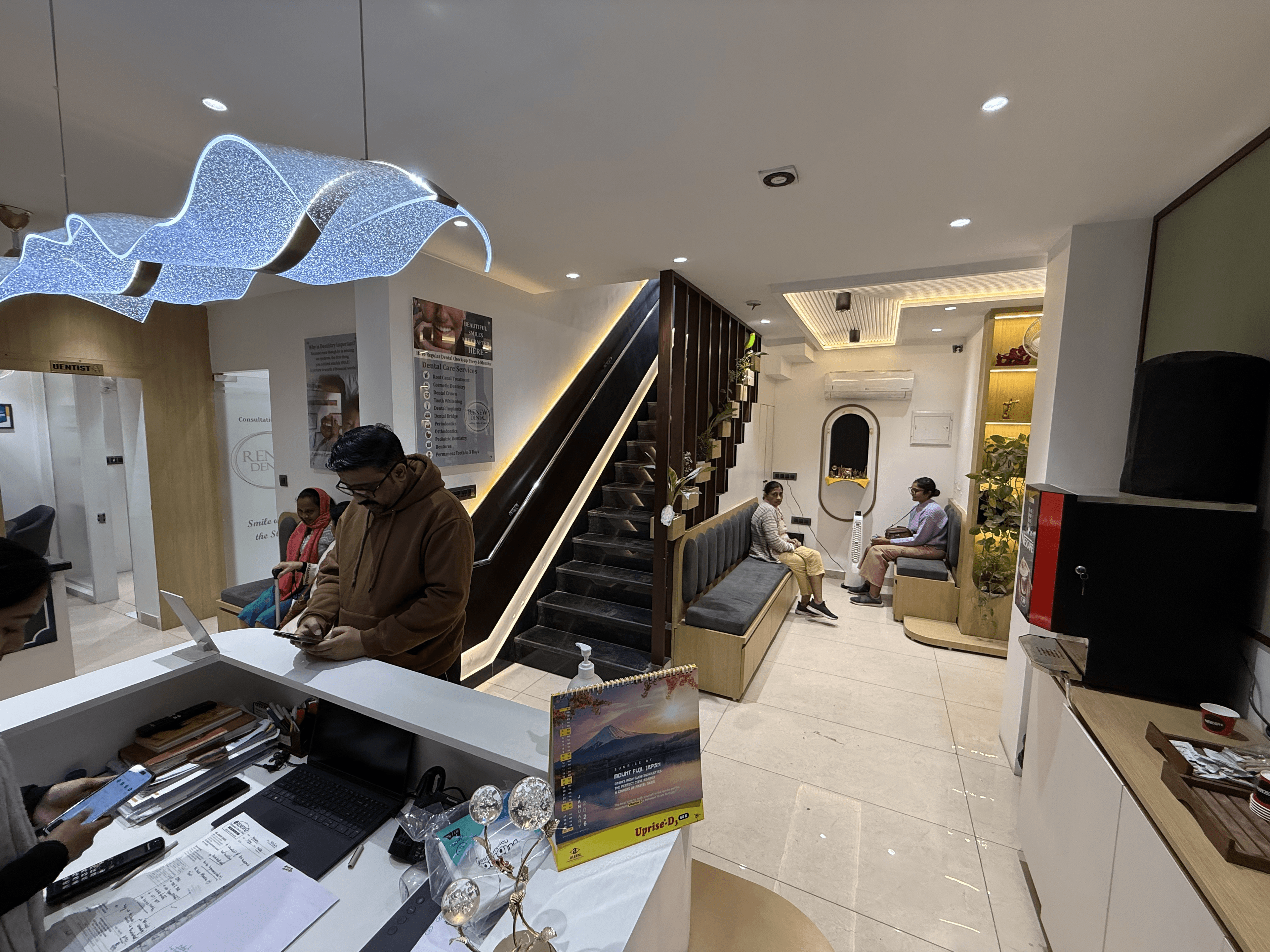
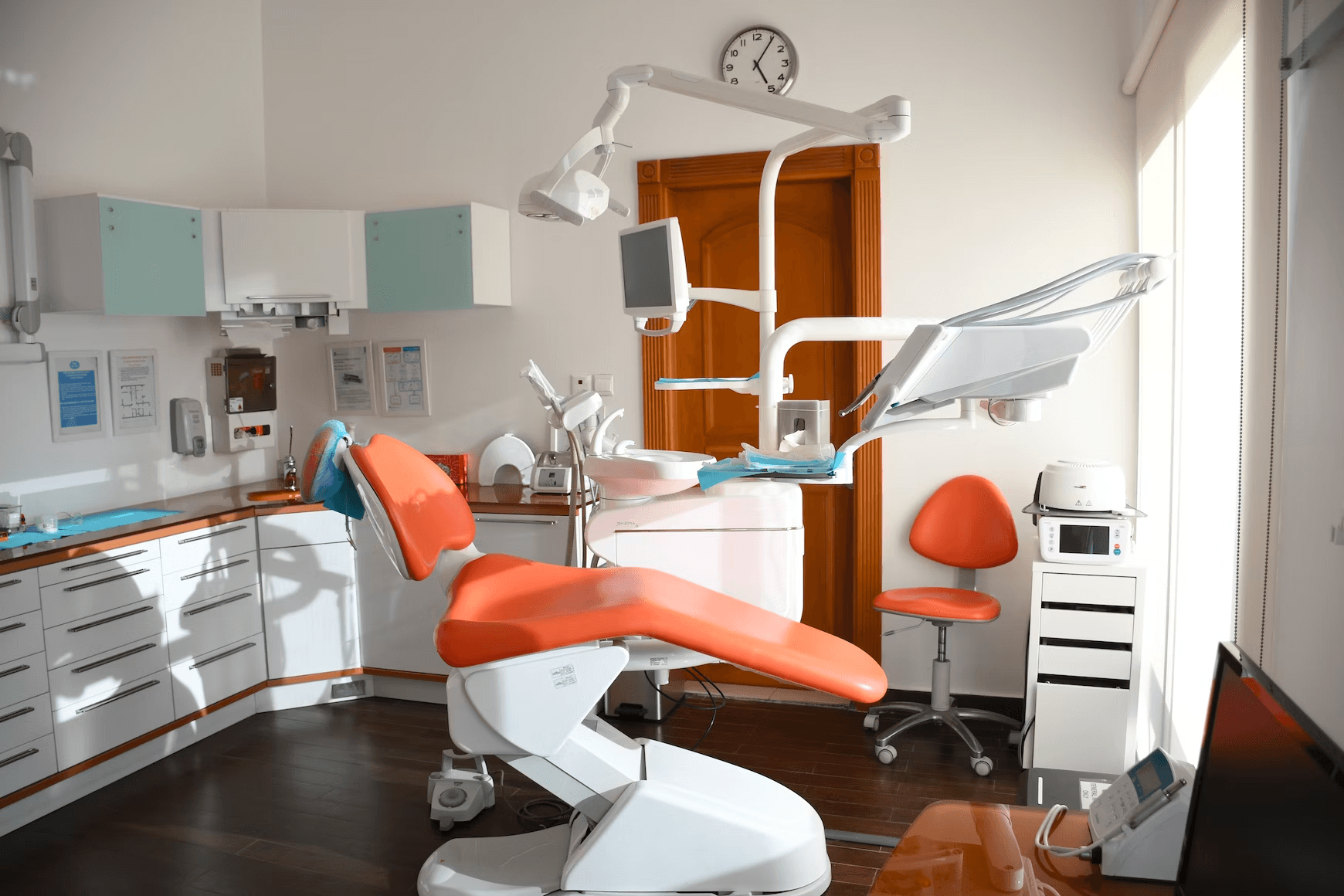
A glimpse into our modern dental clinic, advanced technology, and patient-friendly environment at Renew Dental.
Explore our thoughtfully designed clinic spaces built to provide comfort, cleanliness, and a calming experience for patients of all ages.

Best Dentist in Noida
Renew Dental Clinic located in Noida, Sector 47, is one of the leading dental clinics. Founded by Dr. Suchi Singh who is widely regarded as one of the best dentists in Noida, the clinic is committed to delivering personalised and high-quality dental care. Dr. Suchi Singh focuses on customised treatment plans designed around each patient’s unique needs, ensuring advanced, comfortable and reliable dental care at Renew Dental Clinic.

Your Trusted Dental Experts

Complete Dental Care

Friendly Dental Space

No Hidden Charges
Two trusted dental clinics in Noida — Renew Dental (Sector 47) and Tooth & Truth (Sector 34) — for gentle, modern care.

Renew Orthopedic Clinic, A-321, Basement Floor, Next to Mother Dairy Store, Sector 47, Noida, Uttar Pradesh 201303
 +91 99710 35300
A-98/A, Block A, Sector 34, Noida, Uttar Pradesh 201307
+91 99710 45002© 2026. All rights reserved | Designed and Developed by Zarle Infotech