Jaw Clenching at Night - How to Stop and Protect Your Teeth
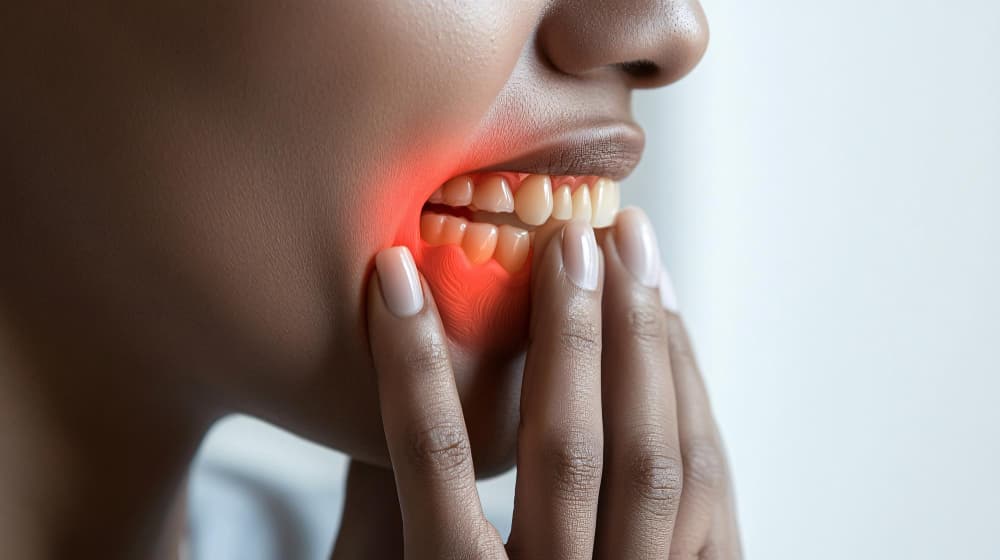
closeup of person clutching painful jaw in bedroom setting
Waking up with a sore jaw, tired-feeling facial muscles, and a tension headache across the temples is a miserable start to the day. And if it's happening regularly, it usually means your jaw has been working through the night while the rest of you was sleeping.
Jaw clenching at night — a form of sleep bruxism — is one of the most common and consistently underdiagnosed conditions in dental practice. Patients aren't aware they're doing it because they're asleep. The consequences build silently over months and years before becoming obvious. By the time a patient mentions it to a dentist, there's often already visible evidence of damage.
This guide covers what jaw clenching is, why it happens, what it's doing to your teeth and jaw, and — most importantly — what can actually be done about it at Renew Dental Clinic in Sector 47, Noida.
Clenching vs Grinding — What's the Difference?
Both are forms of bruxism, but they're mechanically distinct.
Grinding (attrition) involves the teeth moving back and forth against each other — a side-to-side or forward-backward motion that creates the audible grinding sound partners often hear. It wears down the chewing surfaces of the teeth.
Clenching involves simply holding the teeth together in maximum contact for prolonged periods, with enormous force — but without lateral movement. Clenching is often silent, which is why it's harder for a partner to detect. It places extreme compressive loads on the teeth and the jaw joint (TMJ), but without the same dramatic grinding wear pattern.
Many patients do both — clenching during some periods of sleep and grinding during others.
At Renew Dental Clinic, distinguishing between the two informs which treatment and protective approach is most appropriate.
Why Does Jaw Clenching Happen During Sleep?
The mechanisms behind sleep bruxism are not fully understood, but a consistent picture has emerged from research.
Stress and the Nervous System
The jaw muscles are among the first to respond to psychological stress. When the nervous system is in a heightened state of arousal — whether from work pressure, relationship difficulties, financial anxiety, or unresolved tension — the jaw muscles tense involuntarily. During sleep, this manifests as clenching.
This is why patients often notice a direct correlation between stressful periods in their lives and an increase in jaw clenching symptoms. Patients in high-pressure professional environments — which describes many working adults across Noida, Greater Noida, and Delhi NCR — tend to report higher rates of jaw clenching.
Sleep Architecture and Arousal Events
Sleep bruxism occurs predominantly during lighter stages of sleep (Stages 1 and 2) and during REM transitions. Events that disrupt the normal sleep cycle — micro-arousals — are often associated with bruxism episodes. These arousals can be caused by:
- Obstructive sleep apnea
- External noise
- Caffeine or alcohol consumed too close to bedtime
- Anxiety that prevents deep sleep
The connection with sleep apnea is particularly clinically significant and worth discussing further below.
Sleep Apnea
There is a well-documented relationship between obstructive sleep apnea (OSA) and bruxism. In OSA, the upper airway partially collapses during sleep, causing breathing interruptions. The brain — sensing the oxygen drop — triggers a micro-arousal to restore breathing. These arousal events are frequently associated with bruxism episodes.
Some researchers suggest that jaw clenching during sleep may actually be a protective reflex — the jaw muscle tension helping to maintain airway patency by advancing the lower jaw slightly and opening the airway.
If a patient also snores, wakes feeling unrefreshed despite adequate sleep hours, experiences morning headaches, or is told by a partner they stop breathing during sleep, sleep apnea should be investigated. Treating the apnea often significantly reduces associated bruxism.
At Renew Dental, patients where sleep apnea is suspected are referred for appropriate medical assessment. Mandibular advancement devices — custom-made at Renew Dental — can treat mild to moderate sleep apnea and often reduce nocturnal clenching simultaneously.
Medications
Certain medications increase the activity of the jaw muscles during sleep
- SSRIs and SNRIs (antidepressants such as sertraline, fluoxetine, venlafaxine) — one of the most consistently documented medication causes of bruxism
- Stimulant medications used for attention and concentration disorders
- Caffeine — consumed in excess or too close to bedtime, caffeine increases arousal and muscle activity during sleep
If a patient started noticing jaw clenching around the time they began a new medication, this connection is worth raising with the prescribing doctor.
Personality and Hyperarousal
Individuals with higher-achieving, competitive, or perfectionistic tendencies appear more prone to bruxism. The underlying mechanism is thought to be a chronically elevated arousal level — a nervous system that doesn't fully downregulate even during sleep.
What Jaw Clenching Does to Your Teeth and Jaw
Tooth Damage
Clenching generates forces far higher than those of normal chewing. Applied repeatedly over months and years of nightly sleep:
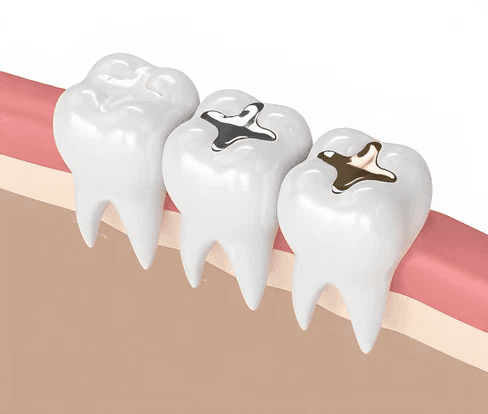
- Enamel cracks and chips — particularly on the biting edges of the front teeth and the cusps of the back teeth
- Tooth fractures — cracks can propagate through the full thickness of the tooth. Vertical root fractures (cracks through the root) are among the most serious consequences and often require extraction
- Accelerated enamel wear — teeth become shorter and flatter over time
- Increased sensitivity — as enamel wears, the dentine beneath becomes exposed
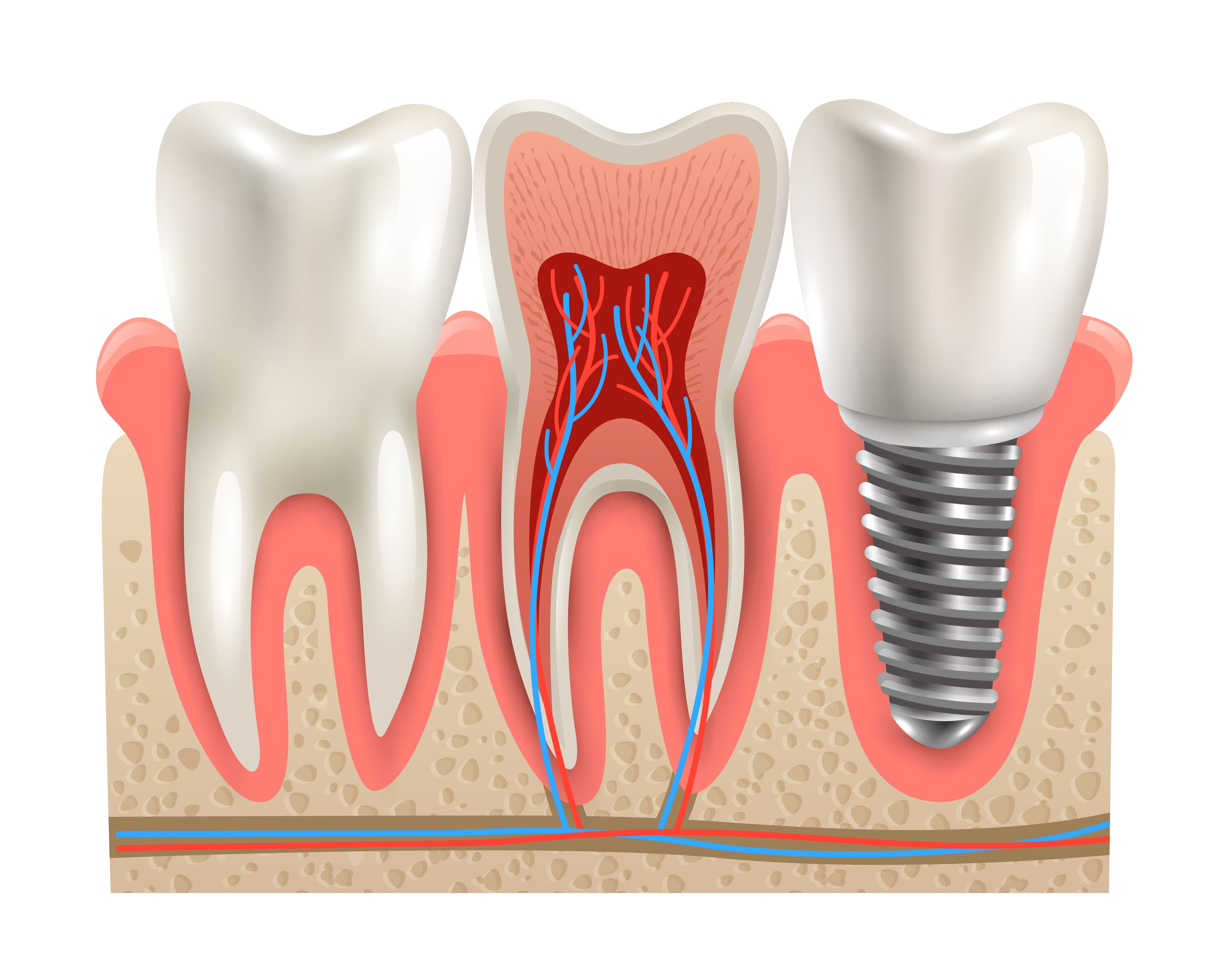
Crowns, veneers, bridges, and implant restorations are all vulnerable to clenching forces. Patients with significant dental restorations who clench at night will shorten the lifespan of that work considerably without protection.
TMJ and Jaw Muscle Damage
The temporomandibular joint and the muscles surrounding it are under enormous sustained load during clenching.
Muscle pain and fatigue — the masseter (main jaw-closing muscle) and temporalis (the fan-shaped muscle covering the side of the skull) are chronically overworked. They respond like any overused muscle: with pain, tightness, and tenderness. Morning jaw soreness is one of the most consistent patient complaints.
TMJ damage — sustained clenching compresses the cartilage disc within the TMJ, which cushions the articulating bones. Over time, this can lead to disc displacement (causing clicking or locking), degenerative joint changes, and chronic TMJ pain.
Referred pain — the muscles and joints involved in clenching refer pain in predictable patterns. Tension headaches across the temples and forehead, pain behind the eyes, earache without ear infection, and neck stiffness are all commonly reported alongside jaw clenching.
Recognising Jaw Clenching — Signs to Watch For
Because clenching happens during sleep, patients rely on secondary signs
- Morning jaw soreness or stiffness — the most consistent symptom
- Headaches across the temples on waking — tension-type headache from overworked temporalis muscles
- Tender facial muscles — particularly the masseter (felt by pressing the cheek muscles just above and in front of the jaw angle) and the temples
- Tooth sensitivity that seems to be increasing without obvious cavities
- Chipped or cracked tooth edges without a clear cause
- Flattening of tooth cusps on the back teeth — visible on close inspection
- Earache without signs of ear infection
- Clicking or discomfort in the jaw joint when chewing or opening wide
- A partner reporting teeth-grinding sounds during sleep
At Renew Dental Clinic in Noida, Dr. Suchi Singh identifies these signs at routine check-ups — which is one of the reasons regular dental visits have value well beyond finding cavities.
Treatment for Jaw Clenching in Noida
Custom Night Guard
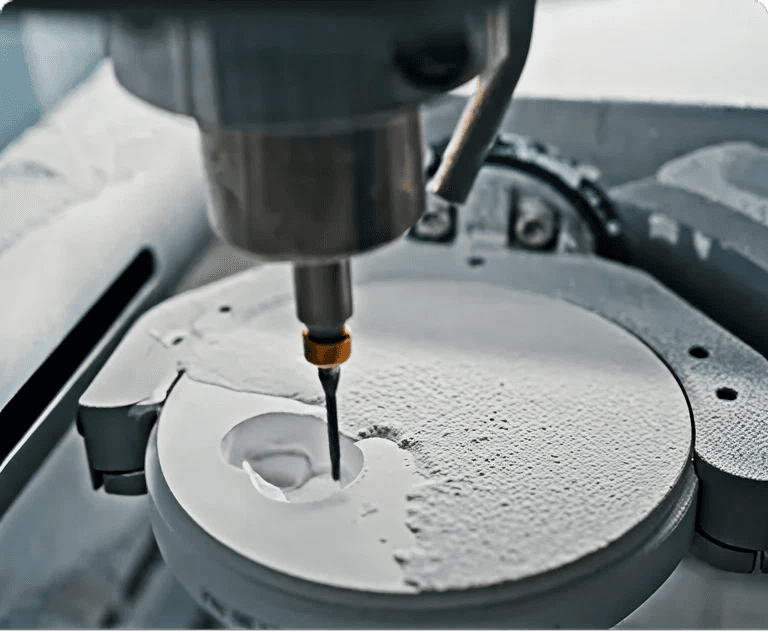
The cornerstone of clinical management. A night guard (occlusal splint) is a custom-fabricated acrylic appliance worn over the upper or lower teeth during sleep. It doesn't stop clenching — it provides a cushion between the upper and lower teeth, distributing and absorbing the clenching forces rather than allowing them to concentrate on the teeth and joint.
A well-made custom night guard from Renew Dental:
- Is fabricated from precise dental impressions of your teeth
- Fits securely without discomfort or airway restriction
- Distributes the clenching forces evenly across all teeth
- Protects existing restorations — crowns, veneers, implant crowns — from damage
- Can incorporate a repositioning design to relieve TMJ compression
This is very different from a pharmacy boil-and-bite guard, which fits poorly, distributes force unequally, and in some cases actually worsens the problem by changing the bite.
Addressing the Stress Component
Where stress is a clear driver, managing the stress has measurable benefits. Strategies that evidence supports include:
- Regular aerobic exercise — one of the most consistent and effective stress reducers, with multiple studies linking it to reduced bruxism activity
- Reduction in caffeine — particularly in the afternoon and evening
- Calming pre-sleep routine — avoiding screens, work email, and stimulating content in the hour before bed
- Mindfulness or progressive muscle relaxation — including specific jaw-relaxation exercises
- Cognitive behavioural therapy (CBT) — for anxiety that is significantly affecting sleep quality
None of these alone eliminates clenching, but combined with a night guard, they reduce its severity.
Managing Caffeine and Alcohol
Both worsen nocturnal clenching. Caffeine (tea, coffee, cola, energy drinks) increases arousal level and should be avoided from the mid-afternoon onward. Alcohol — despite having a sedating effect initially — disrupts sleep architecture and increases the frequency of micro-arousal events, worsening bruxism.
Physiotherapy
Where significant TMJ pain or jaw muscle tension has developed, physiotherapy targeting the jaw and neck muscles provides meaningful relief. Soft tissue massage of the masseter and temporalis muscles, joint mobilisation, and specific exercises can reduce pain and improve jaw function alongside the night guard.
Treatment for Sleep Apnea
For patients where sleep apnea is identified as contributing, treating the apnea is often the most impactful single intervention for reducing clenching. At Renew Dental, mandibular advancement devices (custom-made oral appliances worn during sleep) are available for mild to moderate sleep apnea — they advance the lower jaw slightly to maintain airway patency and eliminate apnea events, frequently reducing associated bruxism in the process.
Botulinum Toxin Injections
For severe cases where clenching forces are very high and other measures haven't provided sufficient relief, botulinum toxin (Botox) injected into the masseter muscle temporarily reduces its contractile strength. This doesn't affect normal chewing function at the dosage used but significantly reduces the force of nocturnal clenching. The effect lasts approximately 4 to 6 months and can be repeated. This is a specialist option for patients who haven't responded adequately to first-line measures.
Protecting Existing Dental Work from Clenching
If you have crowns, veneers, bridges, or implant-supported teeth — a night guard is non-negotiable. These restorations are vulnerable to the forces of clenching and will fail prematurely without protection. Replacing a fractured crown or a cracked veneer is avoidable with consistent night guard use.
Frequently Asked Questions
How do I know if I clench rather than grind?
A clinical examination at Renew Dental reveals the characteristic wear pattern and symptoms. Clenching tends to produce more TMJ symptoms and less visible grinding wear; grinding produces more dramatic flattening of tooth surfaces. Many patients do both.
Will the clenching stop permanently?
In some patients — particularly where the trigger was a specific stressful period — clenching reduces significantly once the stressor resolves. For most patients, it's an ongoing tendency that requires long-term management with a night guard.
Can children clench their jaws?
Yes. Clenching in children often resolves as they mature, but persistent or symptomatic cases should be assessed by a dentist.
Does a night guard cure jaw pain immediately?
The night guard protects the teeth from further damage from night one. Jaw and muscle pain typically reduce over several weeks of consistent use as the muscles recover from the constant overload.
Protect Your Jaw at Renew Dental Clinic, Noida
If you're waking up with jaw soreness, morning headaches, or a partner has mentioned grinding — don't wait for your teeth to show the damage before addressing it. At Renew Dental Clinic, Sector 47, Noida, Dr. Suchi Singh assesses jaw clenching, evaluates any damage already present, and provides a custom-fitted night guard alongside a tailored management plan.
To book a consultation, call (0120) 498-8333.
Open Monday–Saturday, 10:30 AM – 8:00 PM | Sunday, 11:00 AM – 2:30 PM.