Oil Pulling for Teeth — Does It Actually Work? A Dentist's Honest Take

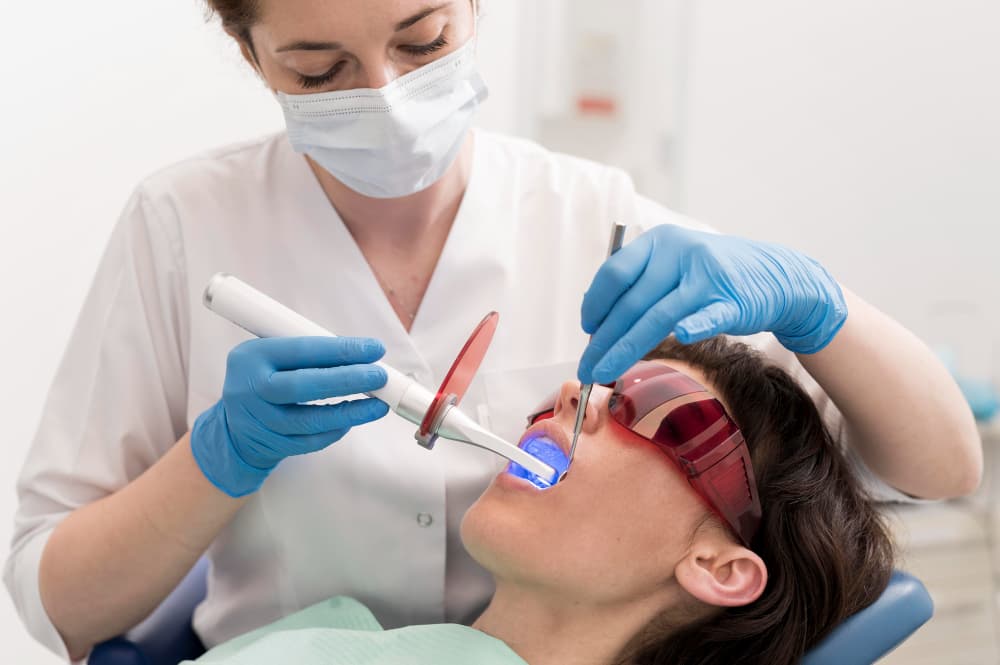
a woman getting her teeth examined happily by a dentist
Oil pulling has been around for thousands of years. It's described in Ayurvedic texts dating back to ancient India, originally using sesame oil. In recent years it's had a wellness revival — now mostly with coconut oil — and the claims surrounding it range from "mild antibacterial benefit" to "replaces brushing entirely." Only one of those is true.
Here's an honest look at what the evidence actually shows.
What Oil Pulling Is
Oil pulling is the practice of swishing oil — typically coconut, sesame, or sunflower — in the mouth for an extended period, usually 15 to 20 minutes, then spitting it out. The traditional recommendation is to do this first thing in the morning, before eating or drinking, on an empty stomach.
The proposed mechanism is that the oil "pulls" bacteria and toxins out of the mouth and from between the teeth, absorbing them before being discarded. Some proponents add claims about systemic detoxification — removing toxins from the body through the oral mucosa. Others focus purely on oral hygiene benefits.
What the Research Actually Shows
There is some genuine research supporting oil pulling. Not the detoxification claims, but the antibacterial ones.
Several studies — mostly small, mostly short-term — have found that oil pulling with sesame or coconut oil reduces counts of Streptococcus mutans (the primary cavity-causing bacterium) in saliva compared to baseline. One study found that oil pulling reduced plaque scores and gingival bleeding comparable to chlorhexidine mouthwash over a two-week period. That's a moderately meaningful finding — chlorhexidine is genuinely effective.
The proposed mechanism is saponification — fats in the oil reacting with bacterial cell membranes and disrupting them. There's also the mechanical effect of 15 to 20 minutes of liquid swishing through the mouth, physically dislodging surface bacteria and food particles.
What this means in practice: Oil pulling probably does reduce the bacterial load in the mouth to some degree. It probably does reduce some surface plaque accumulation if done consistently and for the recommended duration. For patients with dry mouth who can't tolerate alcohol-based mouthwashes, it may be a reasonable alternative rinse.
What It Doesn't Do
Here is where the gap between the wellness-blog version and the evidence-based version becomes significant.
1. Oil pulling does not remove subgingival calculus.
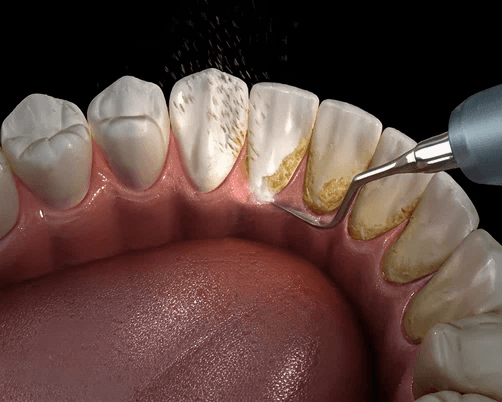
Tartar that has hardened on the tooth surface — including below the gumline — is not dislodged by swishing oil. Only a dental scaler removes it. No amount of oil pulling eliminates the need for professional cleaning.
2. Oil pulling does not remineralise teeth.
It has no fluoride. It delivers no calcium or phosphate to enamel. It doesn't repair early decay or strengthen weakened enamel. The evidence for enamel remineralisation from oil pulling is essentially absent.
3. Oil pulling does not treat active gum disease.
Periodontitis — bone-destructive gum disease — requires professional scaling and root planing, not an oil rinse.
4. It's not a substitute for brushing.
This is perhaps the most important point. Tooth brushing with fluoride toothpaste does two things oil pulling cannot: it physically removes plaque through mechanical action (the bristles), and it delivers fluoride to the enamel. Neither of these is replicated by swishing oil.
Several oil-pulling advocates suggest doing it instead of brushing. This is not supported by evidence and would represent a significant downgrade in oral hygiene for anyone who made that substitution.
The Honest Position
Oil pulling is probably a benign addition to an existing oral hygiene routine. There's enough research to suggest it reduces some bacterial load and may have mild benefits for gum inflammation. It's not harmful when done correctly (coconut oil is safe to use in the mouth; the traditional sesame or sunflower options are also fine).
But it's been widely oversold. People use it hoping it will substitute for dental treatment, whiten teeth (it won't), cure gum disease (it won't), or detoxify the body (the evidence for this is essentially zero).
If a patient at Renew Dental Clinic asks whether to add oil pulling to their routine, Dr. Suchi Singh's answer is: sure, if you'd like to — after brushing and flossing, not instead of either. Keep the duration to 10 to 15 minutes. Don't swallow it (you're accumulating bacteria and their metabolites in the oil). Don't expect it to replace professional cleaning.
Used as a small additional measure alongside a proper routine, it probably does some good. Used as a replacement for evidence-based care, it definitely doesn't.
How to Oil Pull If You Want To Try It
The technique that research has used:
- Take one tablespoon of coconut or sesame oil
- Swish it through your teeth and around your gums for 15 to 20 minutes — less than this, the benefit is minimal; more, there's no additional evidence of added benefit
- Spit into a bin, not the sink — solidified coconut oil clogs pipes
- Rinse with water
- Then brush with fluoride toothpaste
The 15 to 20 minutes is longer than most people expect. The first few attempts are harder to sustain. Some people start with 5 minutes and work up. In clinical studies, participants doing it consistently for two to four weeks showed the benefit — occasional oil pulling probably doesn't accumulate much.
A Note on the Whitening Claims
Oil pulling is frequently marketed as a teeth whitening method. The claim is that the oil removes surface stains.
Some patients do report slightly brighter-looking teeth after consistent oil pulling. This is almost certainly from the mild mechanical cleansing of surface deposits — similar to the benefit of any rinse or chewing motion, not from a chemical whitening effect. The oil contains no bleaching agents. It doesn't lighten the underlying enamel colour.
For actual whitening — meaningful shade improvement — professional laser whitening at Renew Dental is the option that produces documented results.
Frequently Asked Questions
1. Is coconut oil better than sesame oil for oil pulling?
Both have been used in studies. Sesame oil is the traditional oil from Ayurvedic practice and has the most research behind it. Coconut oil is more popular currently, partly because it's better tolerated by most people taste-wise. The evidence doesn't clearly favour one over the other.
2. Can children do oil pulling?
Most studies have been conducted in adults. For younger children, swallowing the oil is a concern — the technique requires deliberate spitting after 15 minutes. Not recommended below the age of about 8 to 10.
3. Should I do it before or after brushing?
If you're doing it, before brushing makes logical sense — you swish, spit the bacteria-containing oil, then brush off whatever remains and apply fluoride. Doing it after brushing washes away fluoride, which is counterproductive.
4. Will it fix bleeding gums?
If bleeding gums are from mild gingivitis and the oil pulling is done as part of an improved overall routine, there may be some improvement. But if gums are bleeding significantly or periodically, that requires a professional assessment and potentially scaling — not an at-home rinse.
Questions About Your Oral Health Routine?
If you're putting thought into your home care routine — whether oil pulling, water flossers, specific toothpastes, or other additions — Dr. Suchi Singh at Renew Dental Clinic, Sector 47, Noida provides practical, evidence-based guidance tailored to your specific dental situation.
To book, call (0120) 498-8333.
Monday–Saturday 10:30 AM – 8:00 PM | Sunday 11:00 AM – 2:30 PM.