By Renew Dental ClinicPublished on
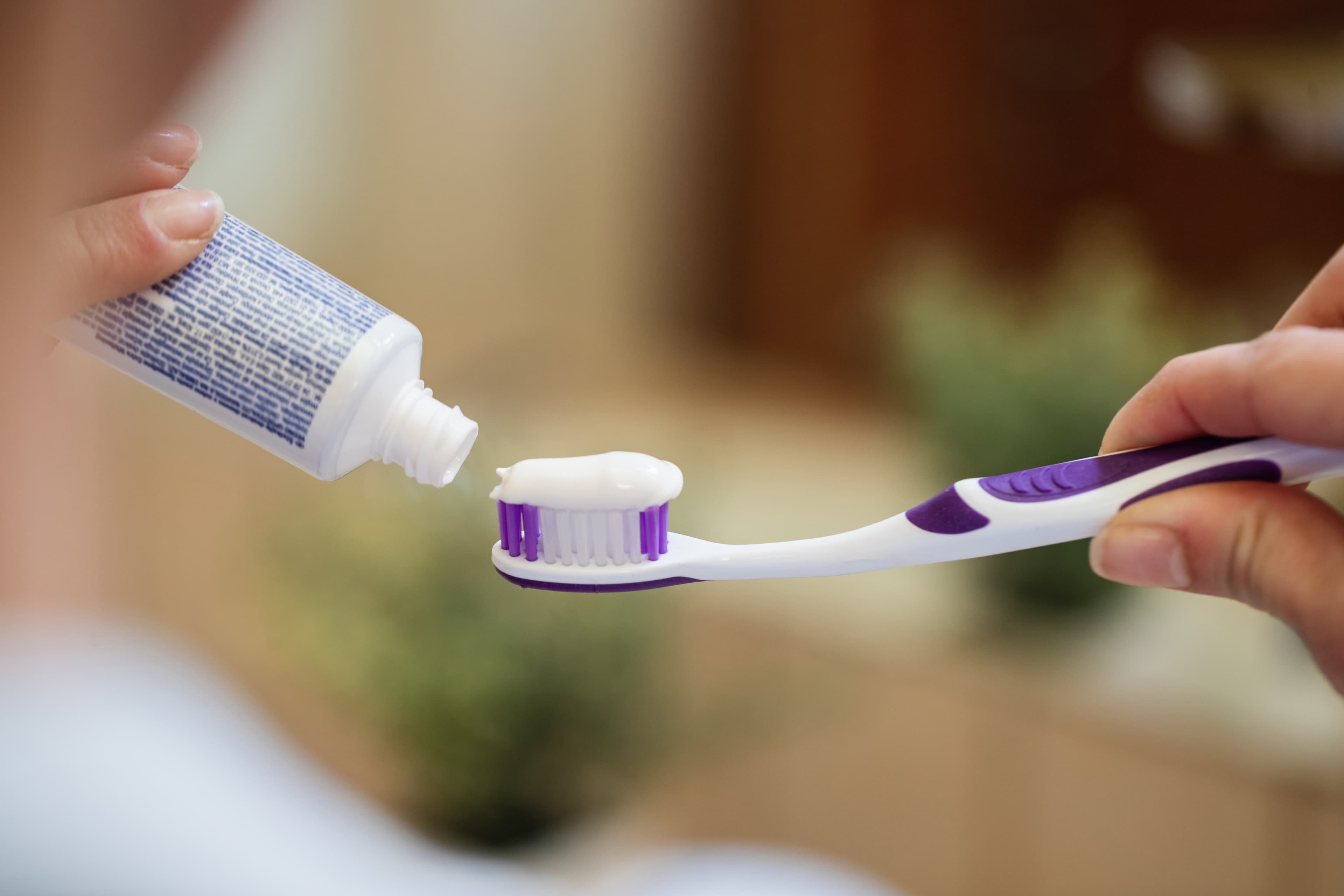
A woman applying toothpaste onto her toothbrush.
Open any toothpaste and look at the advertising. In every television commercial and every print ad, the brush carries a thick ribbon of toothpaste running end-to-end across the full length of the bristle head. A full gram or more of product per session.
Dentists recommend about a third of that.
The gap between what advertising shows and what's actually needed is significant — and it matters for reasons beyond wasting product. The amount of toothpaste you use affects how much fluoride enters your mouth, how much gets inadvertently swallowed, and — particularly for children — whether you're in the safe range or exceeding it.
The reason toothpaste ads show a full brush of product is simple: manufacturers sell more toothpaste when consumers use more per session. One patent document from a dental device company noted explicitly that "the quantity of toothpaste required to cover a typically-sized adult toothbrush weighs about 2.4 grams, while the pea-sized amount recommended weighs approximately 0.8 grams" — meaning advertising promotes usage of roughly three times the recommended amount.
This has successfully conditioned most adults to feel that anything less than a full brush looks insufficient. Patients who know the pea-size recommendation intellectually often still use more by habit, because the visual cue of a sparse brush "feels wrong."
For adults, the consequence is primarily waste and cost. For children, it has more direct clinical relevance.
The recommendation from dental associations globally is a pea-sized amount — approximately 0.8 to 1.0 grams of toothpaste.
A pea of toothpaste is roughly the size of a corn kernel. It looks underwhelming on a toothbrush. It's also sufficient.
Plaque removal is mechanical. The cleaning work is done by the bristles physically disrupting the plaque biofilm. Toothpaste provides fluoride, surfactants to loosen deposits, and mild abrasives — none of which require large volumes of paste.
Fluoride delivery is dose-dependent. Standard adult fluoride toothpaste contains 1000 to 1450 ppm fluoride. A pea-sized amount provides approximately 0.88 to 1.3 milligrams of fluoride — sufficient for effective enamel remineralisation. Doubling the amount doesn't double the benefit; it mostly increases what you spit out.
Excess foam can be counterproductive. Large amounts of toothpaste generate substantial foam from the surfactant (sodium lauryl sulfate). Heavy foam can make some people want to rinse earlier than optimal, washing away the fluoride before it's had adequate contact time with enamel. A smaller amount foams less and tends to encourage the better post-brush routine of spitting without excessive rinsing.
The amount of toothpaste becomes more relevant depending on what you do after brushing.
If you rinse immediately: Most of the fluoride is removed within seconds. In this case, even a pea-sized amount provides minimal fluoride benefit — the brush is doing the cleaning work, and the fluoride isn't staying long enough to do much.
If you spit and don't rinse: The residual fluoride remains on the enamel and in the thin film of saliva coating the teeth for the next 30 to 60 minutes, providing ongoing remineralisation. A pea-sized amount provides adequate fluoride concentration in this residual film.
The correct sequence: Brush with a pea-sized amount of toothpaste, spit excess, don't rinse with water. This single change — not rinsing immediately — is arguably the most impactful adjustment most patients can make to their brushing routine, as it extends the fluoride contact time dramatically.
Mouthwash after brushing washes away toothpaste fluoride. Use mouthwash at a separate time — after meals, between brushing sessions.
For children, the amount of toothpaste is genuinely clinically important.
Young children cannot reliably spit toothpaste out. They swallow some, often more than adults realise. Fluoride is beneficial at the right dose; at elevated doses in young children, it can contribute to dental fluorosis — white or brownish spots on developing permanent teeth caused by excessive fluoride during enamel formation.
Children under 3 (from first tooth eruption): A smear — the size of a grain of rice. This delivers approximately 0.1 milligrams of fluoride. Even if the entire amount is swallowed, it remains within safe limits.
Children 3 to 6 years: A pea-sized amount — approximately 0.25 grams, delivering around 0.25 milligrams of fluoride. At this age, most children can spit but may still swallow some. The pea-sized amount is calibrated to remain within safe fluoride ingestion limits even with partial swallowing.
Children over 6: The same pea-sized amount as adults. By this age, reliable spitting is established.
A concerning finding from research: more than 38% of children aged 3 to 6 in a CDC survey were using a half or full brush-load of toothpaste — far exceeding the recommended amount. This matters because excessive fluoride ingestion during the years when permanent teeth are forming increases fluorosis risk in those developing teeth.
The practical implication for parents: actively check and control how much toothpaste goes on your child's brush. The habit of loading a child's brush "like an adult" needs to be managed.
Children's toothpastes are typically formulated with lower fluoride concentrations — usually 500 to 550 ppm compared to 1000 to 1450 ppm in adult formulations. This lower concentration reduces fluorosis risk in children who may swallow some paste. The trade-off is that 500 ppm provides less cavity protection than 1000 ppm.
Children should transition to standard fluoride toothpaste once spitting is reliable (typically around age 6).
Some dentists recommend using adult-strength fluoride toothpaste from an earlier age in a strictly controlled pea-sized amount for children at high cavity risk, reasoning that the cavity protection benefit outweighs the fluorosis risk when the amount is carefully managed. This is a clinical decision best made with Dr. Suchi Singh at Renew Dental Clinic based on the individual child's cavity history and risk factors.
For certain patients, standard toothpaste isn't enough. Prescription-strength fluoride toothpaste (5000 ppm sodium fluoride — available only through dental prescription) is used for:
At this concentration, the mechanism shifts from remineralisation support to active enamel protection and early cavity reversal. The amount used is still pea-sized — the higher concentration, not the volume, is what provides the therapeutic effect.
At Renew Dental Clinic in Sector 47, Noida, Dr. Suchi Singh identifies patients who would benefit from prescription fluoride as part of the comprehensive dental assessment at check-up appointments.
Not all toothpastes abrade equally. The Relative Dentin Abrasivity (RDA) scale measures how abrasive a toothpaste is. Standard toothpaste: RDA 70 to 100. Whitening toothpastes: often 100 to 150.
For patients using high-abrasivity toothpastes, using a large amount doesn't increase the whitening effect — but it does increase cumulative abrasion over time. Using a pea-sized amount and brushing gently is considerably safer than using a full brush and scrubbing vigorously.
Patients with gum recession who are brushing exposed root surfaces face particular abrasion risk. Root dentine has no enamel protection and wears faster than crown surfaces. For these patients, low-abrasivity or sensitive toothpaste in pea-sized amounts is the most appropriate combination.
Some patients choose fluoride-free toothpastes — herbal formulations, natural brands, or hydroxyapatite-based alternatives. The amount recommendation remains the same: pea-sized.
Without fluoride, the paste cannot contribute to enamel remineralisation through the fluoride pathway. The surfactants and mild abrasives still clean the tooth surface mechanically. A pea-sized amount is sufficient for this purpose — using more doesn't improve cleaning.
For patients who prefer fluoride-free toothpaste, Dr. Suchi Singh can discuss cavity protection trade-offs and, where appropriate, recommend supplementary fluoride through mouthwash or professional fluoride varnish applications.
India has a significant market for Ayurvedic and herbal toothpastes — Dabur Red, Himalaya, Patanjali, Colgate Vedshakti, and many others. These products often contain neem, clove, turmeric, peppermint oil, and meswak. Several of these ingredients have genuine antimicrobial properties in laboratory studies.
The clinical question is whether these ingredients, at concentrations present in toothpaste used for two minutes twice a day, provide cavity and gum disease protection equivalent to fluoride-containing toothpaste. The answer from clinical evidence is no. The evidence for fluoride is supported by decades of large-scale clinical trials; the herbal ingredients' evidence base doesn't yet reach the same standard.
The practical compromise: if a patient strongly prefers herbal toothpaste, choose one that also contains fluoride (several formulations in India do). If the patient uses fluoride-free herbal toothpaste by preference, this is their right — but they should understand they're accepting a reduction in cavity protection compared to fluoride toothpaste.
| Age Group | Amount | Visual Guide |
|---|---|---|
| Under 3 (first tooth to age 3) | Smear | Grain of rice |
| 3 to 6 years | Pea-sized | Corn kernel |
| 6 years and above | Pea-sized | Corn kernel |
| Adults | Pea-sized | Corn kernel |
For all ages: the goal is adequate coverage of the brush to distribute toothpaste across all tooth surfaces during brushing — not to generate maximum foam or fill the bristle head completely.
What if my child refuses to brush with a small amount of toothpaste?
Children often associate the flavour with enjoyment of brushing. A pea-sized amount of an appealing children's toothpaste flavour provides sufficient taste stimulus. If the child wants more for the flavour, a fluoride mouthwash (at the appropriate age) used separately can satisfy the taste preference without the toothpaste volume issue.
Should I use more toothpaste if I have more teeth?
No. A pea-sized amount distributes adequately across all surfaces with systematic brushing. Additional teeth require additional brushing time, not additional toothpaste.
Does expensive toothpaste need a smaller amount?
No. The recommended amount is the same regardless of price. Higher-priced toothpastes may contain additional active ingredients, but none require larger volumes to function.
I feel like I need more to clean my mouth properly — is this psychological?
Largely yes. The foam generated by even a pea-sized amount of toothpaste is sufficient to distribute across all surfaces with proper brushing technique. The "clean" feeling correlates more with the post-brush saliva than with toothpaste volume.
To book a check-up or discuss your toothpaste choices at Renew Dental Clinic, Sector 47, Noida, call (0120) 498-8333.
Monday–Saturday 10:30 AM – 8:00 PM | Sunday 11:00 AM – 2:30 PM.
 Copy
Copy
Teeth looking longer than they used to? Gum recession is one of the most commonly...
19 Aug 2026
by Renew Dental Clinic
The mouth isn't isolated from the rest of the body — it's connected to it...
14 Aug 2026
by Renew Dental Clinic
Gum disease starts silently — often years before it causes pain or visible damage. This...
13 Aug 2026
by Renew Dental Clinic

Toothache while pregnant? Learn what dental treatment is safe, which pain medicines to take or avoid, and whether seeing a dentist could affect your baby.
23 Oct 2026
by Renew Dental Clinic
Dry socket is the most painful post-extraction complication and it doesn't get better on its...
28 Sept 2026
by Renew Dental Clinic

A gummy smile isn't one problem but several that look alike. Learn what drives excess...
19 Oct 2026
by Renew Dental Clinic
Busy professionals in Noida often skip dental care until something hurts. This guide explains why...
03 Jul 2026
by Renew Dental Clinic

What you eat directly affects your dental health. This guide from Renew Dental Clinic Noida...
05 Jun 2026
by Renew Dental Clinic

Find out what preventive dentistry is, why it matters to your oral health, and how...
22 Sept 2025
by Renew Dental Clinic
Looking for a paediatric dentist in Noida? This guide explains when to bring your child...
26 May 2026
by Renew Dental Clinic
Dental anxiety is extremely common and entirely real. This guide explains where it comes from,...
31 Jul 2026
by Renew Dental Clinic

Some dental symptoms can wait for a routine appointment. These can't. This guide identifies the...
29 Jul 2026
by Renew Dental Clinic
Looking for orthodontic treatment near Greater Noida? This guide covers all braces and aligner options...
10 Jun 2026
by Renew Dental Clinic
A gap between your front teeth has multiple treatment options in Noida — and which...
20 Sept 2026
by Renew Dental Clinic
Braces make cleaning between teeth harder — and more important. This guide covers every method...
26 Aug 2026
by Renew Dental Clinic
Explore More
Discover how thousands of patients trust Renew Dental Clinic with their smiles.
I had the bestest experience with Dr. Suchi with my root canal. She is kind, gentle and very patient with her clients. Highly recommended. 🤍🤍🤍
Experience was impeccable services are Immaculate, satisfaction was 100%. Really admire & distinguished about doctor is her care for the patient regular follow up availability on what's App her response is really appreciable. Professionally sound confident responsible doctor she is. Visited her for root canal treatment went with a pain & distress came back with a smile and sense of relief. I should say if you have any dental related problem, she is the one stop solution for the same. Guys what you guys waiting for just book and appointment and feel relaxed as you are in the safe hands. Thank you, Mam, for such wonderful experience and restoring my smile back. You are an Angel.
Had a great experience with Dr. Suchi singh.. Best doctor in Noida...
Great service... Personally I am having root canal it was smooth...
I took tratment recently and got full satisfaction . Human touch of doctor and quality of service are excellent.
I would recommend Renew Dental Clinic Noida, I went there for my Dental Fillings. 5 Star Response.
I have taken my rct at Renew dental clinic.Dr.suchi is very humble and knowledgeable person .100% satisfied with doc and her treatment.
Have been a long standing customer of Dr Suchi's dental services. Her knowledge, attention to detail and empathy is one of the best
Outstanding experience with Dr. Suchi Singh at Renew Dental Clinic. My root canal and capping procedure were handled with great care and comfort. The staff was polite, compassionate and professional. Highly recommended for anyone seeking reliable dental care.
A glimpse into our modern dental clinic, advanced technology, and patient-friendly environment at Renew Dental.
Explore our thoughtfully designed clinic spaces built to provide comfort, cleanliness, and a calming experience for patients of all ages.



Best Dentist in Noida
Renew Dental Clinic located in Noida, Sector 47, is one of the leading dental clinics. Founded by Dr. Suchi Singh who is widely regarded as one of the best dentists in Noida, the clinic is committed to delivering personalised and high-quality dental care. Dr. Suchi Singh focuses on customised treatment plans designed around each patient’s unique needs, ensuring advanced, comfortable and reliable dental care at Renew Dental Clinic.

Your Trusted Dental Experts

Complete Dental Care

Friendly Dental Space

No Hidden Charges

Two trusted dental clinics in Noida — Renew Dental (Sector 47) and Tooth & Truth (Sector 34) — for gentle, modern care.

Renew Orthopedic Clinic, A-321, Basement Floor, Next to Mother Dairy Store, Sector 47, Noida, Uttar Pradesh 201303
 +91 99710 35300
A-98/A, Block A, Sector 34, Noida, Uttar Pradesh 201307
+91 99710 45002© 2026. All rights reserved | Designed and Developed by Zarle Infotech