By Renew Dental ClinicPublished on
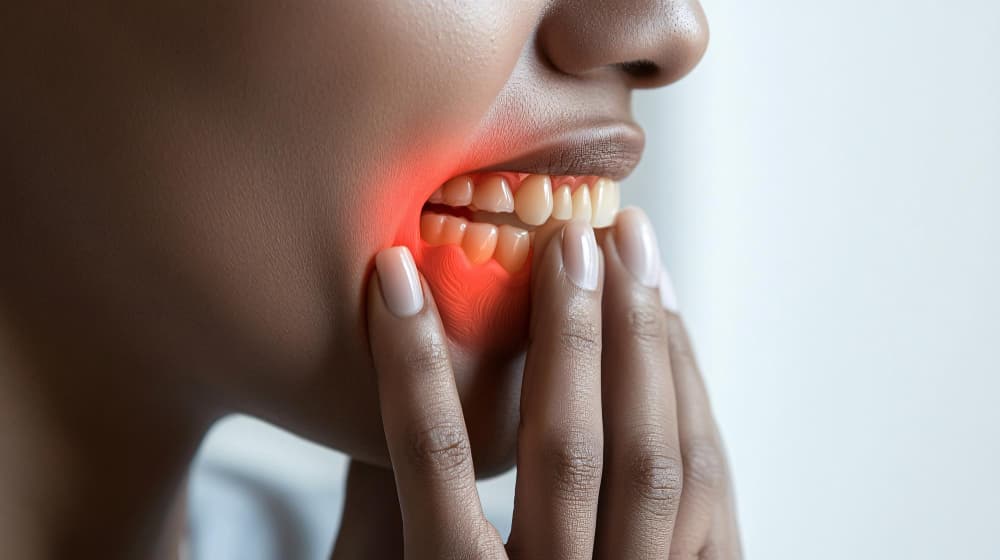
Closeup of person clutching painful jaw in bedroom setting
A sharp, brief pain when cold water touches a tooth. Ice cream that's more unpleasant than enjoyable. The discomfort of cold air in winter hitting the front teeth on a ride to work. Cold sensitivity is one of the most common dental complaints, affecting roughly one in three adults at some point.
The experience is distinctive: a sharp, shooting pain that arrives quickly and resolves within a few seconds once the cold stimulus is removed. It's the "zing" that tells you something is different about that tooth.
What's less commonly understood is that cold sensitivity isn't one condition. It's a symptom that several different dental situations produce through different mechanisms — and distinguishing between them determines whether the solution is sensitive toothpaste, a night guard, a filling, or something more involved.
To understand why teeth become sensitive to cold, it helps to understand the tooth's structure.
The visible crown of the tooth is covered in enamel — a crystalline mineral structure that insulates the inner layers. Beneath the enamel lies dentine — a softer, slightly yellow tissue containing thousands of microscopic channels called dentinal tubules. These tubules run from the outer dentine surface toward the dental pulp at the tooth's centre, where the nerve and blood supply reside.
The fluid in the dentinal tubules is in equilibrium. When cold contacts the tooth surface — particularly exposed dentine — the temperature change causes this fluid to contract and shift within the tubules. The movement triggers pressure changes that the nerve detects. This is the hydrodynamic theory of dentinal sensitivity, and it's the most widely accepted explanation for why exposed dentine causes cold sensitivity.
The key variable: is the dentine exposed? In a healthy tooth with intact enamel and a healthy gumline, the dentine is insulated and protected. When enamel is lost, when gums recede and expose the root, or when structural damage occurs, the dentine becomes accessible to temperature changes and the sensitivity begins.
When enamel is dissolved away by acid — from dietary sources (cola, lemon water, citrus, tamarind) or from GERD (acid reflux) — the dentine layer beneath progressively becomes less insulated. As enamel thins, cold sensitivity becomes more pronounced.
This type of sensitivity tends to be generalised rather than localised to one tooth. Multiple teeth — particularly the front teeth and the chewing surfaces of molars — are affected. The teeth may also look slightly yellower (more dentine showing through thinner enamel) and the biting edges of front teeth may appear more translucent.
Acid erosion-related sensitivity doesn't respond fully to sensitive toothpaste alone because the structural change is progressive unless the acid source is managed. Reducing dietary acid, addressing GERD, and using high-fluoride toothpaste to protect remaining enamel are the management priorities.
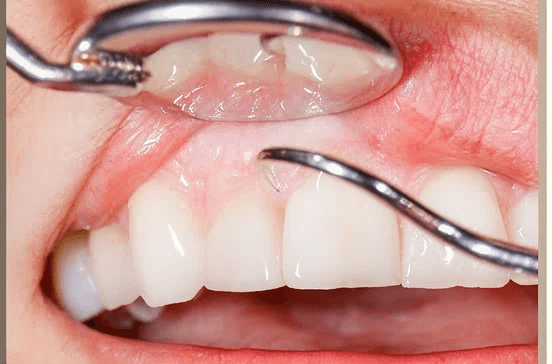
The root surface of the tooth has no enamel covering. It's protected only by the gum tissue sitting against it. When gums recede — from aggressive brushing, gum disease, or thin gum phenotype — the root surface becomes exposed. Exposed root dentine is directly in contact with cold water, cold air, and anything cold that enters the mouth.
Root surface cold sensitivity tends to be localised — concentrated on specific teeth where the recession has occurred. The gumline on affected teeth is visibly lower than on adjacent teeth, and a strip of darker or yellower tooth surface may be visible below the natural gumline.
Sensitive toothpaste applied directly to the exposed root surface helps significantly. Where recession is extensive, composite resin covering the root surface provides more lasting protection.
This is the catch-all term for cold sensitivity from exposed dentine when no single obvious cause (like a cavity or a crack) is identifiable. It's extremely common — estimated to affect 15 to 35% of the adult population.
Multiple factors typically contribute: some enamel erosion, some brushing-related enamel loss at the cervical area, possibly some minor gum recession, all adding up to enamel that's thinner than optimal and dentinal tubules that are slightly more accessible than ideal.
Dentinal hypersensitivity responds well to desensitising toothpaste used correctly (applied, not rinsed, left in contact with the tooth). Professional fluoride varnish at Renew Dental Clinic provides stronger protection. Where needed, in-office desensitising agents that seal the tubule openings provide more lasting relief.
A cavity that has progressed from the enamel into the dentine exposes the dentinal tubules to cold and sweet stimuli. The resulting sensitivity is typically localised to one tooth — the specific tooth with the cavity — and is often triggered by both cold and sweet foods.
This is an important distinction from generalised sensitivity: localised cold sensitivity in one specific tooth warrants clinical assessment for decay, regardless of whether sensitivity toothpaste seems to help. A cavity left untreated progresses, and what's currently causing mild cold sensitivity may cause significant pain once it reaches the pulp.
A crack in the tooth structure is a more serious cause of cold sensitivity that deserves specific attention. Cold sensitivity from a crack has several characteristic features:
Cracks occur from biting on hard objects, bruxism (grinding), large fillings that weaken tooth structure, or trauma. They can be difficult to identify clinically because they may not be visible on X-ray, and require the dentist to use transillumination or bite tests to localise the crack.
Treatment depends on the extent of the crack. A small crack may be managed with a crown that holds the tooth together. A crack that extends into the root may require root canal treatment followed by a crown, or extraction if the crack is too deep for restoration.
If your cold sensitivity is accompanied by sharp pain on biting, don't delay assessment. Cracks don't heal and don't stabilise untreated — they progress.
Sensitivity after a dental procedure is common and usually temporary.
After a filling: Mild to moderate cold sensitivity for days to 2 weeks is normal. The tooth has been worked on and the nerve is mildly irritated. If sensitivity persists beyond 2 weeks or is getting worse rather than better, the filling may need adjustment or, in cases where the cavity was deep, root canal assessment.
After professional scaling: The cleaning procedure temporarily exposes more tooth surface and removes the insulating effect of calculus. Cold sensitivity for 5 to 10 days after scaling is common and resolves as the cleaned surfaces remineralise.
After whitening: Whitening temporarily increases dentinal tubule permeability. Cold sensitivity for 24 to 72 hours post-whitening is expected. Sensitive toothpaste before and after whitening significantly reduces this.
Advanced periodontitis — where bone loss has occurred around the tooth roots — creates a double mechanism for cold sensitivity. First, the bone loss means the gum tissue is less well-supported and may have receded, exposing root surface. Second, the inflamed, compromised gum tissue provides less thermal insulation to the root than healthy tissue does.
Treating the gum disease — professional scaling and root planing — addresses this mechanism, though existing root exposure from previous recession remains.
Grinding wears the enamel from biting surfaces and incisal edges. As enamel thins from years of grinding load, cold sensitivity develops — particularly on the front teeth whose incisal edges become progressively thinner. The pattern of sensitivity in grinders often affects the front teeth most prominently.
A night guard from Renew Dental Clinic stops the grinding-related enamel loss. Where significant wear has already occurred, composite build-ups or crowns restore the lost structure and protect against further sensitivity.
Is it one specific tooth or multiple teeth?
Localised (one tooth): think crack, cavity, or specific recession site. Warrants clinical assessment.
Generalised (multiple teeth): think dentinal hypersensitivity, enamel erosion, or grinding-related wear.
Does the pain linger after the cold stimulus is removed?
Brief (stops within a few seconds): typical dentinal hypersensitivity.
Lingering (persists for 30 seconds or more): suggests pulpitis — significant nerve inflammation. This pattern warrants urgent clinical assessment as it may indicate a root canal is needed.
Is it sensitive to heat as well?
Sensitivity to heat specifically, or sensitivity to both heat and cold with significant lingering: stronger indicator of pulpitis than cold-only sensitivity. Contact the dental clinic.
Is there also pain on biting?
Biting pain alongside cold sensitivity points toward a crack or a failing restoration. Needs assessment.
Did it start after a dental procedure?
Likely post-procedural sensitivity that resolves within 1 to 2 weeks. If not resolving, follow up with the treating dentist.
Start with sensitive toothpaste. Used correctly — applied, spit but not rinsed, left as residue — it addresses mild to moderate dentinal hypersensitivity within 2 to 4 weeks.
Book an appointment if it's specific to one tooth, involves biting pain, includes heat sensitivity, or is getting worse. These patterns don't respond to toothpaste alone.
Address the cause. Reducing dietary acid, switching to a soft toothbrush for brushing-related enamel loss, getting a night guard for grinding — the sensitivity improves only as sustainably as the cause is managed.
Professional fluoride varnish applied at check-up appointments at Renew Dental provides targeted, high-concentration protection for sensitive root and enamel surfaces — more effective than any over-the-counter product at the same application.
Can cold sensitivity go away on its own?
Mild dentinal hypersensitivity sometimes improves spontaneously — saliva mineralises new smear layer over exposed tubules over time. But structural causes (recession, erosion, cracks, cavities) don't resolve on their own and tend to worsen.
If it doesn't hurt all the time, does that mean it's not serious?
Not necessarily. Intermittent sensitivity that only occurs with cold is typically dentinal hypersensitivity. But cavities and cracks can also present with intermittent rather than constant pain.
I've had this for years — is it safe to ignore?
If it's been stable for years without worsening, long-term dentinal hypersensitivity is clinically manageable rather than immediately threatening. But it should be assessed so that any progressive cause (ongoing enamel erosion, progressive recession) is identified.
To have cold sensitivity assessed at Renew Dental Clinic, Sector 47, Noida, call (0120) 498-8333.
Monday–Saturday 10:30 AM – 8:00 PM | Sunday 11:00 AM – 2:30 PM.
 Copy
Copy
Most people skip dental check-ups to save money. This guide tracks exactly what dental neglect...
08 Sept 2026
by Renew Dental Clinic

Copper tongue cleaners are recommended everywhere in Ayurveda. Plastic and stainless steel ones are cheaper...
03 Sept 2026
by Renew Dental Clinic
Whitening toothpastes are among the most purchased dental products in India. This guide explains what...
02 Sept 2026
by Renew Dental Clinic
Not all yellow teeth respond to the same treatment. This guide explains what's actually causing...
23 Sept 2026
by Renew Dental Clinic

Getting your wisdom teeth removed seems to sound scary, but with proper preparation and post-treatment care, it can be a trouble-free and tensionless process.
21 Oct 2025
by Renew Dental Clinic

If you’ve ever had a damaged, cracked, or root canal-treated tooth, your dentist probably suggested...
21 Oct 2025
by Renew Dental Clinic
Choosing between traditional braces and clear aligners in Noida? This practical comparison covers appearance, effectiveness,...
11 Jun 2026
by Renew Dental Clinic
Planning to get braces in Noida? This complete guide explains how braces work, the different...
18 May 2026
by Renew Dental Clinic
Most Noida parents wait until their teenager asks for braces. Learn when to book an orthodontic assessment, which options suit teens, and what to expect.
09 Oct 2026
by Renew Dental Clinic

Find out what preventive dentistry is, why it matters to your oral health, and how...
22 Sept 2025
by Renew Dental Clinic

Persistent bad breath that doesn't respond to brushing and mouthwash has a specific cause —...
18 Aug 2026
by Renew Dental Clinic

You may associate toothpaste with a boring part of brushing your teeth. However, the reality...
01 Sept 2025
by Renew Dental Clinic
Explore More
Discover how thousands of patients trust Renew Dental Clinic with their smiles.
The services that I receive from her is excellent. She is friendly and ensure that I am properly informed about my treatment plan. I would highly recommend her.
I saw Best result. I recommend all of you. You should be visit at least once.
Highly recommended for anyone seeking top-notch dental care
I recently had a root canal treatment done by Dr. Suchi Singh and Dr. Pooja at their dental practice, and I am extremely pleased with the results. From start to finish, the entire experience was excellent.
Best dental treatment in noida
Outstanding
Excellent facilities and infrastructure ,
I am extremely satisfied with the care I received. From the moment I walked in, the staff was welcoming and professional. Dr. took the time to thoroughly explain the
Very kind, smart, polite and cooperative. She explains everything so well and prepares patients for procedure very nicely. Very confident. Great work
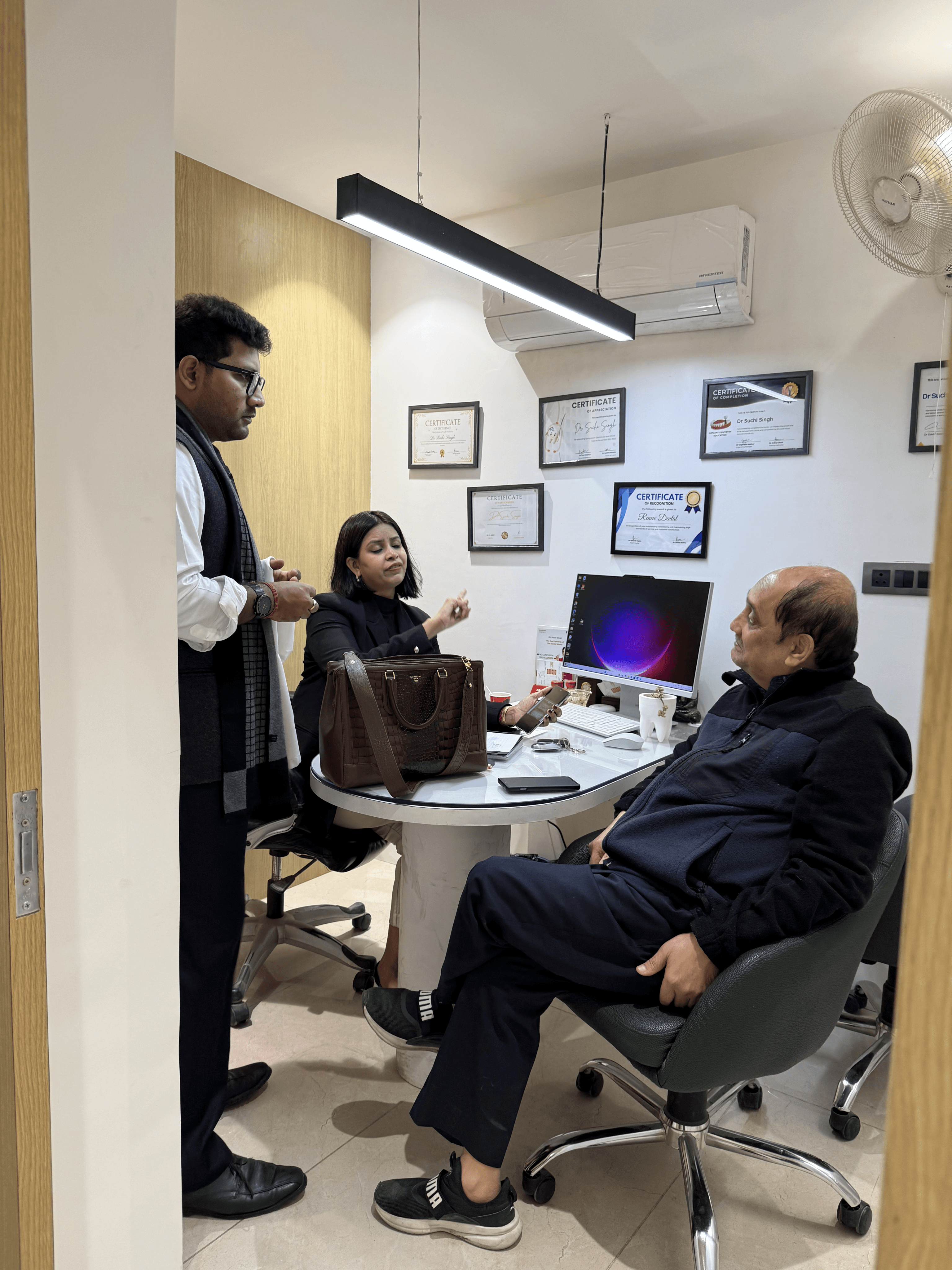
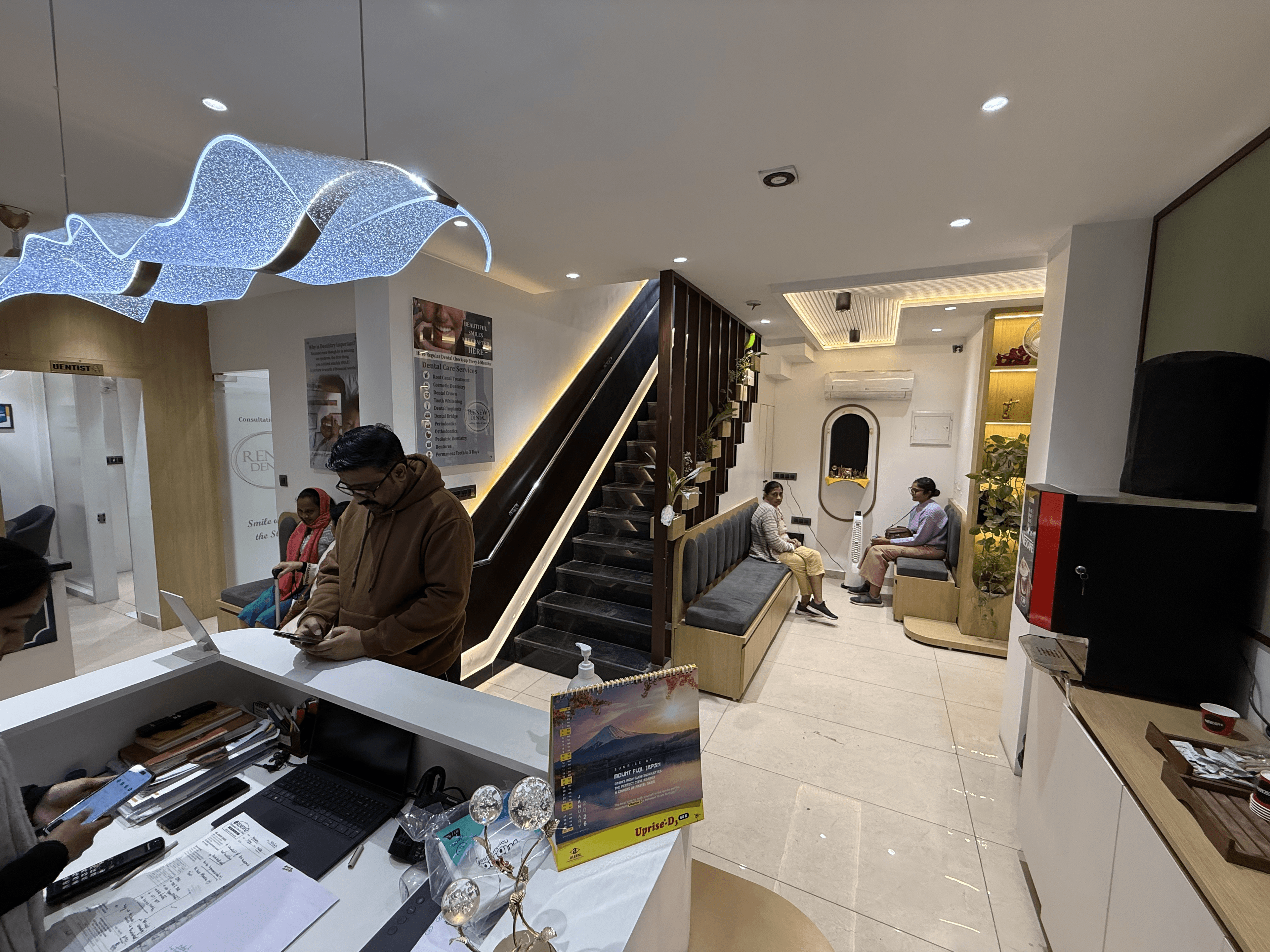
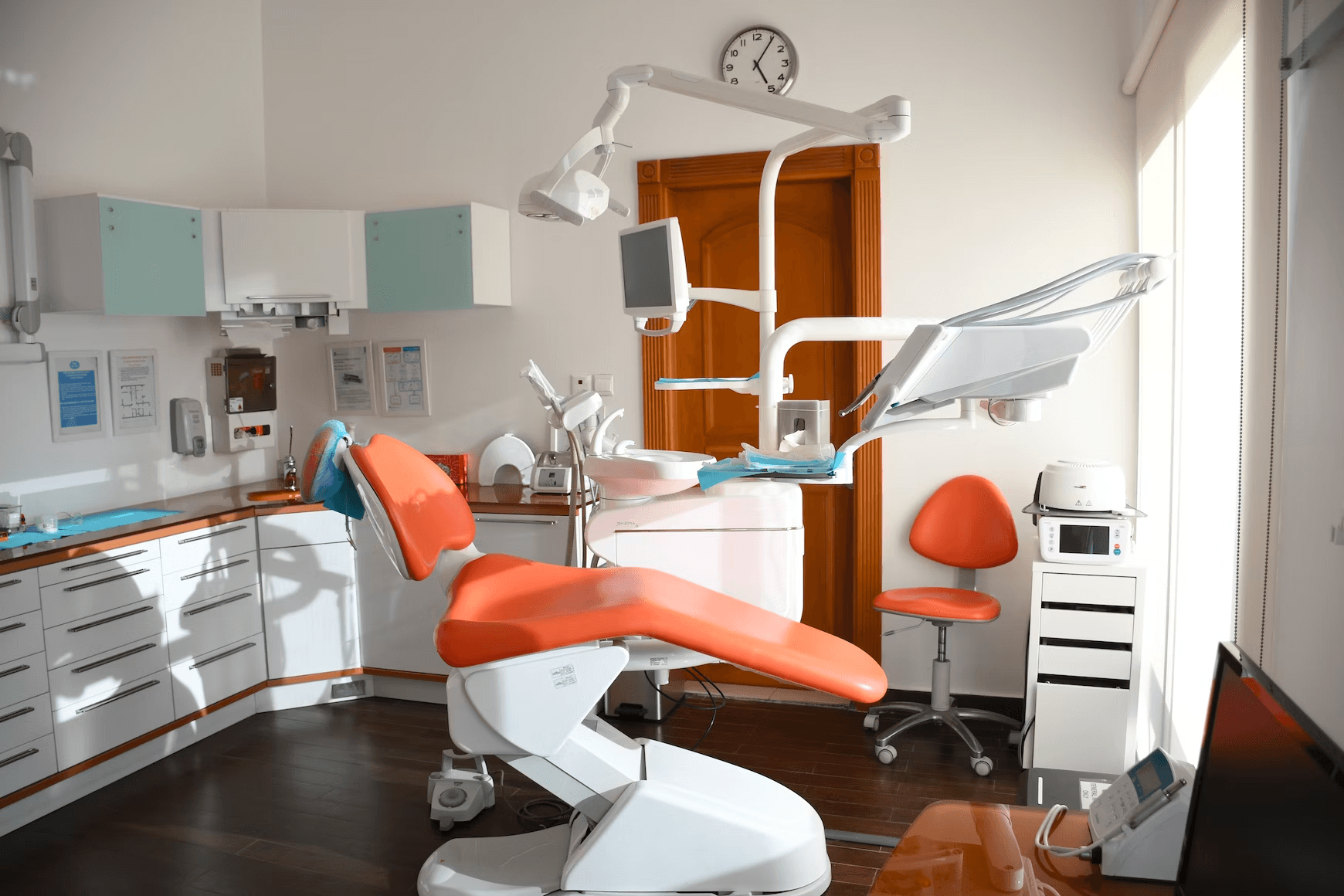
A glimpse into our modern dental clinic, advanced technology, and patient-friendly environment at Renew Dental.
Explore our thoughtfully designed clinic spaces built to provide comfort, cleanliness, and a calming experience for patients of all ages.

Best Dentist in Noida
Renew Dental Clinic located in Noida, Sector 47, is one of the leading dental clinics. Founded by Dr. Suchi Singh who is widely regarded as one of the best dentists in Noida, the clinic is committed to delivering personalised and high-quality dental care. Dr. Suchi Singh focuses on customised treatment plans designed around each patient’s unique needs, ensuring advanced, comfortable and reliable dental care at Renew Dental Clinic.

Your Trusted Dental Experts

Complete Dental Care

Friendly Dental Space

No Hidden Charges

Two trusted dental clinics in Noida — Renew Dental (Sector 47) and Tooth & Truth (Sector 34) — for gentle, modern care.

Renew Orthopedic Clinic, A-321, Basement Floor, Next to Mother Dairy Store, Sector 47, Noida, Uttar Pradesh 201303
 +91 99710 35300
A-98/A, Block A, Sector 34, Noida, Uttar Pradesh 201307
+91 99710 45002© 2026. All rights reserved | Designed and Developed by Zarle Infotech