Why Are My Teeth Yellowing? Causes and Professional Solutions
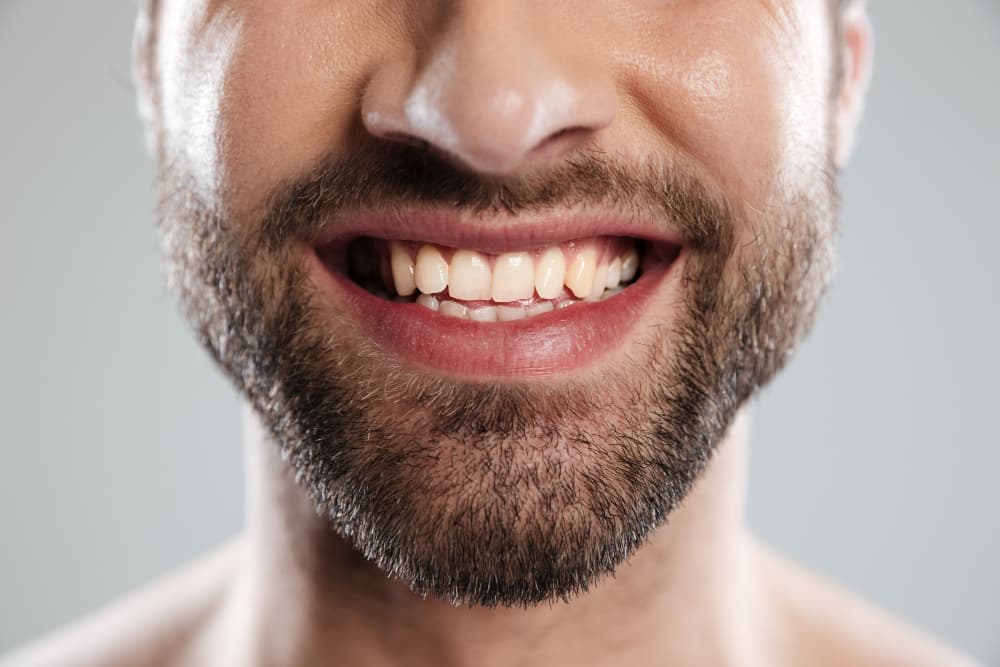
Laughing man's face.
One of the most common concerns patients bring to Renew Dental Clinic in Sector 47, Noida is tooth discolouration. "I brush regularly," they say, "but my teeth keep getting more yellow." It's a frustrating experience — and one that has a straightforward explanation once you understand what's actually happening beneath the surface.
Tooth yellowing is rarely about poor oral hygiene alone. It has multiple distinct causes, and the treatment that's right for you depends entirely on which cause — or combination of causes — is responsible for your specific situation.
Why Teeth Aren't Naturally Brilliant White
Let's start with an important baseline: teeth are not naturally bright white. They never were.
The outer layer of the tooth — enamel — is actually semi-translucent. Underneath the enamel sits the dentine, which has a naturally yellow-brown hue. It's the dentine colour that gives most people's teeth their characteristic warm, ivory shade.
When you see people with very white teeth on television or in advertising, you're typically looking at dental veneers, heavy whitening treatment, or digital photo editing. The "natural" appearance of healthy unrestored teeth is a warm, slightly off-white — not the blinding white of marketing.
That said, teeth that are noticeably yellow — significantly darker than their previous shade, stained in specific patterns, or becoming increasingly discoloured over time — warrant understanding and, in many cases, treatment.
The Two Categories of Tooth Discolouration
All tooth discolouration falls into one of two categories, and the category determines what treatment can actually help.
Extrinsic Discolouration — On the Surface
Extrinsic staining sits on the outer surface of the enamel or within the thin film (pellicle) that coats it. These stains are deposited from dietary and lifestyle sources and accumulate progressively on the enamel surface.
Extrinsic staining responds to whitening treatments. It can be improved with professional scaling and polishing, and significantly improved with laser whitening or professional bleaching.
Intrinsic Discolouration — Within the Tooth
Intrinsic staining is embedded within the dentine or within the enamel structure itself. It develops during tooth formation or from internal processes after the tooth has erupted. It cannot be bleached away in most cases.
When intrinsic staining is responsible, veneers, crowns, or very prolonged professional whitening (for certain types) are the appropriate approaches — not standard whitening.
Understanding which category is involved is the first thing Dr. Suchi Singh establishes at a whitening consultation.
Common Causes of Tooth Yellowing
Tea and Coffee
The most frequent cause of yellow teeth in India. Tea — consumed multiple times daily by the majority of Indian adults — contains tannins, chromogens, and polyphenols that bind to the enamel surface and progressively stain it. Coffee works similarly.
The longer the contact time with the teeth, the more staining accumulates. Sipping tea slowly over 30 to 40 minutes is significantly more staining than drinking a cup in 5 to 10 minutes. And consuming multiple cups daily means the staining compounds are in contact with the teeth for hours each day.
Milk added to tea doesn't neutralise the staining compounds — it may slightly reduce their potency but doesn't prevent staining.
This type of staining is extrinsic and responds well to professional treatment — scaling, polishing, and whitening at Renew Dental Clinic in Noida.
Tobacco — Smoking and Smokeless Forms
Tobacco is one of the most potent tooth-staining agents available. Tar and nicotine from cigarettes, bidis, and hookah penetrate the enamel pores and produce a stubborn brownish-yellow staining that professional cleaning can address, but that recurs with continued tobacco use.
Smokeless tobacco products — paan masala, gutka, khaini, zarda — produce even more direct and severe staining through prolonged contact with tooth surfaces and gum tissue.
Beyond aesthetics, tobacco use is associated with significantly increased risk of gum disease and oral cancer — both of which warrant discussion with Dr. Suchi Singh beyond the cosmetic dimension.
Enamel Thinning from Ageing
This is one of the most common causes of yellowing in adults and is entirely natural. As we age, enamel gradually thins through a lifetime of chewing, acid exposure, and wear. As the enamel thins, the natural yellow-brown colour of the dentine beneath becomes progressively more visible through the increasingly translucent enamel.
This type of yellowing is not surface staining — it's a structural change that whitening can partially address (by bleaching the dentine colour through the thinned enamel) but not fully reverse.
The degree to which this affects individual teeth varies based on genetics (original enamel thickness and dentine shade), diet, acid exposure history, and whether bruxism (teeth grinding) has accelerated enamel wear.
Enamel Erosion from Dietary Acid
Frequently consuming acidic foods and drinks — carbonated beverages, fruit juices, lemon water, pickled foods, citrus — progressively dissolves the enamel surface. As enamel becomes thinner and more translucent from acid erosion, the dentine shows through increasingly.
This is a common and underappreciated cause of yellowing in the Delhi NCR population. Cold drinks, fresh lime soda, and packaged fruit juices are staples of the urban NCR diet and are all significantly erosive to enamel.
The yellowing from enamel erosion is sometimes confused with surface staining, but treating it as staining with whitening won't fully address the underlying issue.
Poor Oral Hygiene and Plaque Buildup
Inadequate brushing and flossing allow plaque (the bacterial biofilm that forms on teeth) to accumulate. The plaque itself contributes to a dull, yellowish appearance. Over time, plaque hardens into tartar (calculus) — a yellow or brown deposit that strongly adheres to the tooth surface and cannot be removed by brushing alone.
Professional scaling at Renew Dental removes tartar, significantly improving both hygiene and appearance. This is one of the reasons regular dental cleaning appointments produce a noticeably brighter smile in many patients.
Tetracycline Antibiotic Staining
Tetracycline antibiotics taken during tooth development — either by the child during the first 8 years of life, or by the mother during the second half of pregnancy — can incorporate into the developing tooth structure, producing grey or brown banding or staining within the teeth.
This is intrinsic staining. Standard whitening has very limited effect on tetracycline staining, though prolonged professional whitening can achieve some improvement in milder cases. For significant tetracycline staining, veneers are the most effective treatment.
Fluorosis
Excessive fluoride intake during the years when teeth are developing — typically from 0 to 8 years — can cause fluorosis. Mild fluorosis produces white spots or streaks on the teeth. More significant fluorosis produces yellow or brown mottling and surface irregularities.
This is intrinsic staining within the enamel structure. Treatment depends on severity — mild fluorosis may respond to bleaching; moderate to severe fluorosis benefits more from composite veneers, porcelain veneers, or microabrasion techniques.
Dental Trauma
A tooth that has suffered significant trauma — a direct blow from a fall, accident, or sports injury — may darken internally over months or years. The darkening results from the breakdown of blood components within the pulp tissue, which gradually stains the dentine from the inside out.
A dark single tooth following previous trauma, while the surrounding teeth remain their normal shade, is a characteristic presentation. The affected tooth may need root canal treatment to remove the internal source of staining, followed by internal bleaching or a crown, depending on its overall health.
Certain Medications
Beyond tetracycline, other medications are associated with tooth discolouration
- Antihistamines (chlorhexidine-based mouthwashes with prolonged use)
- Antihypertensive medications
- Iron supplements — particularly liquid iron preparations — can cause dark surface deposits, especially at the gumline
Natural Tooth Shade and Genetics
Some people simply have naturally darker or more yellow dentine — not from any lifestyle or medical factor, but from genetics. The natural shade of enamel and dentine varies between individuals. Naturally darker teeth respond to whitening treatment but may not achieve the very light shades possible in people with naturally lighter dentine.
Professional Treatment Options for Yellow Teeth at Renew Dental, Noida
The right treatment depends on the cause of yellowing.
Professional Scaling and Polishing
The first step for most patients. Professional scaling removes tartar deposits that brushing cannot, and polishing removes surface stains that have accumulated in the enamel pellicle. For patients whose yellowing is primarily surface deposit and tartar-related, a thorough cleaning appointment at Renew Dental produces a noticeably brighter result — often without any whitening treatment needed.
Laser Teeth Whitening
For extrinsic staining from tea, coffee, tobacco, and dietary sources — laser whitening at Renew Dental Clinic is the fastest and most effective professional option. A high-concentration bleaching gel is applied to the teeth and activated by a dental laser, breaking down the stain molecules within the enamel. Results are visible in a single 45 to 60-minute session.
Professional Take-Home Whitening Trays
Custom-fitted trays with professional-grade whitening gel produce results comparable to in-office whitening over 2 to 4 weeks of daily home application. This option is preferred by some patients for its gradual, controlled pace and suitability for sensitive teeth.
Dental Veneers
For intrinsic staining — tetracycline, severe fluorosis, internal darkening after trauma — veneers cover the discolouration rather than bleaching it. Custom-fabricated porcelain or composite shells bonded to the front surface of the teeth provide a complete aesthetic transformation independent of the underlying staining.
Composite Bonding
For isolated dark or stained areas on specific teeth, composite resin can be applied directly to mask the discolouration. Less invasive and less expensive than full veneers — appropriate for targeted correction.
What to Expect From Whitening — Realistic Outcomes
Whitening removes extrinsic staining and can lighten the dentine colour viewed through the enamel. It does not:
- Change the shade of existing crowns, veneers, or composite fillings
- Reverse significant structural yellowing from severe enamel thinning or erosion
- Eliminate intrinsic staining from tetracycline or severe fluorosis
Results after professional whitening at Renew Dental are typically 4 to 8 shades lighter. The exact outcome depends on the starting shade, the type of staining, and enamel health. Patients with very yellow dentine or significant intrinsic factors may see less dramatic results and benefit from a discussion with Dr. Suchi Singh about whether veneers would be a more appropriate option.
Prevention — Keeping the Whitening Result
Results last 12 to 24 months for most patients. Prolonging them
- Rinse with water after every tea, coffee, or acidic drink
- Use a straw for cold drinks when practical
- Maintain regular scaling appointments at Renew Dental to prevent tartar buildup
- Brush twice daily with a non-abrasive fluoride toothpaste
- Reduce or eliminate tobacco use
Frequently Asked Questions
Are yellow teeth a sign of poor oral health?
Not necessarily. Yellow teeth can reflect natural dentine shade, age-related enamel thinning, or dietary staining — none of which indicate disease. However, yellowing accompanied by sensitivity, bleeding gums, or visible tartar suggests underlying issues that should be assessed.
Will a whitening toothpaste fix yellow teeth?
Whitening toothpastes remove mild surface deposits through mild abrasion. They don't bleach the tooth colour. For established yellowing, they have minimal effect.
Is it safe to whiten teeth repeatedly?
Professional whitening done properly is safe. Over-whitening — using highly concentrated products too frequently without professional supervision — can affect enamel. Discuss frequency with Dr. Suchi Singh.
Get Yellow Teeth Assessed and Treated at Renew Dental, Noida
Whether your yellowing is from years of chai, age-related changes, or something else entirely — the starting point is a consultation with Dr. Suchi Singh at Renew Dental Clinic, Sector 47, Noida. She'll identify exactly what's causing the discolouration and recommend the treatment that will actually help.
To book a consultation, call (0120) 498-8333.
Open Monday–Saturday, 10:30 AM – 8:00 PM | Sunday, 11:00 AM – 2:30 PM.