Minor Oral Surgery in Noida — What Procedures Are Covered and What to Expect
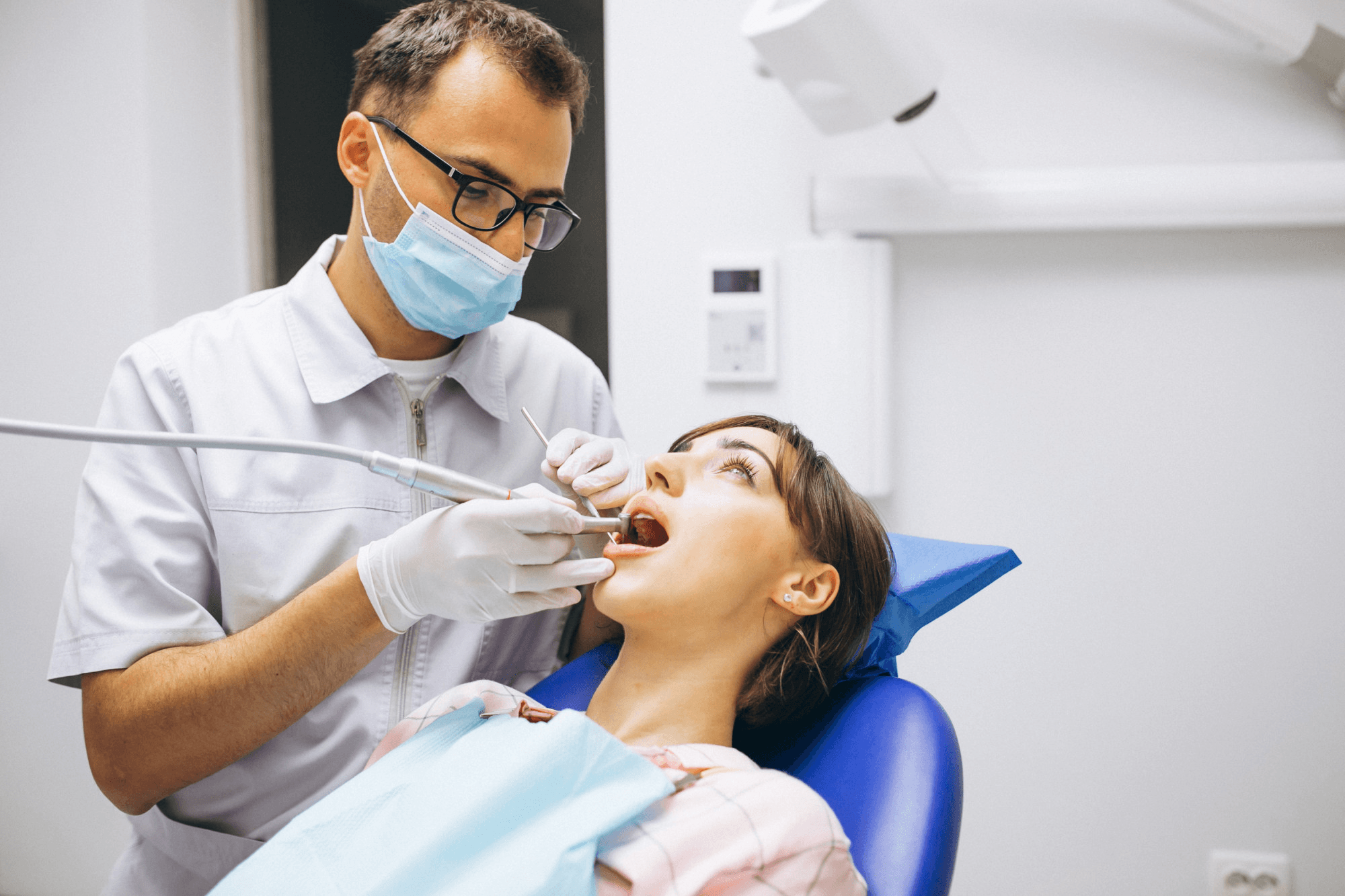
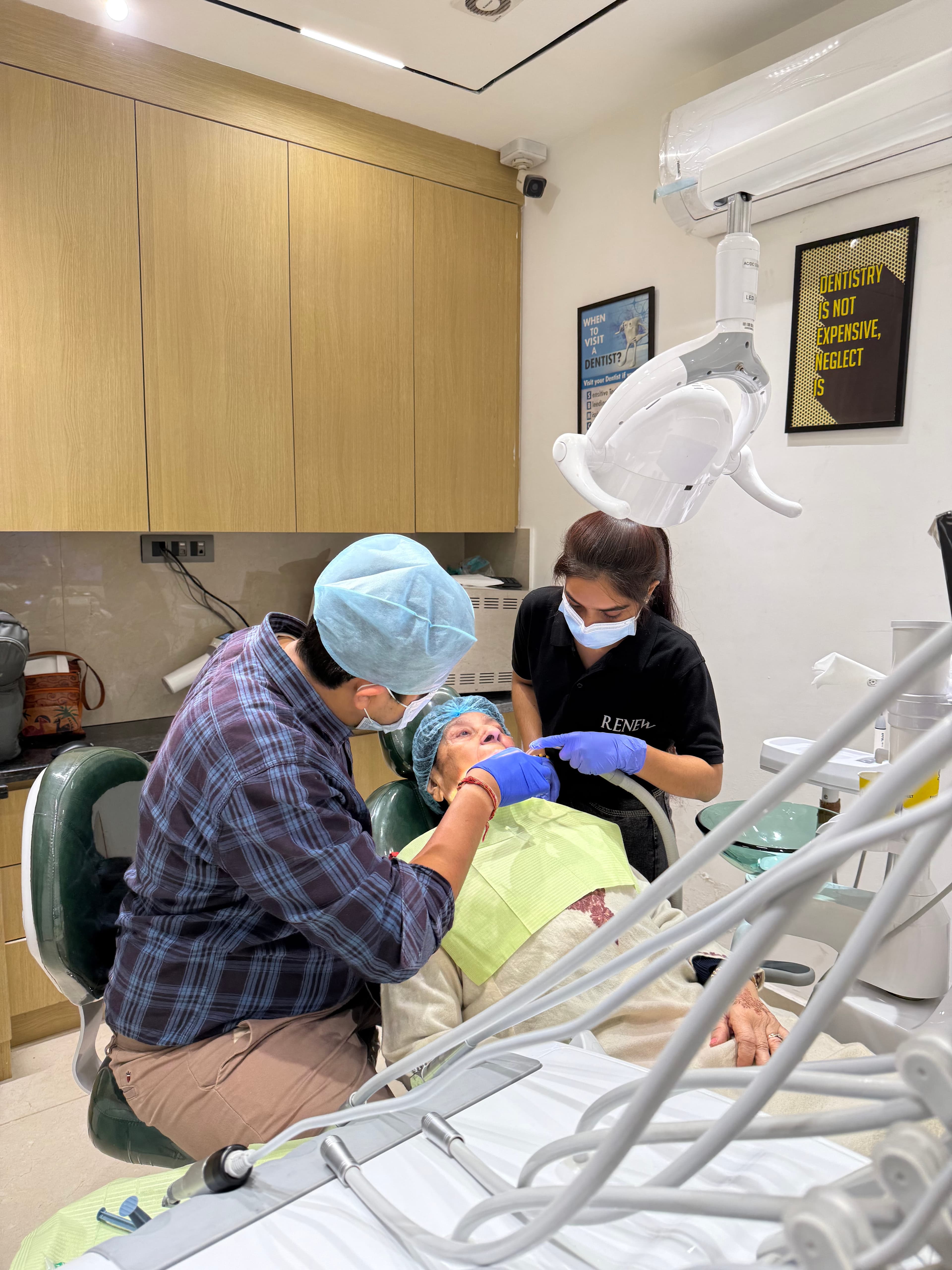
Patient sitting in a dental chair during a tooth extraction.
"Minor" doesn't mean insignificant. In dental terminology, minor oral surgery refers to surgical procedures that can be performed in a dental clinic under local anaesthesia, without the need for hospitalisation or general anaesthesia. For the patient sitting in the chair, it can feel anything but minor — which is why understanding what's involved helps considerably more than reassurance alone.
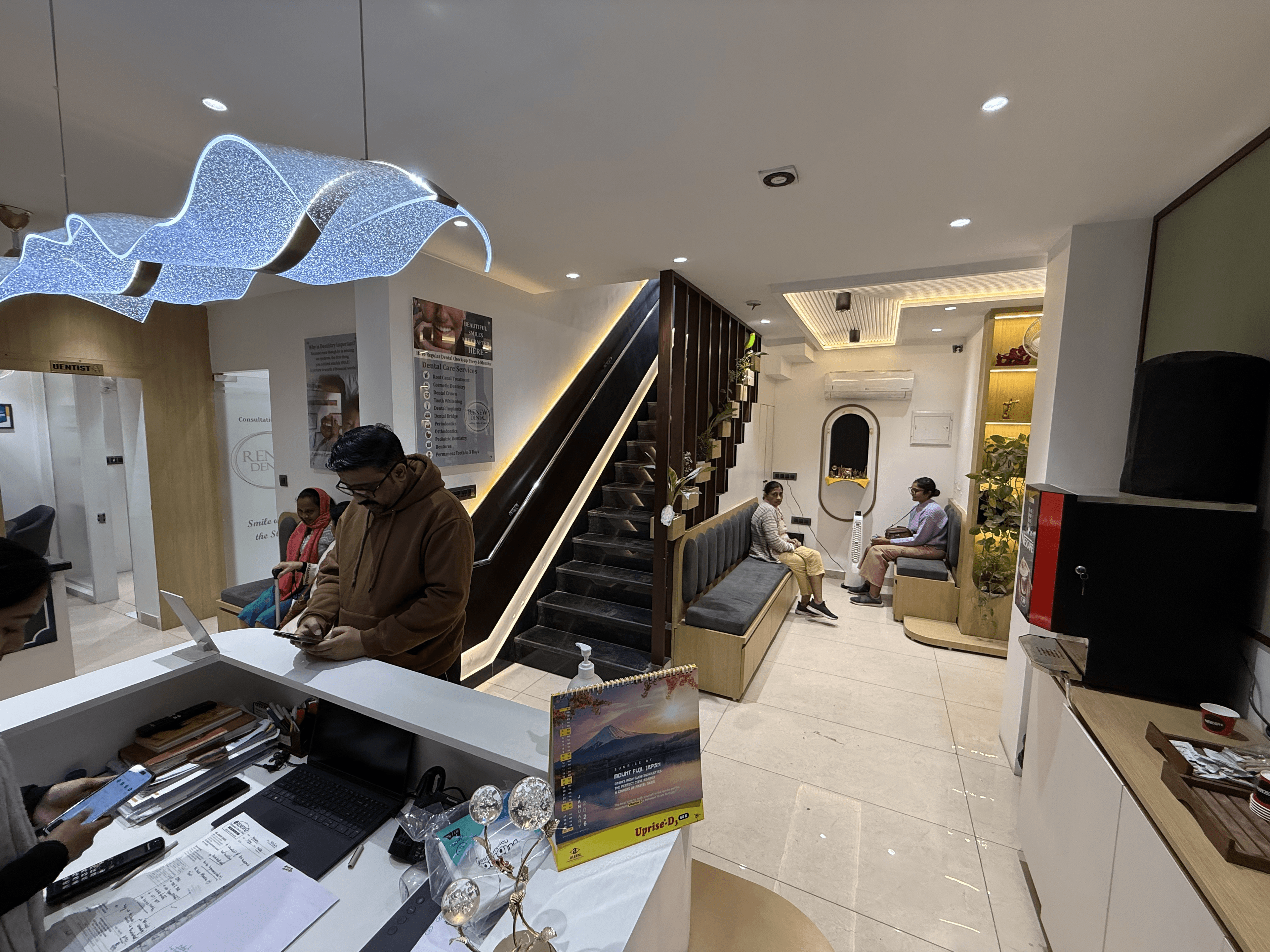
At Renew Dental Clinic in Sector 47, Noida, Dr. Suchi Singh performs a range of minor oral surgical procedures with a focus on thorough anaesthesia, clear communication before anything happens, and aftercare guidance that actually prepares patients for what to expect.
What Falls Under Minor Oral Surgery?
Several procedures count as minor oral surgery. The most common ones seen at Renew Dental
Surgical tooth extraction — when a tooth cannot be removed with a simple extraction because it's broken at the gumline, has curved roots, or is structurally compromised in a way that requires a small surgical flap to access properly.
Impacted wisdom tooth removal — the most frequently performed minor oral surgery. Third molars (wisdom teeth) that are stuck in the bone or gum tissue, lying at an angle, or partially erupted require surgical removal. This is distinct from simple extraction of a fully erupted wisdom tooth.
Surgical removal of retained roots — when a tooth breaks during extraction and root fragments remain in the bone, a surgical approach is needed to access and remove them.
Incision and drainage of a dental abscess — when an abscess has built up pressure that needs to be released, a small incision drains it. This provides immediate pain relief while antibiotic treatment addresses the underlying infection.
Pericoronitis treatment — surgical removal or trimming of the gum flap (operculum) overlying a partially erupted wisdom tooth that keeps causing recurrent infection.
Apicoectomy — removal of the root tip and surrounding infected tissue when root canal treatment has not been able to eliminate an infection at the root apex. The approach goes through the bone, directly to the infection site.
Exposure of impacted teeth — surgically uncovering an impacted tooth (most often a canine) so that orthodontic traction can guide it into its correct position.
Each of these is performed in the dental clinic under local anaesthesia, typically in a single appointment.
Wisdom Tooth Surgery — A Closer Look
Wisdom teeth are the third molars at the back of the mouth. Most people have four — one in each corner. They erupt (or attempt to) between the ages of 17 and 25. Many patients never need them removed. Others aren't so fortunate.
Problems arise when there isn't enough space in the jaw. The wisdom tooth either stays buried in bone (fully impacted), breaks through the gum only partially (partially erupted), or erupts at an angle that pushes against the adjacent molar.
Impacted wisdom teeth cause specific problems:
Partially erupted teeth are almost impossible to keep clean. The gap between the gum flap and the tooth surface traps food and bacteria. Pericoronitis — infection in this pocket — produces swelling, pain, bad breath, and sometimes difficulty opening the mouth. It comes and goes. Each episode is a reminder that the tooth isn't going to self-correct.
Fully impacted wisdom teeth sitting at an angle to the adjacent molar place lateral pressure on that tooth's root. Over time, this can cause root resorption of the second molar — actual destruction of the root of a healthy tooth. This is why some impacted wisdom teeth are removed even when they're currently causing no symptoms.
Some impacted wisdom teeth develop associated cysts. A follicular (dentigerous) cyst forms around the crown of the unerupted tooth and can expand slowly within the jawbone, weakening it.
When removal is recommended:
- Recurrent pericoronitis
- Cavity in the wisdom tooth that's not restorable
- Cavity in the adjacent molar caused by the wisdom tooth's position
- Cyst development
- Root resorption of the second molar
- As part of orthodontic treatment where space is needed
Not every wisdom tooth needs removing. Fully erupted, properly positioned, easily cleanable wisdom teeth can stay. The decision is based on a clinical examination and X-ray review.
What Happens During Surgical Extraction — Step by Step
Consultation and imaging. Before any surgery, a full assessment is done. An OPG (panoramic X-ray) shows all four wisdom teeth, their position, angle, proximity to the inferior alveolar nerve (relevant for lower wisdom teeth), and the volume of bone surrounding them. This is essential planning, not optional.
Local anaesthesia. The area is thoroughly numbed. For lower wisdom teeth, this involves an inferior alveolar nerve block — a single injection that numbs the lower half of one side of the mouth completely. The procedure doesn't begin until the area is confirmed numb.
Incision and flap. A small cut is made in the gum tissue to expose the tooth and surrounding bone. The gum is gently reflected away (the "flap") to give clear access.
Bone removal (if needed). If bone is covering part of the tooth, a small amount is carefully removed using a surgical drill with irrigation, exposing the tooth crown.
Section and removal. Some impacted teeth are easier to remove in sections. The tooth is divided and each section is removed separately — this is less traumatic than trying to remove a large impacted tooth in one piece.
Socket clean and irrigation. The socket is irrigated thoroughly to clear any debris, bone chips, or granulation tissue.
Sutures. Dissolvable stitches are placed to close the gum flap. These dissolve on their own over 7 to 14 days — no need for a return visit to remove them.
Aftercare instructions. Before you leave, you're given specific instructions on what to do and what to avoid during the recovery period. These aren't generic. They're specific to the procedure and your situation.
Does Minor Oral Surgery Hurt?
During the procedure: no. The anaesthesia is thorough. You feel pressure, movement, and the vibration of instruments — none of which are painful with proper nerve blockade. If at any point something feels sharp, raise your hand. Everything stops, more anaesthetic is given, and the procedure only continues when you're confirmed comfortable.
After the procedure: yes, some discomfort is expected and normal. The degree varies by procedure. A simple extraction under surgical conditions might produce 24 to 48 hours of mild soreness. An impacted lower wisdom tooth removal can produce 3 to 5 days of moderate soreness, swelling that peaks at 48 hours and then gradually reduces, and jaw stiffness (trismus) that improves over a week.
This is managed with prescribed or recommended analgesics. Most patients find ibuprofen and paracetamol in alternating doses effective. If antibiotics are prescribed, take the full course.
The Recovery Period — What's Normal and What Isn't
Normal after any minor oral surgery:
- Swelling peaking 48 hours after surgery then gradually reducing
- Mild to moderate soreness for 3 to 7 days
- Some jaw stiffness (trismus) after lower wisdom tooth surgery, improving over 1 to 2 weeks
- Blood-tinged saliva for the first 24 hours
- A slight unpleasant taste as the wound heals
Warning signs that need prompt contact with Renew Dental:
- Severe, throbbing pain beginning 2 to 4 days after surgery (classic dry socket — the clot has dislodged)
- Swelling that increases rather than decreases after 72 hours
- Fever above 38°C with dental pain
- Pus or significant bad taste from the wound
- Numbness that hasn't resolved 24 hours after surgery (relevant for lower wisdom tooth cases where the inferior alveolar nerve runs close to the roots)
Dry socket is the most common post-surgical complication. It's treatable — a medicated dressing placed in the socket provides significant pain relief. But it needs dental attention, not waiting.
Why the Dentist's Experience Matters More Than the Technology
Minor oral surgery outcomes depend heavily on the surgeon's judgement — how to position the incision, whether to section the tooth, how to manage unexpected anatomy. A well-equipped clinic with an inexperienced surgeon produces worse outcomes than a competent surgeon with standard equipment.
At Renew Dental Clinic, Dr. Suchi Singh's surgical cases are planned from complete imaging, approached conservatively, and executed with thoroughness that minimises trauma and recovery time. Patients are never rushed into surgery without understanding what the procedure involves and why it's recommended.
If you've been told you need a wisdom tooth removed and aren't sure whether that advice is correct, a second opinion at Renew Dental is a completely reasonable step.
Frequently Asked Questions
1. Can all four wisdom teeth be removed at once?
In some cases, yes — particularly when all four are fully erupted or the surgical difficulty is low. For impacted lower wisdom teeth where recovery is more demanding, spreading the procedures over two appointments (left side then right) means the patient can always eat and open their mouth on one side during recovery.
2. How long off work after wisdom tooth surgery?
Most patients take 1 to 2 days off. For more complex surgical cases, 3 to 4 days is reasonable. Heavy physical work or strenuous exercise should wait 4 to 5 days.
3. Will my face swell?
After lower wisdom tooth surgery, some facial swelling on the affected side is expected. It peaks at 48 hours and reduces over the following 5 to 7 days. Applying ice packs to the cheek for the first 24 hours minimises it.
4. What if I need oral surgery but I'm very anxious?
Mention this when booking. Dr. Suchi Singh discusses anxiety management options before the appointment, including the approach to anaesthesia delivery that minimises discomfort.
Book a Surgical Consultation at Renew Dental Clinic, Noida
If you've been told you need an extraction, have a wisdom tooth causing problems, or want an assessment of any surgical dental need — Renew Dental Clinic in Sector 47, Noida provides the full range of minor oral surgery in a clinical environment where you know what's happening and why.
To book, call (0120) 498-8333.
Monday–Saturday 10:30 AM – 8:00 PM | Sunday 11:00 AM – 2:30 PM.