Dentures in Noida — Types, Care, and How to Know If You Need Them
Dentures in Noida — Types, Care, and How to Know If You Need Them
There is a very outdated mental image of dentures — uncomfortable, unreliable, obviously artificial, associated with old age in the least flattering sense. Modern dentures are significantly better than that image suggests. But they're also not perfect, and the patients who do best with them are the ones who understand both sides going in.
This guide covers what dentures actually are in 2025, the different types available at Renew Dental Clinic in Sector 47, Noida, what daily life with dentures looks like, and how to know whether dentures are the right choice for your specific situation.
When Dentures Become the Relevant Option
Dentures aren't a first choice — they're a solution for situations where multiple teeth have been lost and other options are limited or impractical.
The situations where dentures are commonly recommended:
Multiple missing teeth across an arch — when several teeth are missing in different positions, partial dentures are often more practical than placing multiple implants at dispersed locations.
Full arch tooth loss — when all teeth in an arch (upper or lower) are missing, a complete denture is the conventional non-surgical option. An implant-supported alternative exists (discussed below) but requires surgery and higher initial investment.
Medical contraindications to surgery — some patients cannot safely undergo implant surgery due to medical conditions, medications, or age-related health factors. For these patients, dentures are the only viable option.
Bone loss too extensive for implants — significant bone resorption after long-term tooth loss may make implant placement impossible without extensive grafting that isn't practical in every case.
Patient preference — some patients, fully understanding the options, choose dentures for reasons of simplicity, comfort, or personal preference. This is a legitimate choice.
Types of Dentures at Renew Dental, Noida
1. Complete (Full) Dentures
A complete denture replaces an entire arch of missing teeth — either upper, lower, or both. It consists of an acrylic base that mimics gum tissue, with artificial teeth set into it.
Upper complete dentures rest against the palate and are held in place partly by suction between the acrylic base and the mucosa. They're generally more stable than lower dentures because the broad palatal coverage provides a larger contact area.
Lower complete dentures sit on the alveolar ridge (the bony ridge where teeth once were) and are notoriously more difficult to keep stable. The tongue, cheek movements, and the narrower ridge area all work against stability. Lower full dentures are the most challenging prosthesis in dentistry from a stability standpoint — and being honest about this upfront matters.
Modern complete dentures are made to be natural-looking. The shape, shade, and arrangement of the artificial teeth are customised, and a skilled dental technician can create a denture that looks considerably better than most patients expect.
Immediate dentures — placed on the same day that the remaining teeth are extracted. The advantage is that the patient is never without teeth. The disadvantage is that the gums and bone change shape as they heal after extraction — the immediate denture will likely need relining within 6 to 12 months as it becomes loose.
Conventional dentures — fabricated after the gum has healed (6 to 8 weeks after extraction). The fit is more accurate because impressions are taken from healed tissue, but the patient goes through the healing period without teeth.
2. Partial Dentures
A partial denture fills the gaps left by some missing teeth when some natural teeth remain. It clips onto the remaining natural teeth using metal or flexible clasps for stability.
Acrylic partial dentures — the most affordable option. An acrylic base with metal clasps that hook around existing teeth. Adequate for many patients and easily modified if additional teeth are lost.
Cast metal partial dentures (cobalt-chrome) — a metal framework precisely cast to fit the remaining teeth, with acrylic saddles carrying the artificial teeth. More durable, more precisely fitting, and less bulky than acrylic alternatives. The framework design is calculated to distribute chewing forces in a way that protects the remaining natural teeth rather than overloading them.
Flexible partial dentures (Valplast) — made from a flexible nylon resin rather than rigid acrylic. No visible metal clasps, more comfortable for some patients, and more aesthetic. Less suitable for patients who need a precision fit for complex tooth replacement.
Partial dentures must be designed carefully — poorly designed clasps can actually damage the teeth they clip onto. At Renew Dental, Dr. Suchi Singh assesses the remaining teeth thoroughly before designing a partial denture to ensure the load distribution is appropriate.
3. Implant-Supported Dentures (Overdentures)
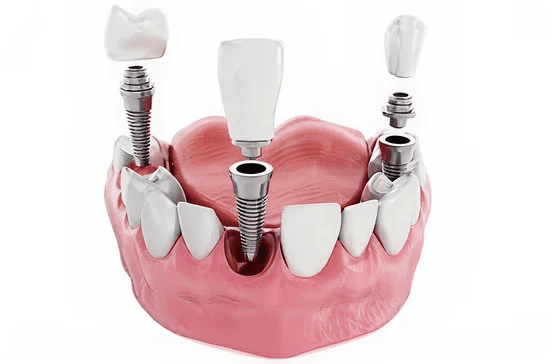
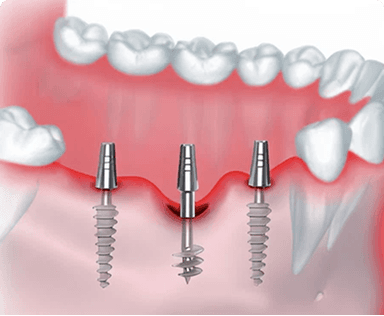
A significant upgrade on conventional complete dentures. Rather than relying on suction and gum contact for stability, the denture clips onto 2 to 4 dental implants placed in the jaw. The implants act as anchors — the denture snaps onto them and stays firmly in place during eating and speaking.
The difference in stability compared to a conventional full denture is dramatic. Most patients who switch from a conventional lower denture to an implant-supported one describe the improvement as transformative.
Additional benefits: the implants provide bone stimulation, slowing the bone resorption that conventional dentures allow to continue. Over years, this makes a significant difference to the structural support available.
Implant-supported dentures are still removable — they're taken out for cleaning — unlike fixed implant bridges. This means they can be cleaned more easily than fixed prostheses.
They require surgery for implant placement, and the bone must be adequate to support the implants. Not every patient is suitable, but many patients who've been struggling with conventional lower dentures are candidates and benefit enormously.
The Denture Fitting Process at Renew Dental
Getting a denture isn't a single appointment. The process involves multiple stages over several weeks:
Initial assessment — examining the remaining teeth and gums, taking X-rays where needed, discussing the patient's expectations and the realistic outcomes.
Preliminary impressions — an initial mould of the mouth using impression materials. From this, study models are made for treatment planning.
Primary impressions and bite registration — more detailed impressions of the gum ridges, and a record of how the jaws close together. These are sent to the dental laboratory.
Trial (wax try-in) — the teeth are set in wax on the denture base and tried in the patient's mouth. The patient (and dentist) assess the appearance, shade, shape, and fit of the teeth before anything is finalised. Changes are still possible at this stage.
Fitting of the definitive denture — the final denture is delivered, adjusted, and any immediate pressure points are relieved.
Follow-up adjustments — almost universal. Dentures rarely fit perfectly without at least one or two minor adjustments as the gum tissue settles and any pressure points are identified. These follow-up appointments are part of the process, not a sign of failure.
What to Expect in the First Weeks
Most patients take 4 to 8 weeks to fully adapt to a new denture. During this period:
Speech may be affected. Some sounds — particularly sibilants (s, sh, z) — sound slightly different with a new denture. Most patients adapt within 2 to 3 weeks. Reading aloud helps speed adaptation.
Chewing takes adjustment. Start with soft foods cut into small pieces, chewing on both sides simultaneously. Progress to firmer foods gradually. Full chewing function takes several weeks to feel natural.
Soreness is common initially. New dentures create pressure points on areas of gum that weren't under load before. These produce sores. Return to Renew Dental for adjustments — don't try to file the denture yourself. Most adjustments take 10 minutes and immediately relieve the problem.
The denture may feel large. Particularly an upper denture with a palatal plate. This normalises with time as the brain adjusts to the new structure.
Daily Denture Care
Dentures need as much care as natural teeth — just a different kind.
Remove and clean after every meal where practical, or at minimum after the main meal of the day. Food and bacteria accumulate under and on dentures just as they do on natural teeth.
Brush with a soft denture brush and mild soap or a denture cleaning cream. Not regular toothpaste — it's abrasive and scratches acrylic, creating rough surfaces that harbour bacteria.
Soak overnight in a denture-cleaning solution (effervescent tablets designed for the purpose) or in plain water. Never leave dentures dry overnight — acrylic can warp. Never soak in hot water — it distorts the denture.
Handle carefully over a basin of water or a folded towel — dropped dentures crack or break. Replacing a fractured denture is an avoidable expense.
Clean your gums, tongue, and remaining natural teeth (if applicable) with a soft toothbrush even without dentures in. The oral mucosa still needs stimulation and cleaning.
See Dr. Suchi Singh at Renew Dental at least annually even if the denture feels fine. Gum and bone shape change over time, altering denture fit. Early relining extends the denture's lifespan and prevents trauma from a poorly fitting base.
Common Denture Problems
Looseness — all dentures loosen over time as the underlying bone resorbs. This is a natural process, not a failure of the denture. Relining (adding material to the fitting surface to restore fit) is often an option; sometimes a new denture is needed.
Sore spots — pressure areas on the gum that are disproportionately loaded. Easily adjusted at the clinic.
Difficulty with lower denture stability — this is almost universal for lower complete dentures and is an anatomical reality, not a fabrication problem. Dental adhesive can help; implant stabilisation is the definitive solution.
Cracking or fracture — usually from being dropped. Some fractures can be repaired; others require replacement.
Colour change over time — acrylic absorbs stain from coffee, tea, and tobacco. Professional cleaning at the clinic and avoidance of heavy staining substances reduces this.
Frequently Asked Questions
1. Should I sleep with my dentures in?
The conventional recommendation is to remove dentures at night, allowing the gum tissue to recover and breathe. However, some patients — particularly those with implant-retained dentures — are advised differently based on their specific case. Follow Dr. Suchi Singh's specific guidance.
2. How long do dentures last?
Typically 5 to 8 years before replacement is needed, though some last longer with good care. The underlying bone changes more than the denture itself — a well-made denture becomes ill-fitting as the ridge resorbs beneath it.
3. Can I eat anything with dentures?
Most foods, with adaptation. Very hard foods (hard nuts, raw carrots bitten into) and very sticky foods (extremely chewy sweets, gum) are harder to manage and can dislodge or damage the denture.
Book a Denture Consultation at Renew Dental Clinic, Noida
Whether you need a first set of dentures, an assessment of an existing one that's become uncomfortable, or want to explore implant-supported options for better stability — Renew Dental Clinic in Sector 47, Noida provides the full range of denture services.
To book, call (0120) 498-8333.
Monday–Saturday 10:30 AM – 8:00 PM | Sunday 11:00 AM – 2:30 PM.