Dental Fillings in Noida — Types, Procedure, and What to Expect

Dentists treat patients' teeth.
Dental fillings are one of the most common procedures in dentistry — and one of the most misunderstood. Many patients delay getting a filling because they're not sure what it involves or whether it will hurt. Others don't realise they have a cavity at all until it's become significantly larger than it needed to be.
This guide covers everything patients in Noida, Greater Noida, and across Delhi NCR need to know about dental fillings — the types available, how the procedure works, how long fillings last, and what to do after getting one.
Why Dental Fillings Are Necessary
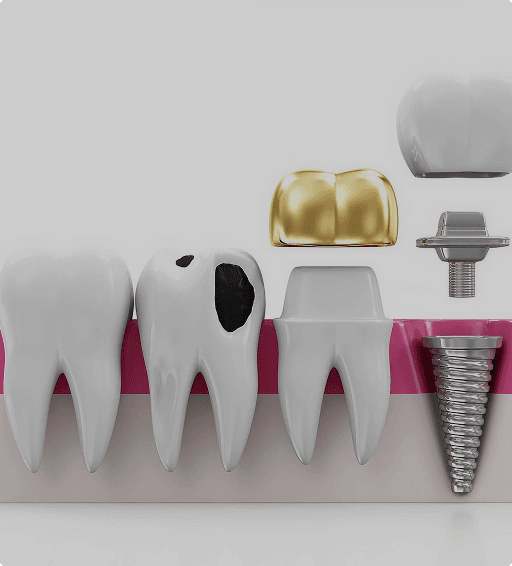
A filling becomes necessary when tooth decay (a cavity) has created a hole in the enamel or dentine that requires repair. Left untreated, a cavity doesn't stay the same size. It grows. Bacteria continue to break down the tooth structure progressively deeper — through the enamel, into the dentine, and eventually toward the pulp (the inner nerve and blood vessel tissue). Once decay reaches the pulp, a root canal is required instead of a simple filling.
This is the fundamental reason dentists emphasise regular check-ups. Cavities caught early — when they've only just entered the enamel — are treated with a small, quick filling. Cavities caught late require significantly more invasive treatment.
Beyond decay, fillings are also used to repair:
- Cracked or chipped teeth (small fractures)
- Teeth worn down by bruxism (grinding)
- Closing minor gaps between front teeth (composite bonding)
- Restoring a tooth after an old filling failure
Signs You May Need a Filling
Some cavities produce obvious symptoms. Many do not.
Symptoms that may indicate a cavity needing a filling:
- A visible hole, dark spot, or rough area on a tooth
- Sensitivity to sweet foods or cold or hot drinks that lingers briefly
- A toothache or dull ache in a specific tooth
- Food consistently getting stuck in the same spot between teeth
- A rough edge you can feel with your tongue
The important caveat: Many early to moderate cavities produce no pain whatsoever. The tooth only begins to hurt when decay approaches the nerve — at which point a filling may no longer be sufficient. This is why X-rays at regular check-ups at Renew Dental Clinic in Noida detect cavities well before they cause symptoms.
Types of Dental Fillings Available at Renew Dental, Noida
The right filling material depends on the location of the tooth, the size of the cavity, aesthetic requirements, and the patient's specific clinical situation. Dr. Suchi Singh discusses material options at the consultation stage so patients make an informed choice.
Composite Resin Fillings (Tooth-Coloured)
Composite fillings are made from a resin base mixed with finely ground glass or quartz particles. They're tooth-coloured — custom-shade-matched to the surrounding natural tooth — making them virtually invisible once placed.
Composite is currently the most widely used filling material in modern dentistry for several reasons
- Aesthetics — blends seamlessly with natural tooth colour on both front and back teeth
- Conservative preparation — composite bonds directly to the tooth, meaning less healthy tooth structure needs to be removed compared to older materials
- Versatility — suitable for small to large cavities, chips, cracks, and cosmetic bonding
- Single-appointment placement — composite is placed, shaped, and hardened using a curing light in a single visit
Durability: Composite fillings typically last 7 to 10 years with good oral hygiene. High-quality composite materials (nano-hybrid resins) used by experienced dentists like Dr. Suchi Singh fall toward the upper end of this range.
Limitations: Composite can stain over time with heavy consumption of tea, coffee, or tobacco — though the staining is mild and a professional polish at regular check-ups addresses it.
Glass Ionomer Cement (GIC)
Glass ionomer is a tooth-coloured material that bonds chemically to the tooth and — importantly — releases fluoride, which helps prevent secondary decay around the filling margin.
Best suited for:
- Children's teeth (milk teeth)
- Cavities near or below the gumline
- Non-load-bearing areas not subject to heavy chewing force
- Patients at high risk of decay who benefit from the fluoride-release property
Limitations: Less strong and less durable than composite — not ideal for the biting surfaces of back teeth under heavy chewing load.
Ceramic / Porcelain Inlays and Onlays
For larger cavities where a standard direct filling isn't sufficient — but the damage isn't extensive enough to require a full crown — ceramic inlays and onlays provide a middle-ground restoration.
An inlay fits within the chewing surface of the back tooth. An onlay extends over one or more cusps (the raised projections of the molar surface). Both are fabricated in a dental laboratory from impressions taken of the prepared tooth and bonded into place at a second appointment.
Advantages:
- Extremely durable — ceramic inlays and onlays can last 15 years or more
- Precise fit and aesthetics — lab-fabricated for exact match to tooth anatomy
- Strong under chewing forces — suitable for the demanding environment of back teeth
Consideration: Requires two appointments (preparation and fitting) rather than a single visit.
Amalgam (Silver Fillings)
Silver amalgam — a mixture of mercury with other metals including silver, tin, and copper — was the dominant filling material for over a century. It's extremely durable and robust under chewing load.
However, amalgam is now used far less frequently due to:
- Its silver/grey colour makes it visible when smiling or opening the mouth
- Growing preference for tooth-coloured alternatives
- Environmental and health concerns related to mercury content (though major dental organisations consider amalgam safe for adults, many patients and practitioners prefer alternatives)
At Renew Dental Clinic in Noida, tooth-coloured composite and GIC are the standard materials. Amalgam is not routinely placed.
The Filling Procedure — Step by Step
Understanding what happens during a filling removes most of the anxiety around the appointment.
Step 1 — Examination and X-Ray
Dr. Suchi Singh examines the tooth and takes an X-ray to assess the depth and extent of the cavity. The X-ray is essential — it reveals whether the decay has reached close to the nerve, which would change the treatment approach.
Step 2 — Local Anaesthesia
For most fillings, local anaesthesia is administered to numb the tooth and surrounding area completely. A topical anaesthetic gel is first applied to the gum to reduce the sensation of the injection — most patients feel only mild pressure rather than a sharp sting.
Once the anaesthetic takes effect (2 to 5 minutes), the area is completely numb. You feel pressure and vibration during the procedure but not pain.
Step 3 — Decay Removal
The decayed portion of the tooth is removed using a dental handpiece (drill) and, in some cases, hand instruments. The preparation is cleaned carefully to remove all bacterial debris. A liner may be placed to protect the nerve if the cavity is deep.
Step 4 — Filling Placement
For a composite, the resin material is placed in thin layers into the prepared cavity. Each layer is hardened (cured) using a bright blue curing light before the next layer is added. This layering technique ensures full curing and optimal strength throughout.
The composite is then shaped and sculpted to match the natural contours and anatomy of the tooth — a critical step that affects both appearance and bite function.
Step 5 — Polishing and Bite Check
The finished filling is polished smooth. The patient bites down on special articulating paper that marks any high spots on the filling surface. These are adjusted carefully until the bite feels natural and comfortable.
The entire appointment for a standard composite filling typically takes 30 to 45 minutes.
Does Getting a Filling Hurt?
This is the question almost every patient asks first. The honest answer: during the procedure, with proper anaesthesia — no.
What patients experience during filling placement:
- A brief, mild sting when the local anaesthetic injection is administered (this is typically the most uncomfortable moment)
- Pressure and vibration as the decay is removed
- Occasional brief sensitivity if the cavity is very deep and close to the nerve
What patients do not experience with proper anaesthesia: pain during drilling or filling placement.
After the appointment, once the anaesthetic wears off (2 to 4 hours typically):
- Mild sensitivity to hot, cold, or biting pressure is common for several days
- This resolves on its own as the tooth settles
- Over-the-counter pain relief manages any discomfort during this period
If pain after a filling is severe, worsening rather than improving, or persists beyond 1 to 2 weeks, contact Renew Dental Clinic — this may indicate the filling needs adjustment or that the cavity was deeper than initially apparent.
Deep Fillings — When the Cavity Is Close to the Nerve
When decay is close to the pulp but hasn't reached it, a deep filling is placed. This involves:
- More careful removal of decay without disturbing the nerve
- Placement of a pulp-protecting liner or base (typically calcium hydroxide or MTA)
- The filling placed over the liner
Deep fillings carry a higher chance of post-filling sensitivity. In some cases, a deeply filled tooth may later develop symptoms of pulp inflammation requiring a root canal — this isn't a failure of the filling but rather a sign that the decay was closer to the nerve than initially apparent. Regular monitoring at check-ups identifies this early.
How Long Do Fillings Last?
Filling longevity depends on the material, the size of the restoration, the location in the mouth, and the patient's oral hygiene and habits.
- Composite resin: 7 to 10 years
- Glass ionomer: 5 to 7 years
- Ceramic inlay/onlay: 15+ years
- Amalgam (if existing): up to 15 to 20 years
Fillings don't last indefinitely. Over time, the margins between the filling and the natural tooth can micro-crack, allowing bacteria to seep beneath the restoration and cause secondary decay. This is why regular check-ups at Renew Dental Clinic include examining the condition of existing fillings — replacing a failing filling early prevents the need for a crown or root canal later.
After Your Filling — What to Do and What to Avoid
Immediately after (while numb)
- Avoid eating until the anaesthetic has fully worn off — it's easy to bite the cheek or tongue without feeling it
- Avoid extremely hot drinks — temperature sensation is affected by anaesthesia
First 24 to 48 hours
- Avoid hard, sticky, or chewy foods — composite takes the first 24 hours to reach full strength
- Mild sensitivity to cold is expected — it typically improves within a few days
- If the bite feels high (a sensation that one tooth is hitting harder than the others when biting together), contact the clinic — the filling can be adjusted quickly
Long-term
- Brush twice daily with fluoride toothpaste
- Floss daily, including around the filled tooth
- Attend check-ups every 6 months at Renew Dental
- If you grind your teeth, discuss a night guard — grinding accelerates filling wear significantly
Frequently Asked Questions
Can I get multiple fillings in one appointment?
Yes — depending on the number and location. Dr. Suchi Singh will advise on what's practical in a single session.
Will the filling match my other teeth?
Yes. Composite is shade-matched to the natural tooth at the start of the appointment for a seamless result.
Can a filled tooth decay again?
The filling material itself doesn't decay. However, decay can develop at the margin of the filling if oral hygiene lapses. This is called secondary (recurrent) decay and is one of the most common reasons fillings need replacement.
Is a filling better than a crown for a damaged tooth?
A filling is appropriate when sufficient natural tooth structure remains and the damage is not too extensive. When a large portion of the tooth is missing or weakened, a crown provides better protection. Dr. Suchi Singh advises on what is clinically appropriate.
Book a Filling Appointment at Renew Dental Clinic, Noida
Whether you have a known cavity, have noticed sensitivity, or simply haven't had a check-up recently — Renew Dental Clinic in Sector 47, Noida provides thorough dental assessments and high-quality composite fillings in a comfortable setting.
To book an appointment, call (0120) 498-8333.
Open Monday–Saturday, 10:30 AM – 8:00 PM | Sunday, 11:00 AM – 2:30 PM.