Dental Consultation in Noida - What Happens at Your First Visit?
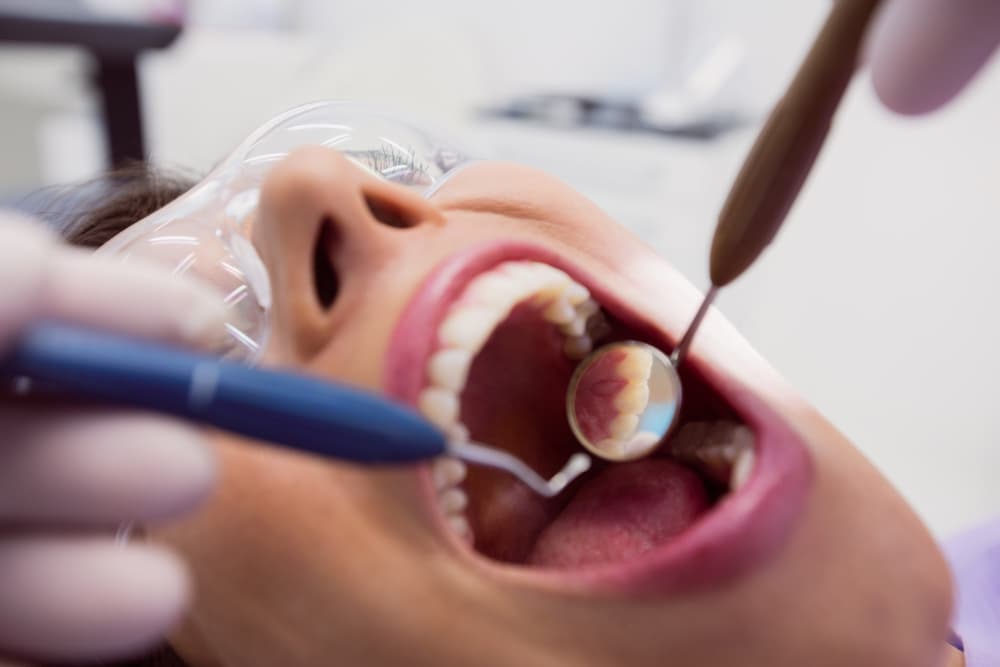
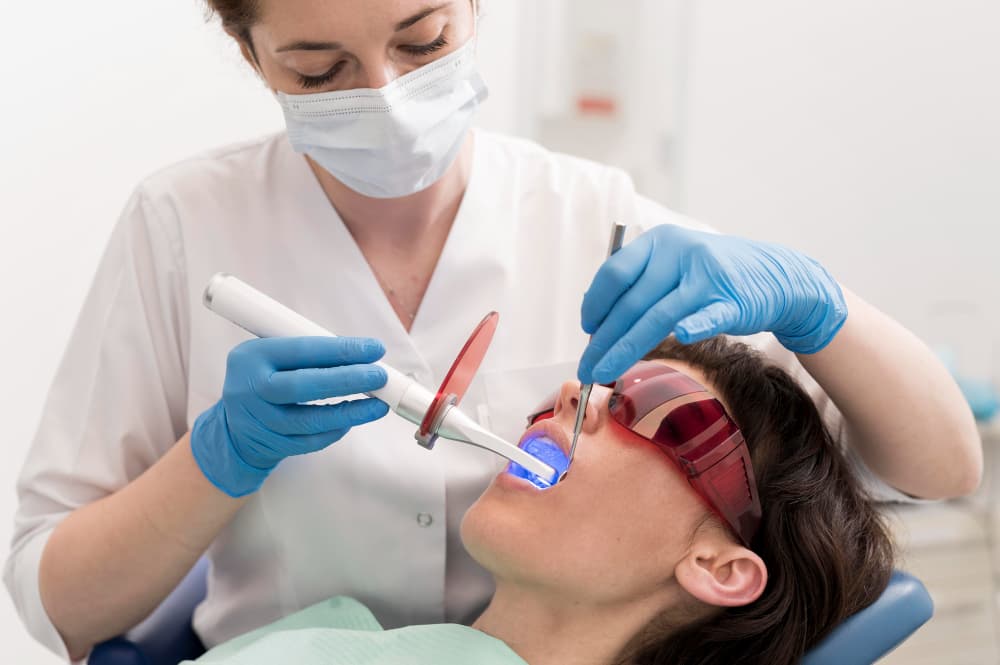
Dentist examining a female patient with tools.
For many people, the biggest barrier to booking a dental appointment isn't the treatment itself — it's the uncertainty of what happens when you walk through the door. What will the dentist look at? What will they tell you? Will you be told you need expensive procedures? How long will it take?
That uncertainty keeps people away far longer than it should. And in dentistry, time is usually not in the patient's favour — the problems caught early are the ones treated simply. The ones left for months or years become complex, uncomfortable, and more involved.
This guide is a straightforward walkthrough of what a first consultation at Renew Dental Clinic in Sector 47, Noida actually involves — so that the visit itself holds no surprises.
Why a Dental Consultation Matters More Than Most People Realise
Tooth decay and gum disease are the two most prevalent dental conditions globally — and in India, where regular dental visits are still far less common than they should be, the impact of delayed care is significant.
The average urban Indian visits a dentist fewer than three times in their lifetime. Most of those visits happen because something is already hurting. Pain is a late-stage signal in dental disease. By the time a tooth genuinely hurts, the cavity has usually reached the inner layers of the tooth. By the time gums are noticeably swollen and bleeding heavily, bone loss may already be underway.
A regular dental consultation — scheduled before anything hurts — changes this entirely. Conditions are caught at stages where treatment is quicker, simpler, and far less invasive.
Who Should Book a Dental Consultation at Renew Dental?
Everyone — but particularly
- Adults who haven't seen a dentist in more than a year
- Patients who've moved to Noida from another city and are establishing a new dental home
- Patients with ongoing concerns — sensitivity, occasional pain, bleeding gums, bad breath — that they've been putting off addressing
- Patients who've been recommended a procedure by another dentist and want a second opinion
- Anyone considering a specific treatment — braces, implants, veneers, whitening — and wanting a professional assessment before deciding
- Patients with medical conditions that affect oral health — diabetes, heart disease, osteoporosis, pregnancy
- Children who haven't yet had a dental check-up, or who are due for their regular assessment
Before Your Appointment — What to Bring
You don't need to bring anything specific for a first consultation. However, the following are helpful:
- Medical history summary — list of current medications, any relevant medical conditions, allergies
- Previous dental records or X-rays if you have them — these help the dentist understand your history and avoid repeating diagnostic work unnecessarily
- A list of concerns — any specific issues you want to mention, however minor they seem
At Renew Dental, Dr. Suchi Singh takes the time to review this information at the start of the appointment rather than rushing straight to the examination.
What Happens During a First Dental Consultation
Step 1 — Welcome and History Review
The appointment begins with a conversation. Dr. Suchi Singh (or a member of the team) will ask about:
- Your dental history — previous treatments, significant dental work (fillings, crowns, root canals, extractions)
- Current concerns — any pain, sensitivity, cosmetic concerns, or functional difficulties
- Medical history — conditions and medications that affect dental treatment and healing
- Family dental history — certain conditions (periodontal disease, developmental problems) have hereditary components
- Oral hygiene habits — how and how often you brush and floss
This isn't a formality. The history shapes everything that follows — what the dentist looks for, how they interpret findings, and what treatment options are appropriate.
Step 2 — Comprehensive Oral Examination
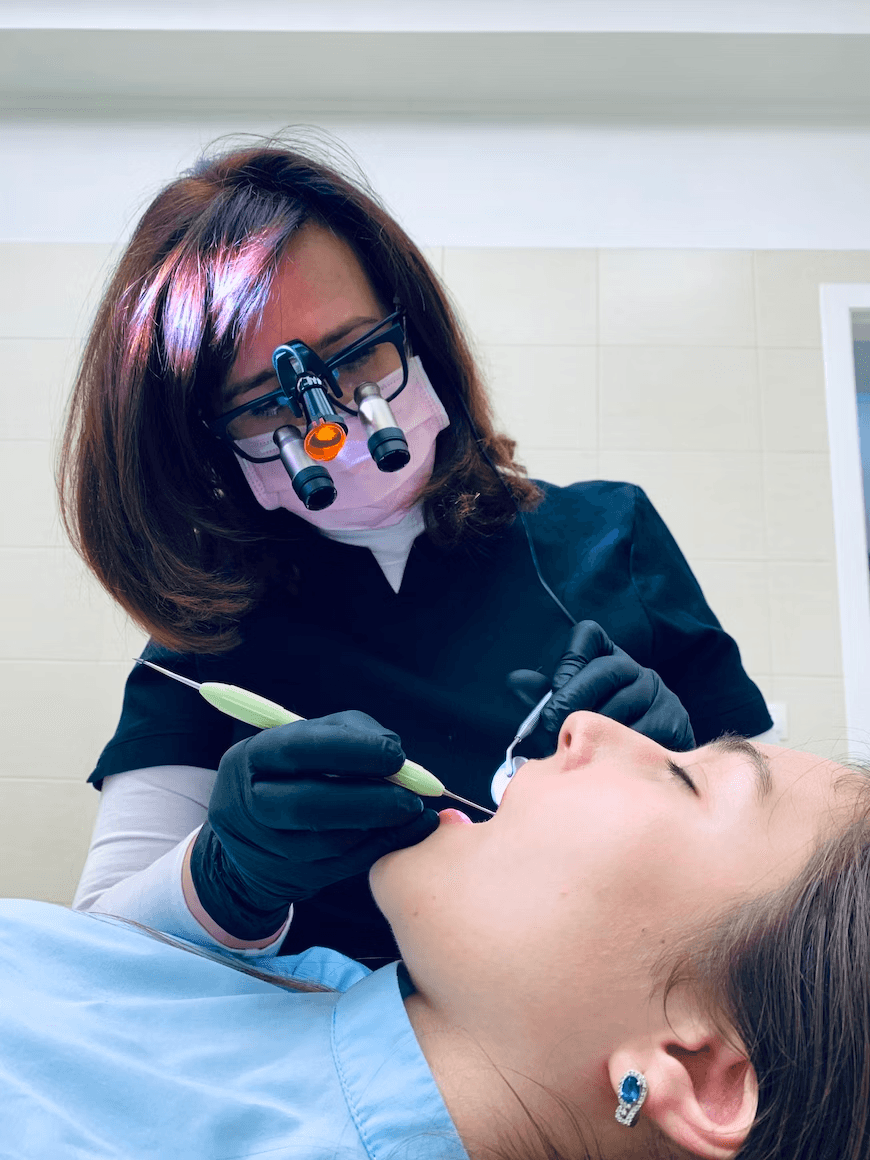
This is the clinical core of the consultation. Dr. Suchi Singh examines the full mouth systematically.
Teeth:
Each tooth is examined individually. The dentist looks for:
- Cavities — using a dental explorer to detect soft spots in the enamel, and visually assessing each surface
- Existing restorations — checking the margins and condition of existing fillings, crowns, and bridges
- Cracks and fractures — which may not be visible to the patient but are detectable during examination
- Wear patterns — indicating bruxism (teeth grinding) or acid erosion
- Tooth mobility — loose teeth suggest bone loss
Gums and Periodontal Status:
The gum tissue is assessed for:
- Redness, swelling, or bleeding on probing (signs of gingivitis)
- Pocket depth — using a periodontal probe to measure the depth of the space between the tooth and gum. Healthy pockets are up to 3mm; deeper pockets indicate periodontitis
- Recession — whether the gum tissue has pulled back from its correct position
- Calculus deposits — tartar above and below the gumline
Soft Tissues:
The inner cheeks, tongue, palate, floor of the mouth, and back of the throat are examined for:
- Ulcers or sores — distinguishing between benign canker sores and suspicious lesions
- White or red patches — which may warrant further investigation
- Oral cancer screening — included as a standard part of every comprehensive examination at Renew Dental
Bite and Jaw:
The occlusion (how upper and lower teeth meet) is assessed. The jaw joint (TMJ) is checked for clicking, deviation on opening, or tenderness — signs of temporomandibular disorder (TMD).
Aesthetic Assessment:
For patients with cosmetic concerns or interest in aesthetic treatments, Dr. Suchi Singh assesses smile symmetry, tooth proportions, shade, and what treatment options might achieve the patient's goals.
Step 3 — Diagnostic Imaging
X-rays are a critical part of dental diagnosis. Many significant findings — interproximal decay (between teeth), bone levels, root tip infections, impacted wisdom teeth — are invisible to clinical examination alone.
At Renew Dental, the type of X-ray taken depends on the clinical situation
Bitewing X-rays: Two or four small films showing the crowns of upper and lower teeth — ideal for detecting cavities between teeth and assessing existing restorations.
Periapical X-rays: Show the full tooth including the root and surrounding bone — used for assessing root tip infections, root fractures, and bone levels around specific teeth.
Panoramic X-ray (OPG): A single image showing the full mouth, jaw, sinuses, and developing teeth. Used for an overview of the entire dentition, particularly useful for assessing wisdom teeth, orthodontic planning, and implant assessment.
Cone Beam CT (CBCT): A 3D X-ray used for implant planning, complex cases, and situations where standard X-rays don't provide sufficient anatomical detail.
For new patients without recent X-rays, a baseline set of bitewing X-rays is typically recommended. The decision to take any X-ray is made on clinical grounds — not routine.
Step 4 — Discussion of Findings
This is the part of the appointment that many patients find most valuable — and that separates a thorough dental consultation from a rushed one.
Dr. Suchi Singh explains
- What has been found in the examination
- What each finding means clinically — how significant is it, is it urgent, what happens if it's left untreated?
- What options are available for each issue
- The recommended treatment plan and the reasoning behind it
- What is genuinely urgent versus what can be monitored
Nothing is assumed. If you have questions — about what a particular finding means, why a treatment is being recommended, whether there's an alternative — those questions are answered during this discussion.
There is no pressure. If you want to think about a recommendation before agreeing to proceed, that's completely fine. You leave with a clear picture of your oral health and a plan — not a deadline.
Step 5 — Treatment Planning
Based on the examination findings and your discussion, a treatment plan is formulated. This typically involves:
- Priority ranking — identifying what needs to be addressed urgently (active infection, pain) versus what can be planned over the coming weeks or months
- Sequencing — where multiple treatments are needed, the order matters. Gum disease is usually addressed before restorative work, for example
- Options — where there are multiple approaches to a problem, these are explained so you can make an informed choice
For patients with complex needs, the plan is documented and given to take home, allowing time to consider the recommendations.
Step 6 — Next Appointment Booking
Whether the next step is a cleaning, a filling, or simply a recall in 6 months, the next appointment is booked before you leave. This ensures continuity and prevents the all-too-common scenario of leaving the dentist with a plan that never gets acted upon.
How Long Does a Consultation Take?
A thorough first consultation at Renew Dental typically takes 45 to 60 minutes. This includes the history review, examination, X-rays where needed, findings discussion, and treatment planning. Shorter consultations are possible for very simple situations; more complex assessments take longer.
Subsequent appointments — for specific treatments like cleaning, fillings, or a crown — are scheduled separately.
What If You're Anxious About the Dentist?
Dental anxiety is genuinely common. A significant proportion of adults who avoid dental care do so because of anxiety, often rooted in past experiences or the simple fear of the unknown.
At Renew Dental Clinic, anxious patients are treated with patience. Nothing happens without explanation. You're told what's about to happen before it happens. You can take breaks. And a consultation appointment involves no drilling, no injections, and no procedures — just examination and conversation.
If you're anxious, mention it at the start of the appointment. Dr. Suchi Singh's approach to anxious patients is consistent: slower, clearer, and as comfortable as possible.
Frequently Asked Questions About Dental Consultations in Noida
Is there anything done to my teeth at the first consultation?
The first consultation is primarily examination, discussion, and planning. Procedures are not typically performed at the same appointment unless there is an acute, urgent situation (such as severe pain requiring immediate relief).
How often should I come for a check-up?
For most adults in good dental health, every 6 months. Patients with specific conditions — active gum disease, a high cavity rate, dry mouth — may need more frequent visits.
Will I be told I need a lot of work done?
You'll be told what the examination actually finds. If your teeth are in good health, you'll be told that. If issues are detected, they're explained honestly. Dr. Suchi Singh does not recommend treatments that aren't warranted.
Can I book for a specific concern rather than a full check-up?
Yes. If you have a specific issue — a broken tooth, sensitivity, bleeding gums, concerns about a particular area — you can book for that. A check-up may still be recommended as part of the appointment to provide context.
Do you see patients who haven't been to the dentist in many years?
Yes. Patients who've avoided dental care for a long time are welcome, and the approach is non-judgmental. The only starting point that matters is where you are now.
Book Your Dental Consultation at Renew Dental Clinic, Noida
Whether you're due for a routine check-up, have a specific concern, or want to establish a dental home for your family — the first step is a consultation.
To book, call (0120) 498-8333.
Renew Dental Clinic, A-321, Basement Floor, Next to Mother Dairy Store, Sector 47, Noida, UP 201303.
Open Monday–Saturday, 10:30 AM – 8:00 PM | Sunday, 11:00 AM – 2:30 PM.