Best Dentist in Noida for Children - A Parent's Complete Guide

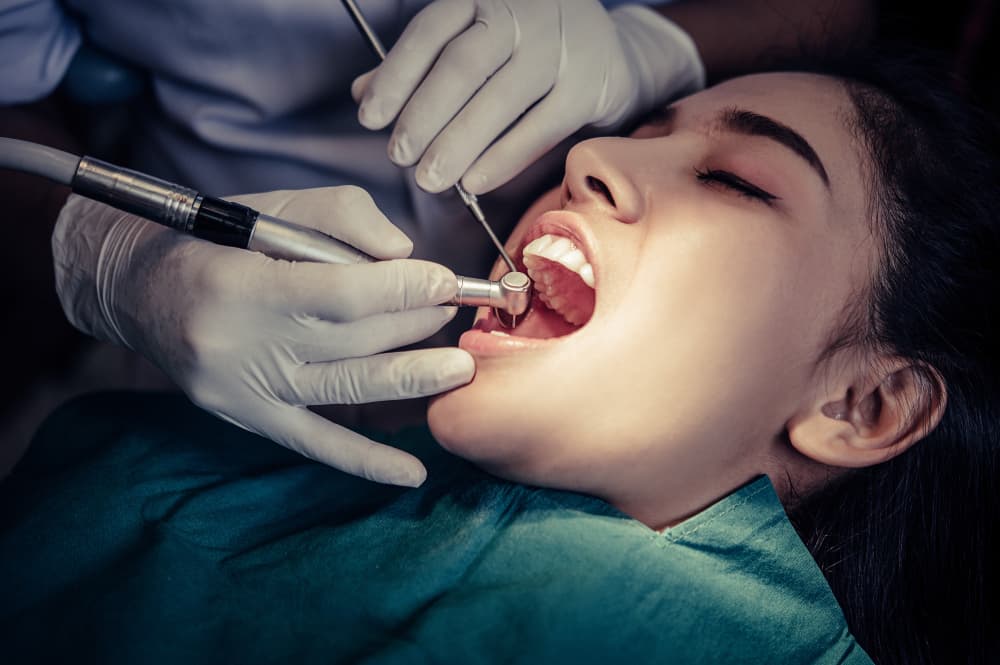
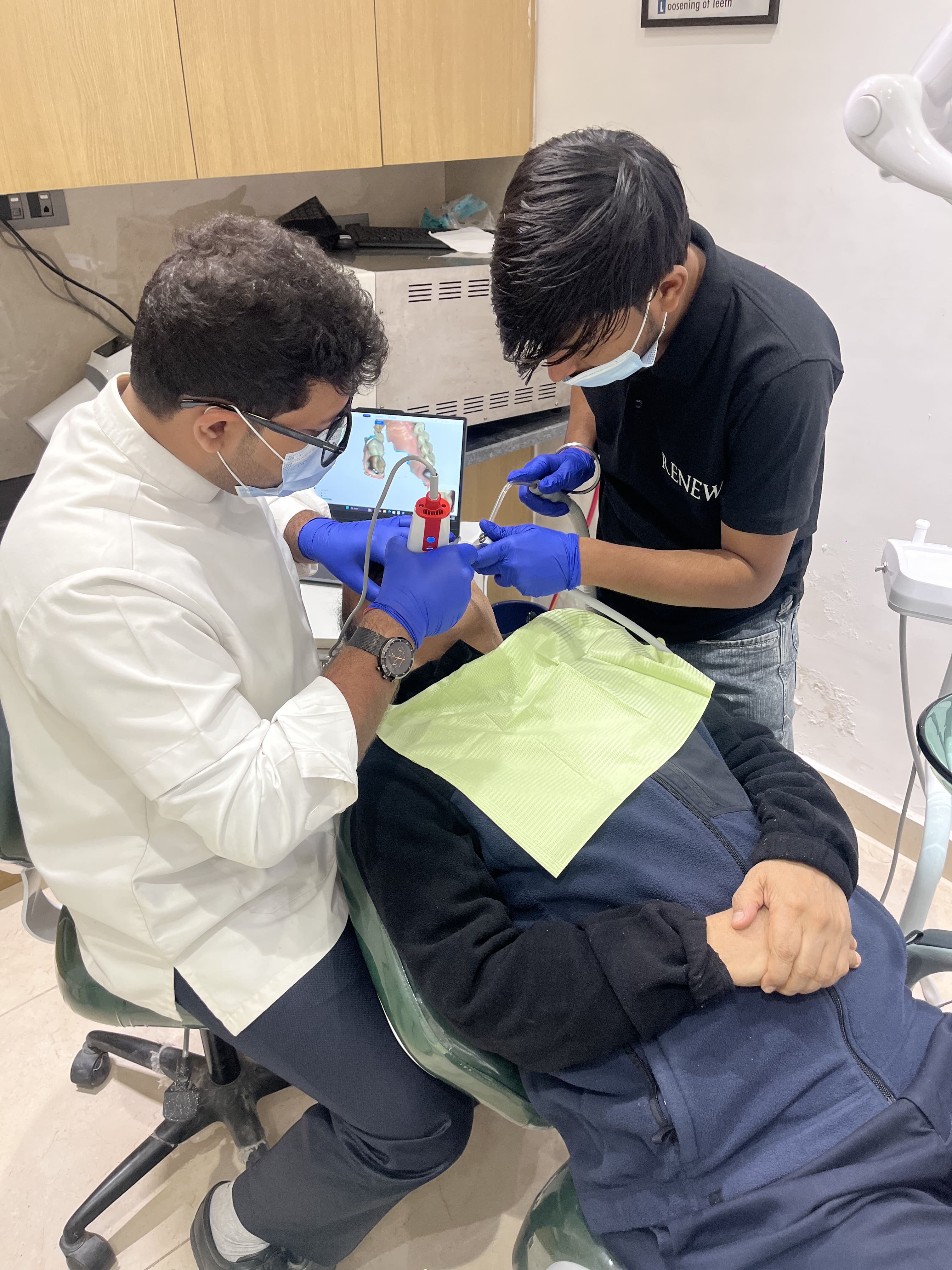
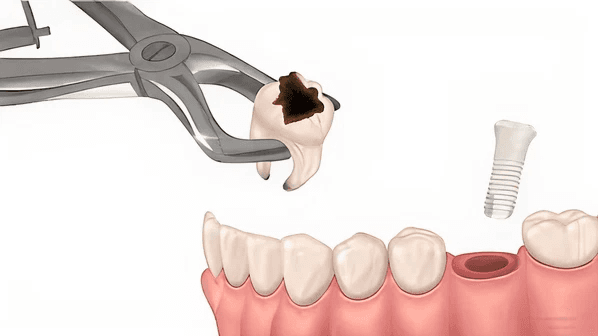
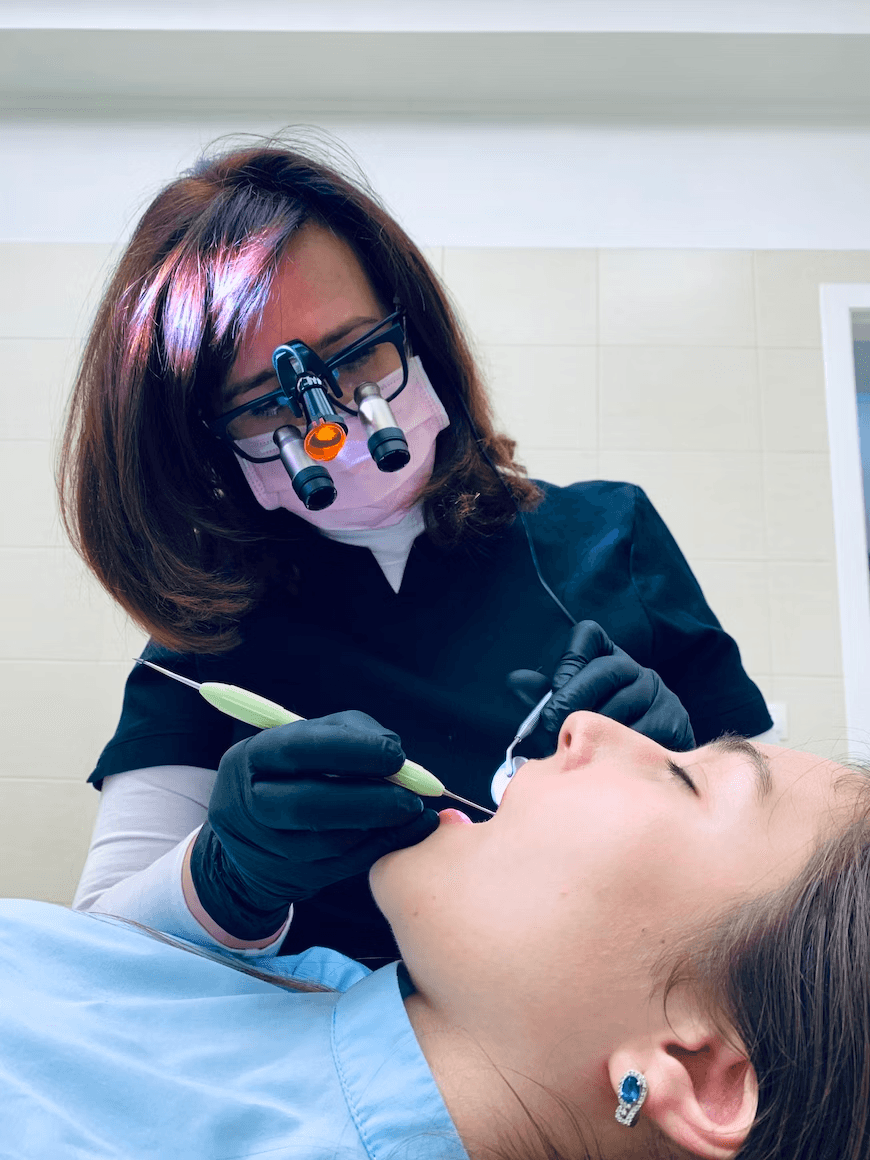
Patient sitting in a dental chair during a tooth extraction.
Every parent wants their child to have good teeth and healthy gums. But dental health in children doesn't happen by itself — it requires the right habits at home, the right guidance from professionals, and a dental clinic where your child actually feels comfortable.
The dental clinic a child visits as a young patient shapes their relationship with dental care for life. Children who have positive early experiences attend dental check-ups as adults without fear. Children who have negative ones avoid dental care for years — often at real cost to their oral health.
This guide covers everything parents in Noida, Greater Noida, and across Delhi NCR need to know about finding the right dentist for their child, and why so many families choose Renew Dental Clinic in Sector 47, Noida as their children's dental home.
When Should Your Child First See a Dentist?
This is the question most parents get wrong — usually because they think the first visit happens when all the baby teeth are in, or when a problem appears.
The correct answer: when the first tooth appears, or by the first birthday — whichever comes first.
This is the recommendation of the Indian Dental Association and is consistent with international paediatric dentistry guidelines. It may seem early, but there are excellent reasons for it.
Baby teeth begin erupting at around 6 months. By 12 to 18 months, several teeth are typically present. These teeth are susceptible to early childhood decay — also known as baby bottle caries — which can develop rapidly and cause pain, infection, and premature tooth loss in very young children.
A first dental visit at this age isn't about drilling or treatment. It's about:
- Examining the emerging teeth for any early signs of decay or developmental issues
- Giving parents practical guidance on how to clean infant teeth
- Discussing feeding habits — including the dental risks of bottle use and breastfeeding on demand through the night
- Giving the child a positive, non-threatening first experience of the dental environment
Starting early creates the single most valuable outcome: a child who is comfortable with dental visits from the very beginning and who therefore receives the preventive care they need throughout childhood.
What Makes Renew Dental the Right Clinic for Your Child?
Choosing a dental clinic for your child isn't the same as choosing one for yourself. Children have specific needs that not every clinic is equipped to meet.
A Genuinely Patient Approach to Children
At Renew Dental Clinic, Dr. Suchi Singh and the team work at the child's pace. Nothing happens without explanation. Young patients are shown instruments before they're used. They're talked through every step of the appointment in language appropriate to their age.
Children who arrive anxious — perhaps having heard stories from siblings or friends — are given time. A first appointment may involve nothing more than the child sitting in the chair, looking at instruments, and leaving without any examination at all. That first positive experience is worth more than any procedure that could have been rushed through.
There is no restraint, no rushing, and no treating the child as an obstacle. This is the foundation of paediatric dental care at Renew Dental.
Experience Across All Ages
Dr. Suchi Singh has more than 12 years of experience treating patients from infancy through to adulthood. Children present unique clinical challenges — smaller mouths, developing teeth, different pain thresholds, and different communication needs than adults. These are familiar territory at Renew Dental, not exceptions.
All Paediatric Services Under One Roof
Parents don't need to be referred to multiple clinics. Renew Dental provides all the paediatric dental services a child needs:
- Routine examinations and professional cleaning
- Fluoride treatments and dental sealants
- Cavity treatment and fillings
- Early orthodontic assessment
- Wisdom tooth monitoring in teenagers
- Management of dental injuries (knocked or chipped teeth)
Common Dental Problems in Children — What Parents Should Know
Baby Bottle Caries (Early Childhood Tooth Decay)
One of the most heartbreaking dental conditions to see in young children — and one of the most preventable. Baby bottle caries develops when the front baby teeth are repeatedly exposed to sugary liquids, particularly when a baby is put to sleep with a bottle of formula, juice, or even breast milk.
The upper front teeth are most commonly affected, developing white chalky spots that progress to brown or black decay. In severe cases, multiple teeth require extraction in very young children — a traumatic experience that affects the spacing of permanent teeth and the child's confidence.
Prevention:
- Never put a child to bed with a bottle containing anything other than plain water
- Begin cleaning the baby's gums with a soft cloth before teeth erupt
- Begin brushing with a tiny smear of fluoride toothpaste when the first tooth appears
- Transition from bottle to cup by age 12 months
Dental Cavities in School-Age Children
Once children begin eating more varied food — including sweets, biscuits, crackers, and sugary drinks — cavity risk rises. The first permanent molars (the "six-year molars") erupt around age 6 and are highly susceptible because of their deep grooves. Without intervention, these teeth are among the most commonly decayed in childhood.
Early detection at Renew Dental: X-rays at check-ups can detect cavities between teeth before they become visible or symptomatic, allowing simple fillings rather than more involved treatment.
Dental Sealants — Prevention Before the Cavity Starts
One of the most effective preventive interventions available for children. Dental sealants are thin plastic coatings applied to the grooves and fissures on the chewing surfaces of the back teeth — where decay most commonly starts.
The application takes a few minutes per tooth, requires no drilling or anaesthesia, and can prevent up to 80% of cavities in sealed teeth. Dr. Suchi Singh assesses sealant candidacy when the first permanent molars have fully erupted — typically between ages 6 and 8.
Early Orthodontic Issues
Not all bite problems should wait until all the permanent teeth have erupted. Some issues — crossbite, very narrow jaw, significant overbite — benefit from early intervention while the jaw is still growing, when simpler appliances can guide jaw development and avoid more complex treatment later.
At routine paediatric check-ups at Renew Dental, orthodontic development is assessed. Parents are advised honestly — some children need no early intervention; others benefit from it significantly.
Gum Disease in Children (Gingivitis)
Gingivitis — gum inflammation from plaque accumulation — is common in children, particularly during the mixed dentition phase when baby teeth are falling out and permanent teeth are erupting. Bleeding gums when brushing is the most common sign.
Gingivitis in children responds quickly to improved brushing technique and professional cleaning. Untreated, it can progress to more significant gum disease.
Thumb Sucking and Pacifier Habits
Thumb or pacifier use beyond age 3 to 4 begins to affect the developing teeth and jaw — potentially causing an open bite (where upper and lower front teeth don't meet) and protrusion of the upper front teeth.
If your child is still using a thumb or pacifier beyond age 4, Dr. Suchi Singh will discuss gentle, evidence-based strategies for breaking the habit and assess whether any dental changes are developing.
What Happens at a Child's Dental Check-Up at Renew Dental?
For Very Young Children (Under 3)
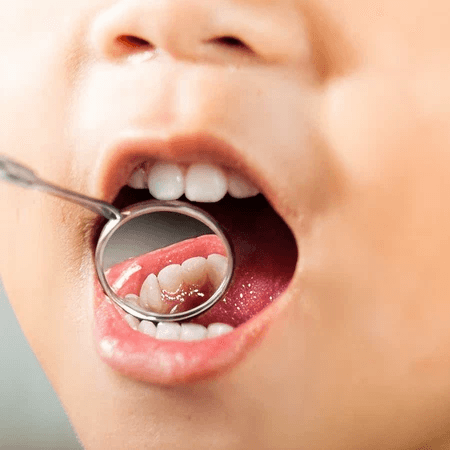
These appointments are often conducted with the child sitting or lying in the parent's lap, with Dr. Suchi Singh examining the mouth in this position. The focus is on:
- Examining erupted teeth for decay, developmental abnormalities, or positioning issues
- Discussing appropriate oral hygiene techniques for the parent to use
- Providing dietary and feeding guidance
- Creating a positive, calm experience for the child
No instruments are forced. If the child is resistant, the appointment is kept brief and positive — the priority is trust, not data collection.
For Children Aged 3 to 7
These appointments introduce the dental chair, instruments, and examination more fully. The dentist uses simple, reassuring language — counting teeth, looking for sugar bugs (bacteria), and polishing teeth to make them smooth and shiny. The vocabulary is deliberately non-threatening.
Services provided:
- Full dental examination
- Cavity detection (visual and, where the child cooperates, with a probe)
- Professional cleaning and polishing
- Fluoride varnish application
- Discussion of brushing technique and diet
X-rays are taken when clinically indicated and when the child is cooperative.
For Older Children (8 to 12)
Examination becomes more comprehensive as more permanent teeth are present. Orthodontic development is assessed. X-rays are routinely included. Oral hygiene instruction becomes more detailed as children begin to take responsibility for their own brushing.
At this age, Dr. Suchi Singh speaks directly to the child about their dental health — not just to the parent. Children who are included in conversations about their own care develop better health engagement.
For Teenagers
Full dental examination, X-rays, hygiene assessment, wisdom tooth monitoring, and orthodontic assessment or management. Teenagers are spoken to as adults — their questions are answered directly and their preferences respected.
How to Prepare Your Child for a Dental Visit — Practical Tips
Use neutral language. Avoid words that create a fear framework before the appointment — "needle," "drill," "hurt," or "pain." Instead: "the dentist will look at your teeth" or "they'll count your teeth and make sure they're healthy."
Keep your own anxiety separate. If you have dental fear, your child will sense it. Stay calm and matter-of-fact about the appointment.
Read books about dentist visits together. There are many excellent children's books that normalise dental visits in a fun, positive way.
Never use the dentist as a threat. "If you don't brush your teeth, the dentist will have to do something painful" is one of the most counterproductive things a parent can say.
Arrive a few minutes early. Give the child time to settle in the waiting area before the appointment begins.
Praise the experience afterward. Whatever the appointment involved — even if it was just sitting in the chair — acknowledge the child's bravery positively.
Oral Hygiene at Home — What Parents Need to Know
Infants: Clean gums with a soft, damp cloth before teeth appear. Begin brushing with a tiny smear (grain of rice size) of fluoride toothpaste as soon as the first tooth erupts.
Ages 2 to 3: A pea-sized amount of fluoride toothpaste. Brush for the child — young children lack the fine motor skills to brush themselves effectively.
Ages 3 to 6: Introduce the child to brushing themselves, but continue supervising and assisting. Two minutes, twice daily.
Ages 7 to 10: Children can brush more independently, but parental supervision and occasional checking of quality remain valuable.
From 10+: The child brushes independently. Parents should periodically observe that the technique is correct.
Flossing: Begin flossing as soon as two teeth are touching — typically from around age 2 to 3.
Frequently Asked Questions from Noida Parents
My child has had bad experiences at other clinics. Can Renew Dental help?
Yes. Many children who come to Renew Dental after negative experiences elsewhere gradually build trust through patient, unhurried appointments. The priority is always a positive experience — treatment comes secondary.
My child's baby teeth are wobbly — should I bring them in?
Usually, baby teeth fall out naturally. If a tooth is very mobile and the child is ready, encourage them to wiggle it themselves. If it seems stuck, painful, or if the permanent tooth appears to be erupting beside the baby tooth while it's still firm, book an appointment.
At what age should we think about braces?
An orthodontic assessment can begin at age 7 to 8, when the first permanent molars and incisors have erupted, and the dentist can evaluate how the bite and jaw are developing. Active orthodontic treatment typically begins between 11 and 14.
How can I reduce my child's sugar intake for better dental health?
Water and milk as primary drinks, rather than juice, cola, or flavoured drinks. Fresh fruit rather than juice. Limit biscuits and sweets to mealtimes rather than continuous snacking. These changes have the greatest impact on childhood cavity rates.
Book Your Child's Appointment at Renew Dental Clinic, Noida
For families across Noida, Greater Noida, and Delhi NCR looking for a children's dental clinic that combines clinical expertise with genuine patience and care — Renew Dental Clinic in Sector 47, Noida is that clinic.
To book your child's appointment, call (0120) 498-8333.
Open Monday–Saturday, 10:30 AM – 8:00 PM | Sunday, 11:00 AM – 2:30 PM.
Start the right dental relationship for your child — earlier than you think, gentler than you expect.